Let My Country Awake: Indian Revolutionaries in America and the Fight to Overthrow the British Raj
Scott Miller is a former journalist and author of Let My Country Awake
India’s struggle for independence has been widely chronicled, from the early years of the East India Company to Mahatma Gandhi’s campaign of non-violent resistance. Yet one heroic chapter has been largely overlooked: the audacious Ghadar movement and its California-based revolutionaries.
America’s relationship with India stretches back to the early days of the republic, when Thomas Jefferson and John Adams corresponded about Hindu philosophy, an interest also shared by Walt Whitman and Henry David Thoreau. A few decades later, India-born New York restaurateur Ranji Smile became America’s first celebrity chef. By 1905, the first major influx of Indian immigrants began to arrive in the United States, laborers who quickly earned a reputation for their tremendous work ethic. Inspired by the Founding Fathers, many saw the United States as a beacon of hope compared to the oppression they knew at home. Yet they immediately faced racism from Americans who feared what the newspapers dubbed a “turban tide;” people who would steal their jobs and never assimilate into American society. Starting in 1907, white locals launched a string of terrifying attacks on Indian communities along the West Coast that left many wondering if the United States could ever truly welcome them. From this cauldron of swirling fears and ideals, two ambitious men emerged.
In 1911, a charismatic Indian named Har Dayal first arrived in California after studying at the University of Oxford on a prestigious scholarship. Almost immediately, he developed a measure of notoriety around the Bay Area. He taught at Stanford University and frequently lectured around San Francisco, spouting frothy leftist politics denouncing the British Raj. In 1913, Dayal’s spreading fame reached a group of Indian immigrants living near Portland, Oregon, led by Sohan Singh Bhakna, a laborer who shared his views. In the spring of 1913, the two founded an organisation named Ghadar, or revolt. Rather than blame their adopted home for the hardships immigrants faced, they concluded they could never win respect anywhere in the world until India became free. Establishing a headquarters in San Francisco, their group began publishing a seditious newspaper on the evils of colonialism.
It did not take long before a British spy named William Hopkinson learned of these radicals from his post in Vancouver, Canada. Ambitious and determined, he saw Dayal and Bhakna as a dire threat and raced to London to sound the alarm. Convinced that the Ghadar movement included some of the most dangerous revolutionaries anywhere, his handlers ordered Hopkinson to somehow convince the Americans to arrest and deport its leaders. Over the next three years an incredible story of both bravery and heartbreak would unfold.
Hopkinson had no legal power in the United States, and the authorities doubted the Ghadar movement was violating any laws. Advised by American friends, Hopkinson shifted his strategy to domestic concerns by painting the Indians as dangerous leftists, cleverly riding a wave of fear sparked when a self-described anarchist had assassinated President William McKinley in 1901. By tracking Dayal’s radical rhetoric and leaking it to US authorities, Hopkinson managed to orchestrate an investigation that led to his arrest. Dayal would skip bail and flee to Switzerland, turning the organisation over to another Indian freedom fighter who carried little political baggage. Under the leadership of Ram Chandra, a gifted writer whose sole focus became violent revolution, the Ghadar movement entered the summer of 1914 with history on its side.
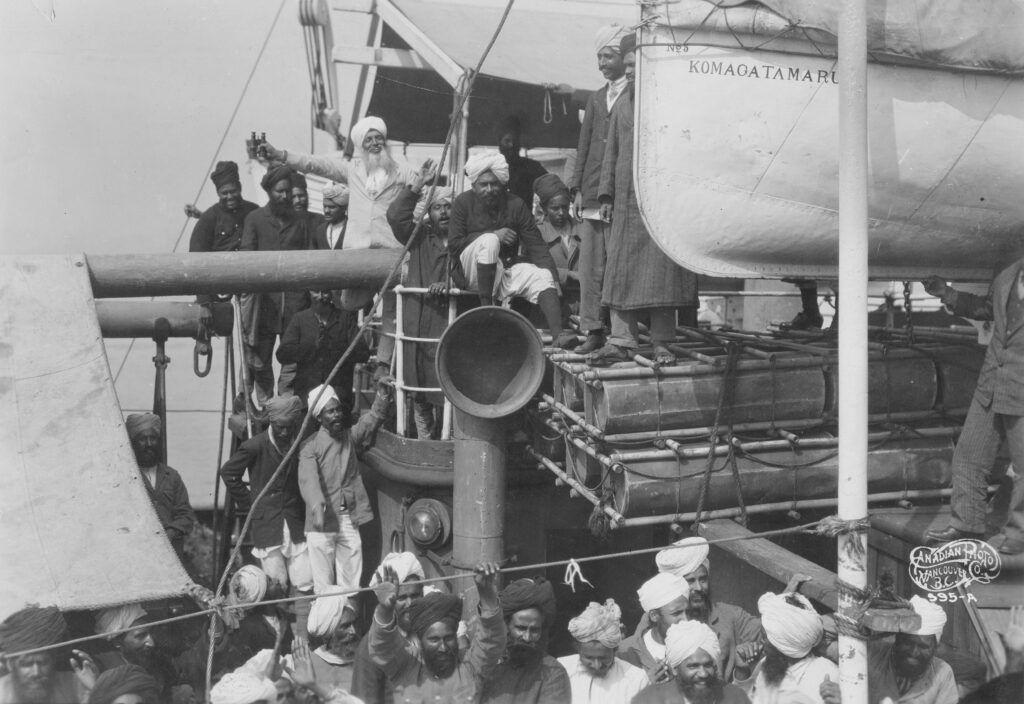
Chandra could hardly believe how providence had smiled on him. With the start of the First World War in July, England began to shift troops from India to the front in France, leaving his country ripe to reclaim. A spark was lit when Canadian anti-immigration authorities refused to let Indian passengers disembark from the Komagata Maru in Vancouver harbor, and the outrage spread to the United States as well as Canada. Chandra and other Ghadar leaders held rallies in Washington, Oregon, and California urging Indians to take up arms. “Your duty is clear. Go to India. Stir up rebellion in every corner of the country,” he told one gathering. His audiences responded with incredible energy. One newspaper noted communities that had once flourished were rapidly emptying. As many as 1,000 revolutionaries left the country for India.


The returnees hoped to incite mutinies among Indian troops serving in the British army. There was just one problem – the British were waiting for them. Thanks to the work of spies like Hopkinson, the Viceroy of India had enacted new laws such as the Foreigners Ordinance, which restricted the ability of Indians living abroad to return to their homeland. The viceroy also intensified his own intelligence gathering and succeeded in rounding up Bhakna and other Ghadar leaders in the weeks leading up to the attack. On the night of the planned uprising, the British captured critical members of the plot, such as former University of Washington engineering student Vishnu Ganesh Pingle, crippling the entire revolution before it even got off the ground. Waiting back in the United States, Chandra learned of the failed uprising with horror. But he soon discovered help from an unexpected source.
German intelligence officers had studied the Indians’ revolutionary ambitions with fascination. Recognising a potential ally against the British, they swiftly recruited known Indian radicals in Europe to form a joint organisation in Berlin whose goal was to foment revolution. They also sent orders to their consulate in San Francisco for an ambitious spy named Wilhelm von Brincken to make contact with Chandra. The two concocted a hugely complex plot: to smuggle thousands of guns from San Diego to waiting rebels in India. Hardly had the operation begun when a ship the Germans acquired, the Annie Larsen, proved too decrepit to manage even a brief ocean voyage.
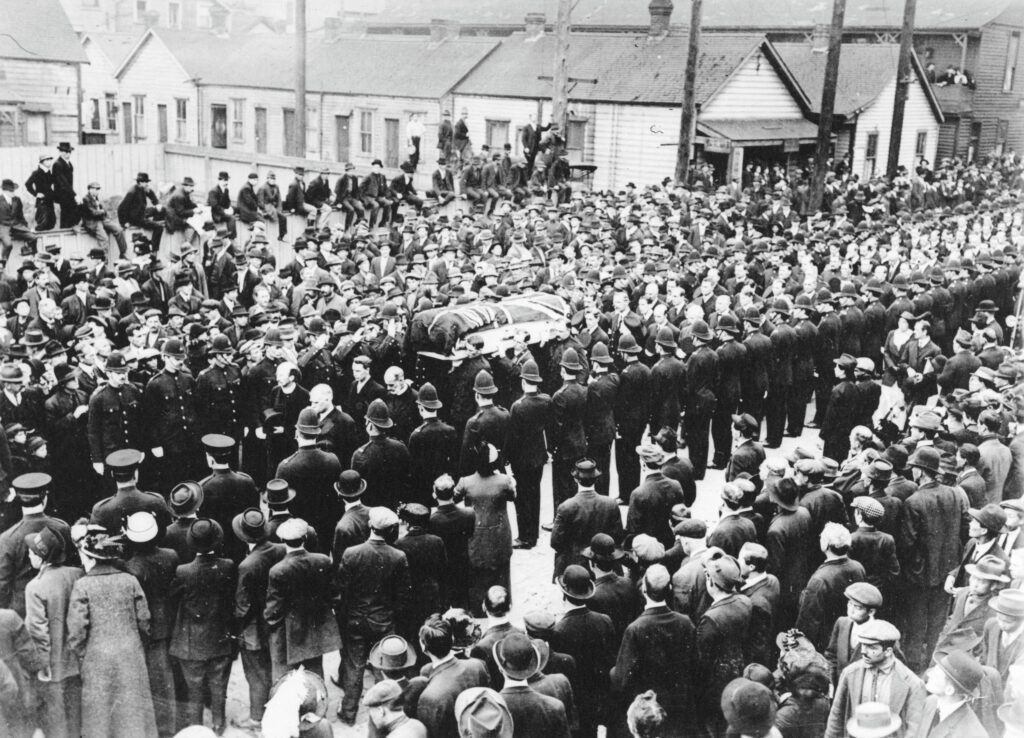
The Ghadar movement soon spawned a full-blown espionage war on the West Coast of the United. States. In October 1914, Hopkinson was attending a trial in Vancouver when an Indian he had once tracked approached him in a hallway, withdrew a revolver, and shot him dead. The murder only fortified the resolve of the California revolutionaries to intensify their collaboration with Germany. By early 1915, the Germans were pouring more money into the freedom movement, and strategised with Chandra on another armed foray to Asia, this time to Burma. Indian revolutionaries in California adopted false names, held clandestine meetings, and received help from sympathetic Irish immigrants. Yet they couldn’t prevent the British from infiltrating the Ghadar network with spies of their own, providing a detailed picture of its finances and operations and easily snuffing out the Burma plot.
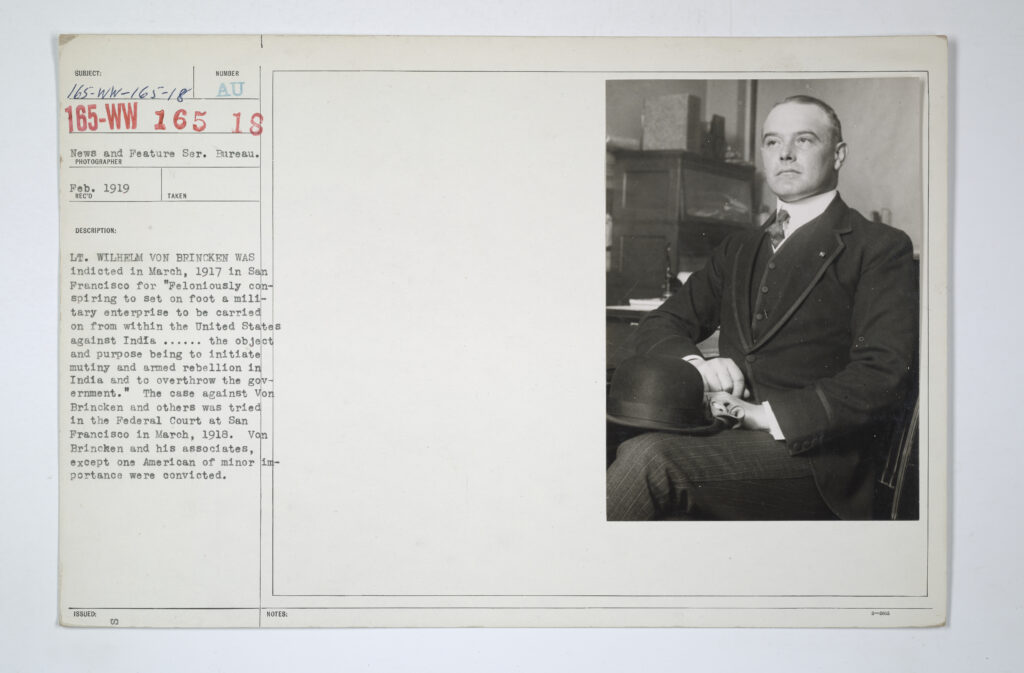
By 1916, the Ghadar movement’s clandestine war had reached a final turning point. A new British spy master in the United States, William Wiseman, claimed to discover that a revolutionary named Chandra Chakravarty was planning a bombing in New York and leaked his suspicions to the police. When Chakravarty was arrested not long later, he divulged details of the Ghadar gun-running operations, enabling the Department of Justice to quickly build a case against the movement. In April 1917, authorities gave orders for scores of Indians to be arrested on the charge of conspiracy to violate American neutrality laws.
The trial was purportedly the most expensive in US history to that point, costing $2.5 million. Throughout, British agents made sure that the Americans received all the witnesses and evidence they could want. The Department of Justice’s case was also helped in no small measure by deep divisions among the Indians themselves, some convinced that Chandra was embezzling money. On the final day of the trial in April 1918, these tensions erupted when one defendant, Ram Singh, snuck a pistol into the courtroom and shot Chandra dead. Ram Singh was himself quickly killed by a court officer. Only hours after the courtroom shootout, the jury found twenty-nine people guilty, handing down prison sentences that crushed the work of Indian revolutionaries in America.
Though it failed in its immediate objectives, the Ghadar movement launched a chain of events that would help shape India’s freedom struggle. In 1919, the British used the Rowlatt Act to reinforce the same strict measures they had believed were needed to protect India from the Ghadar movement in 1915. Many Indians, hoping for some show of appreciation for their support of London during the war, felt this was a villainous betrayal. On April 13, thousands of protesters gathered peacefully at the Jallianwala Bagh gardens in Amritsar, Punjab, a demonstration that Brigadier-General Reginald Dyer considered unlawful. Marching his men to the confined square, he gave the order to fire, killing hundreds. The massacre would galvanise support for Gandhi’s campaign of non-cooperation that would eventually help India win independence in 1947.
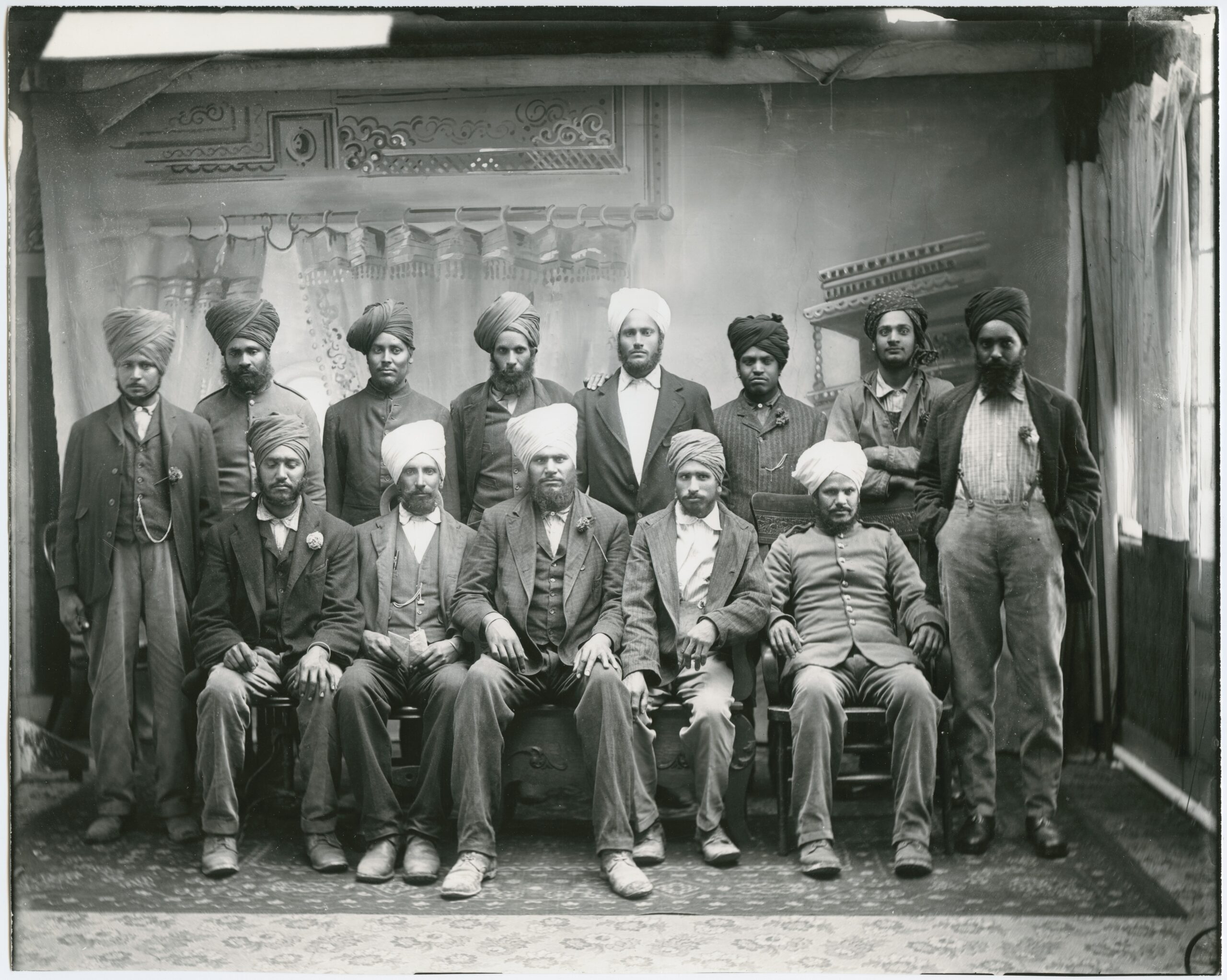
*title image – Sikh working men in California around 1910 (Courtesy of the California History Room, California State Library, Sacramento, California)
The opinions expressed are those of the contributor, not necessarily of the RSAA.
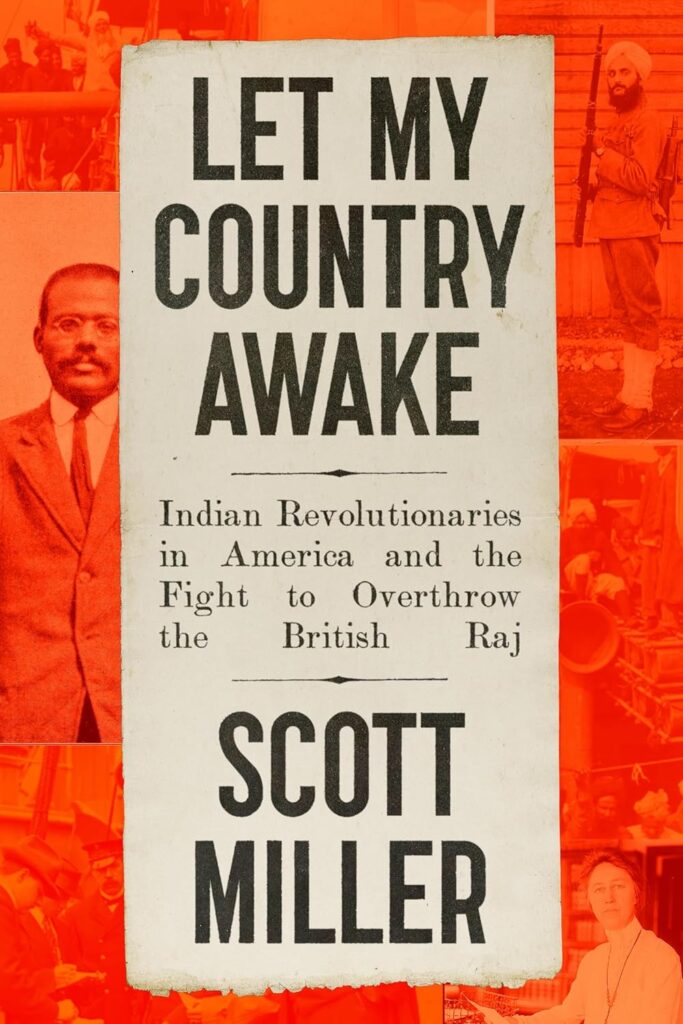
Let My Country Awake: Indian Revolutionaries in America and the Fight to Overthrow the British Raj
On the eve of World War I, a band of Indian immigrants living in the United States hatched an audacious plan to liberate their homeland from British colonial rule. From its bases on the West Coast of the US and Canada, the movement recruited thousands of supporters via its underground newspaper and sent hundreds of freedom fighters across the Pacific in an attempt to smuggle guns and seditious literature into India – an effort abetted by spies working for the German government, who were keen to undermine a wartime adversary. All the while, tracked by Britain’s intelligence service, which eventually convinced the US government to crack down. The result was one of the most complex trials to date, culminating in a courtroom gun battle that shocked the nation.