Japanese Wisdom for Export
Michael Neale was born in Kashmir, India and worked for Reuters in Asia and Africa
This piece offers a reflective exploration of Wabi Sabi: The Wisdom in Imperfection by Nobuo Suzuki and Wabi Sabi: The Japanese Art of Impermanence by Andrew Juniper, drawing out their shared vision of wabi sabi as both philosophy and way of life.
The interrelated concepts of wabi and sabi, bundled together as wabi sabi, are a mainstay of the Japanese psyche. The term has spiritual and moral as well as aesthetic connotations. In our turbulent times, books on this topic convey the same underlying message: that the calming wisdom of wabi sabi deserves to have greater influence in the wider world outside Japan.
Nobuo Suzuki proposes ways in which acceptance of imperfection can enhance your better self, while as Andrew Juniper puts it: ‘Wabi sabi, as a tool for contemplation and a philosophy of life, may now have an unforeseen relevance as an antidote to the rampant unravelling of the very social fabric which has held men together for so long’.
Before going into detail about what they have to say, here is the background to a subject whose ramifications can be difficult to pin down. Wabi sabi has ancient roots in Zen Buddhism and its Chinese precursor, Daoism. Mahayana Buddhism filtered into Japan through the prism of China, where it was introduced by sages from India. Devotees of Zen, the Japanese enhancement of Chinese ‘Ch’an’, can grasp cosmic truth as their inspirational reality through a ‘eureka!’ flash of intuition, a leap of faith irrational beyond words (satori=enlightenment). To them, the human brain does not seem to be wired to comprehend, rationally, the ultimate mystery of the universe, the boundless eternity of its dark matter, whatever the scientific advances made in quantum mechanics or astronomy.
Daoism shares with Zen a respect for harmony with nature and a disapproval of attachment to non-essential possessions. But it goes further – in advocating effortless action, if not complete inaction, to ‘go with the flow’. Dao means ‘the way’ to do so. Such stoical quietism proved no match however for the authoritarian sway of Confucianism that has prevailed in China to this day.
Nobuo Suzuki tells us that wabi sabi is almost indescribable because of the ambiguity of the Japanese language and adjustments in the meaning of its pictographs over time. Yet he goes on to describe its basic meaning as follows: Wabi connotes rustic simplicity, subdued elegance, freshness, tranquillity, and beautiful imperfections, tinged with melancholy. Sabi signifies beauty and calm in what is mature or aged (with patina or weathering) and pleasure felt when appreciating the imperfect, ‘wizened, wilted, or rusted’.
In his foreword, Héctor García affirms that, by extension, wabi sabi’s invisible texture embraces philosophy, mindset, thought, lifestyle, history, religion, and even social behaviour, besides art and architecture.
Nobuo notes that Sen no Rikyu, a tea master of the 16th century, is widely acknowledged as father of both the tea ceremony and of wabi sabi as it is understood today. (In a European perspective, Rikyu was a contemporary of Michel de Montaigne of France, whose self-analytical essays, frankly discussing both his imperfections and his virtues, were to modernise Western letters). According to Nobuo, Rikyu rebelled against Chinese perfectionism epitomised by its impeccable porcelain; for his tea ceremony he preferred humble clay bowls and a tiny hut, with all their flaws, to the showy displays favoured by the nobility. This still-performed ritual derived from the simple habits of Zen monks in their monasteries.
In an art form unique to Japan known as kintsugi, wabi sabi conjures up a magical beauty even in the repair of broken porcelain – by highlighting the mended cracks with gold lacquer. The inklings of wabi sabi first came to the attention of the West in the late 19th century in the reports of Lafcadio Hearn, from his immersion in traditional Japan. Daisetz Suzuki stood out as the foremost populariser of Zen Buddhism in the mid 20th century. But it was not until its uptake by the hippie counterculture later in the century that wabi sabi really caught on in America and elsewhere.
The term entered English dictionaries in the late 1990s after the publication in 1994 of Leonard Koren’s Wabi Sabi for Artists, Designers, Poets and Philosophers. The ball has kept rolling in the 21st century with further documentaries and books, represented by those selected here.
In short, wabi sabi can become better recognised by Western culture in the same mould as that of another useful oriental import, the geomantic Chinese design precepts of feng shui.
Nobuo lists three core principles: nothing is perfect, nothing is finished, nothing lasts forever. A humble acceptance and letting go of our own perceived imperfections can make us happier. A wabi sabi mindset sharpens a savouring of the here and now. It inspires self betterment through fresh insights into the world around us. It encourages creativity and resilience. Its mindful practitioners never impose their own egos on their creations.
Nobuo adds that the numen of wabi sabi can be found everywhere in the world. He sees it in the stupendous basilica Sagrada Familia in Barcelona, started by the Catalan architect Antoni Gaudi in 1883 (and still unfinished a century after his death in 1926). He reads it in the poetry of the Portuguese Fernando Pessoa (1888-1935) and of the German-Swiss Hermann Hesse (1877-1962); also in the writings of Franz Kafka (1883-1924), a Czech, and Henry Thoreau (1817-1862), an American.
Nobuo commends the dictum of William Morris (1834-1896), doyen of the English Arts and Crafts movement: ‘Have nothing in your house that you do not know to be useful, or believe to be beautiful’. But Nobuo adds the proviso that something can be deemed beautiful only if ‘seeing it every day makes your experience of life more fulfilling’.
Juniper, an Englishman steeped in Japanese lore and language, offers this interpretation: ‘Wabi sabi is an intuitive appreciation of a transient beauty in the physical world that respects the irreversible flow of life in the spiritual world. It is an understated beauty that exists in the modest, rustic, imperfect, or even decayed, an aesthetic sensibility that finds a melancholic beauty in the impermanence of all things’.
But he warns that Japanese norms are changing at an unprecedented rate, as frenetic materialism threatens the future relevance of traditional values, particularly to Japan’s youth. He quotes an old-timer: “From being one of most attractive countries in the world Japan has transformed herself into one of the most visually unappealing’. Indeed, Juniper declares, Japan can justifiably be accused of spawning some of the ‘most indescribably awful’ architecture, a complete antithesis of wabi sabi that ‘would make Sen No Rikyu turn several times in his grave’.
Juniper then palliates his rant with reassurances of a contradictory side to the paradox. With its wealth of natural beauty and ‘peerless social refinement’ Japan can still offer some ‘unforgettable glimpses into the transcendent world that she has so carefully fostered’. He singles out the Tawaraya Hotel, a ryokan (traditional inn) in Kyoto, as a quintessential oasis of Japanese hospitality, where the spirit of wabi sabi is ‘still alive and very well’.
As for Japan’s youth, Juniper observes that everyone growing up in Japan is bound to come into contact with Japanese art, including pottery, poetry, calligraphy, flower arranging, gardens, and temples, thus continuously reinforcing the subliminal message inherent in wabi sabi. Furthermore a ‘very strong opinion’ on taste is baked into the herd instinct of one of the world’s most homogenous societies. The wabi sabi advocated by Sen No Rikyu has remained almost unchanged for more than half a millennium, despite huge changes in cultural and social values.
He concludes: ‘It may well be a testament to the fact that the beauty of wabi sabi will, because of its profound artlessness and purity, always strike a chord in the spirit of man, affirming our insignificance in a world in constant flux’.
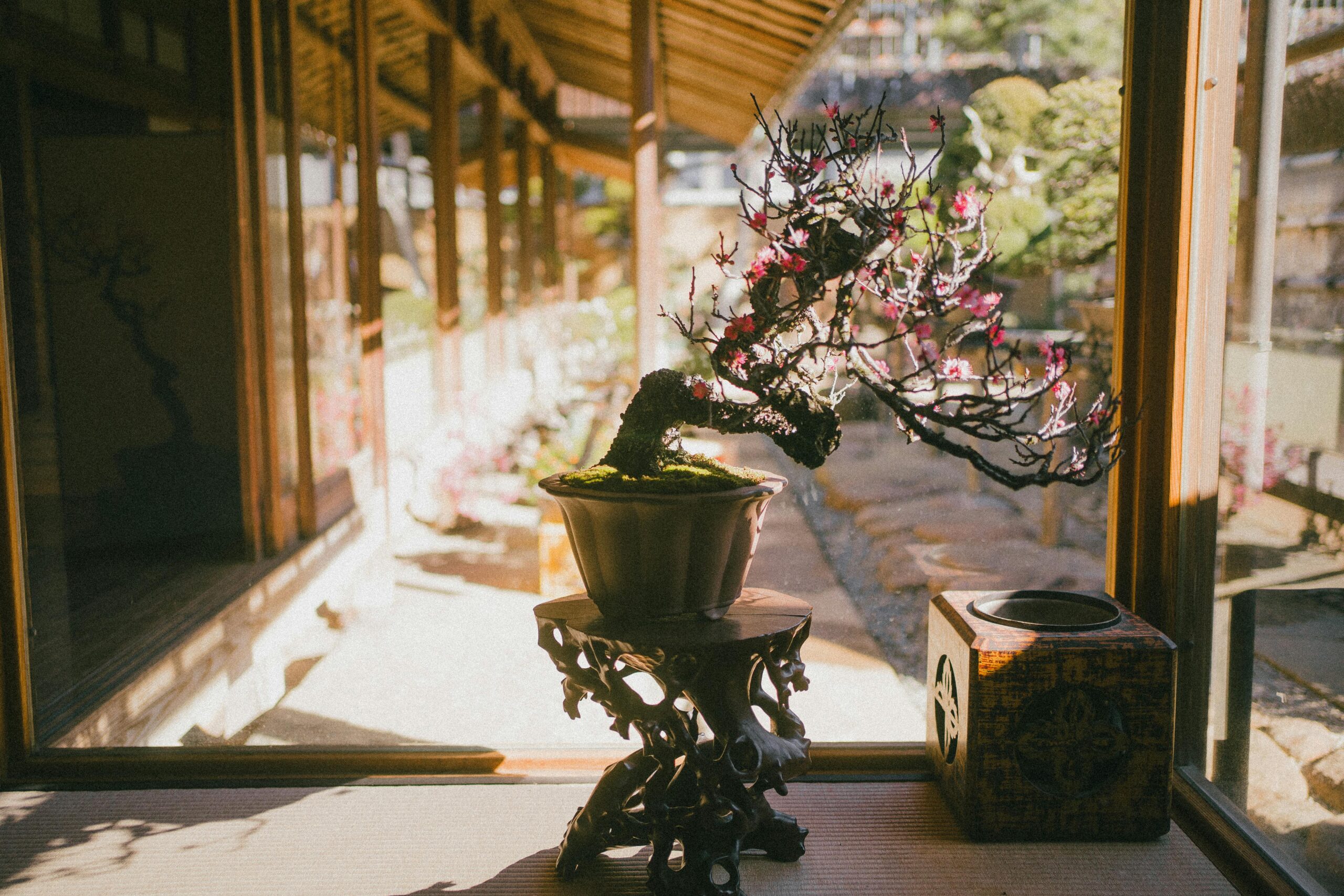
Photo by Jenny Mavimiro from Pexels.
The opinions expressed are those of the contributor, not necessarily of the RSAA.
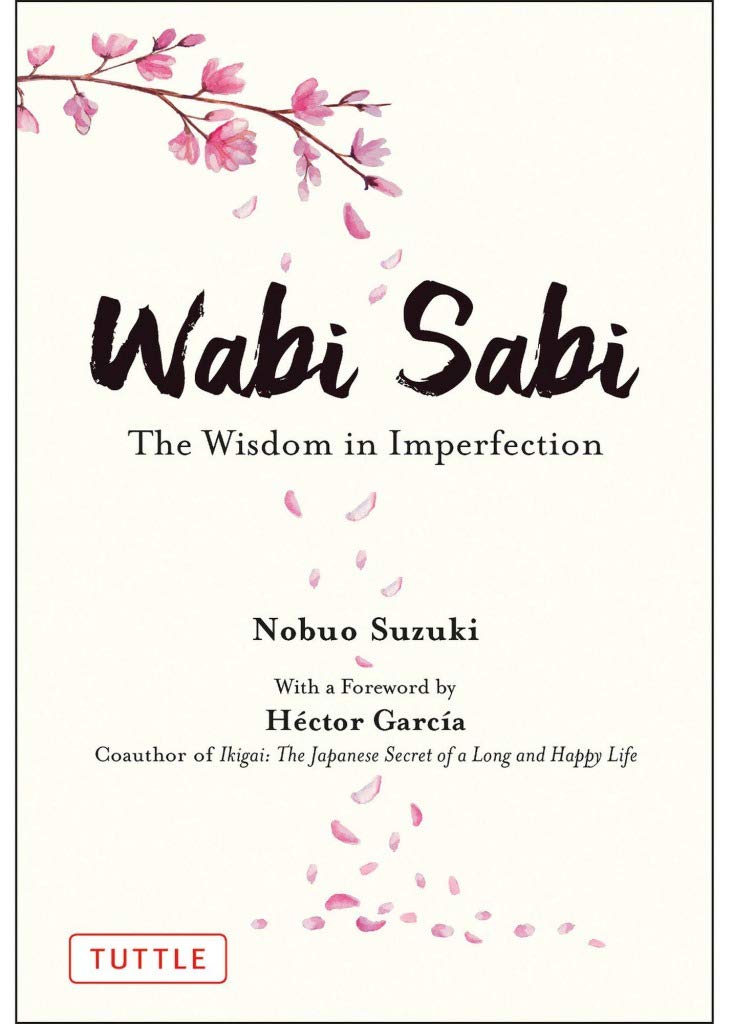
Wabi Sabi: The Wisdom in Imperfection
Wabi Sabi is the Japanese Zen philosophy that all things are imperfect, unfinished and impermanent. It is a fresh way of seeing and moving through the world when our lives, literally and figuratively, feel cluttered. This book shows how to apply this concept in the context of daily life and offers ideas on how to see it, embrace it and incorporate it into everyday thoughts, objects and situations.
In a simple and accessible style, Wabi Sabi: The Wisdom in Imperfection shows you how embracing imperfections and impermanence frees you to become a better person, by reevaluating what “better” means – what really matters and what you truly want.
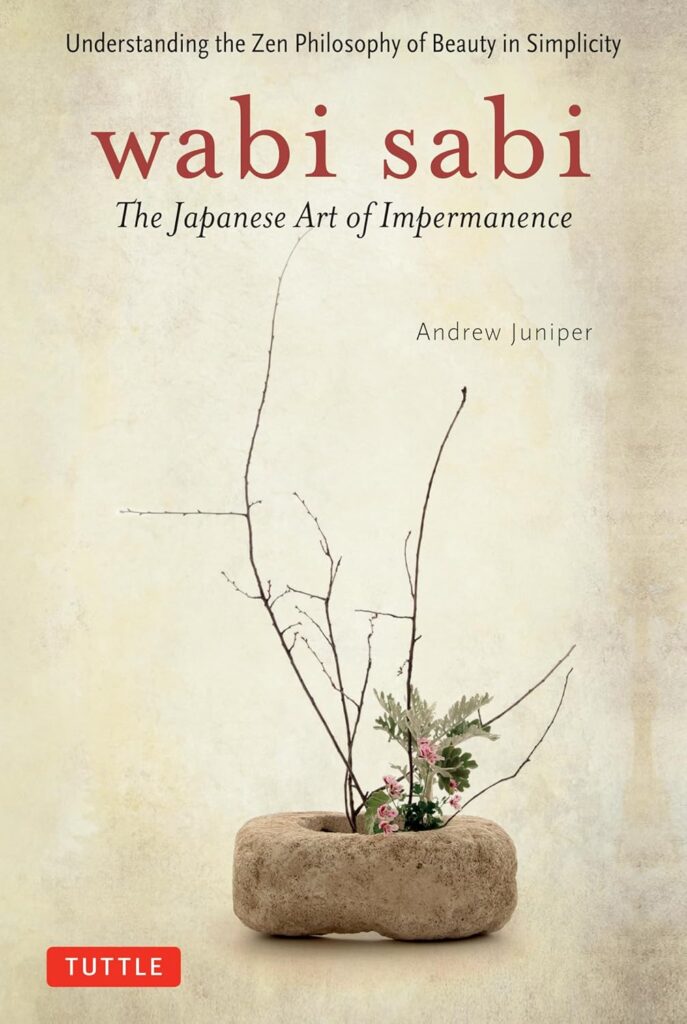
Wabi Sabi: The Japanese Art of Impermanence
Taken from the Japanese words wabi, which translates to less is more, and sabi, which means attentive melancholy, wabi sabi refers to an awareness of the transient nature of earthly things and a corresponding pleasure in the things that bear the mark of this impermanence.
As much a state of mind – an awareness of the things around us and an acceptance of our surroundings – as it is a design style, wabi sabi begs us to appreciate the pure beauty of life – a chipped vase, a quiet rainy day, the impermanence of all things. Presenting itself as an alternative to today’s fast-paced, mass-produced, neon-lighted world, wabi sabi reminds us to slow down and take comfort in the natural beauty around us.