
Indonesia’s Return to the Centre: The Quiet Hollowing of Regional Autonomy
Jonathan Manullang is a postgraduate student at the University of Edinburgh and a member of the Basic Income Earth Network
Recentralisation rarely arrives as a dramatic reversal. Instead, it presents itself under the guise of bureaucratic “correction” – a rational, technical endeavour to tidy up the loose ends of a messy decentralised experiment, restore policy coherence, and ensure that grand national priorities are not derailed by local inconsistency. In contemporary Indonesia, this logic is once again in the ascendant. What began nearly three decades ago as one of the world’s most ambitious experiments in devolved governance is being steadily and quietly drawn back toward the centre.
The central government increasingly operates under the assumption that the structural shortcomings of the state stem not from uneven local administrative capacity, but from an excess of local autonomy itself. Yet an examination of Indonesia’s deep institutional history reveals that this contemporary shift is far from novel. Rather, it represents the continuation of a path-dependent cycle that has plagued the archipelago since independence.
By analysing the foundational archives of political scientist Gerald S Maryanov – who documented the unravelling of Indonesia’s first decentralisation framework in the late 1950s – we can observe that the structural tensions between Jakarta and the regions are deeply embedded in the DNA of the state. The attempt to resolve political problems with technical, centralised fixes repeats a historical pattern that has previously pushed the state to the brink of collapse.
The Historical Parallel: Capacity as a Pretext for Centralisation
The tendency to blame local autonomy for systemic governance failures closely mirrors the political battles of the early post-independence era. In his 1958 work, Maryanov observed that the debate over regional autonomy was a primary ideological battleground, where the central elite’s desire for a unified, modernising state apparatus clashed directly with regional demands for democratic self-determination.
In the 1950s, as the young republic struggled to transition from a chaotic revolutionary structure to a stable legal framework, the central government routinely justified its reluctance to grant genuine local autonomy by pointing to regional deficiencies. Jakarta argued that the outer islands lacked the trained personnel, sophisticated administrative mechanisms, and financial resources required to govern themselves effectively. Local democracy was treated as an ultimate, distant ideal, but one that had to be deferred until the regions reached an arbitrary standard of administrative maturity defined by the centre.
This exact diagnostic framing has re-emerged today. In the years following the passage of Law No 22/1999 and Law No 25/1999, which bypassed the provinces to grant sweeping autonomy directly to district and municipal governments, Indonesia undoubtedly experienced fragmented policymaking. In many regions, local autonomy resulted in the relocation rather than the elimination of corruption, as local dynastic elites captured regional institutions. Personnel spending frequently absorbed more than half of local budgets, starving critical infrastructure and public services of necessary funding.
However, instead of viewing these pathologies as symptoms of uneven development or an incomplete democratic transition requiring targeted capacity-building, the central government has diagnosed local autonomy itself as the disease. Just as Jakarta did in the 1950s, it uses regional disparities – particularly between the hyper-developed island of Java and the lagging eastern provinces – as empirical justification for asserting that subnational governments cannot be trusted to manage their own affairs. This creates a powerful path-dependent loop: the centre underinvests in local capacity, points to the resulting underperformance as proof of regional incapacity, and then uses that underperformance to legitimise the clawback of authority.
The Resurrection of Medebewind
The mechanics of contemporary recentralisation are explicitly encoded in recent sweeping legislative overhauls, most notably the Omnibus Law on Job Creation. By altering thousands of legal provisions across dozens of sectors, the Omnibus Law systematically stripped subnational governments of authority over spatial planning, environmental impact assessments, and business licensing, shifting these powers back to Jakarta.
This legal restructuring effectively marks the resurrection of medebewind (co-government), a concept deeply analysed in Maryanov’s 1957 archive. In the legislative frameworks of the early Republic – such as Law No 22 of 1948 and Law No 1 of 1957 – the central government attempted to balance unitarism and regionalism by dividing governance into otonomi (genuine local self-governance) and medebewind. Under medebewind, the central government retained absolute authority over the formulation of policy and regulatory principles, while subnational units were relegated strictly to the execution of those central directives.
Today’s recentralisation has effectively hollowed out the otonomi pillar, turning subnational government into a vast, hyper-regulated apparatus of medebewind. When the central government dictates strict, uniform criteria for local licensing, imposes rigid spending mandates through the central budget, and retains the unilateral right to overrule local regulations, it fundamentally alters the character of the regional state. Subnational officials are no longer primarily accountable to their local electorates; instead, they effectively serve as unpaid field employees of the central government.
This administrative dualism was identified by Maryanov as a structural failure. The current legal trajectory strips local governments of their ability to adapt policies to diverse geographic and cultural realities, replacing local innovation with rigid, Jakarta-centric standardisation.
Fiscal Asymmetry and the Illusion of Autonomy
The political hollowing of autonomy is reinforced by structural financial dependency. While the post-1998 Reformasi era decentralised expenditure, the central government carefully guarded its control over the primary levers of revenue generation, particularly corporate taxes and natural resource rents. Consequently, the vast majority of Indonesia’s hundreds of subnational governments operate with virtually no genuine fiscal autonomy, remaining overwhelmingly reliant on central fiscal transfers such as the General Allocation Fund (Dana Alokasi Umum – DAU) and the Revenue-Sharing Fund (Dana Bagi Hasil – DBH).
Law No 1 of 2022 on Financial Relations between the Central Government and Regional Governments accelerates recentralisation by placing tighter constraints on how subnational governments allocate these transfers. Central transfers are increasingly earmarked for specific national target programmes, leaving local parliaments with minimal discretionary funding to address local priorities.
The consequences of this fiscal architecture are already visible in the Riau Islands (Kepulauan Riau, KEPRI), which offers one of the clearest contemporary illustrations of uneven recentralisation. Following Presidential Instruction No 1/2025, which mandated nationwide spending cuts amounting to Rp306.69 trillion, KEPRI’s transfer allocation from the centre was reduced by approximately Rp534 billion. Officially justified as a fiscal efficiency measure, the policy effectively redirected resources toward centrally determined priorities while reducing the province’s ability to finance its own development agenda.
More importantly, the cuts exposed how recentralisation does not affect all regions equally. Batam – protected by its free trade zone status and the institutional influence of BP Batam – has become increasingly self-financing, with locally generated revenue accounting for roughly 60 per cent of expenditure by 2026. By contrast, the provincial capital Tanjung Pinang remains heavily dependent on central transfers, which historically financed more than 60 per cent of its budget. As Jakarta tightened fiscal transfers, Batam remained relatively insulated while Tanjung Pinang and the outer islands absorbed the shock. Rather than reducing regional inequality, fiscal recentralisation has widened a growing core-periphery divide within the province itself.
This financial stranglehold mirrors the core regional grievances analysed by Maryanov. He concluded that there was broad recognition across early Indonesia that political autonomy is meaningless without financial independence. In the late 1950s, the outer islands generated the bulk of Indonesia’s export revenue through agricultural commodities and oil, yet the central government siphoned these revenues to Jakarta, redistributing only a fraction back to the producing regions. This fiscal asymmetry constituted an existential political crisis that delegitimised the centre in the eyes of the regions.
When subnational governments are denied the fiscal tools to innovate or independently finance local development, they inevitably underperform. The KEPRI case reveals another structural weakness in Jakarta’s approach: geographic blindness. The DAU formula remains heavily weighted toward land area and population density. For an archipelagic province whose territory is approximately 96 per cent maritime space, this formula systematically undervalues the real costs of governance. Maintaining inter-island transport links, marine infrastructure, fisheries oversight, and public services across dispersed island communities requires expenditures that conventional fiscal formulas fail to recognise. The result is a form of administrative centralism in which uniform national standards obscure radically different local realities.
The Brittleness of the State
The current trajectory toward centralisation is driven by an elite consensus that values top-down efficiency, fast-tracked infrastructure development, and the smooth execution of national strategic projects such as downstream industrialisation (hilirisasi) and natural resource exploitation. However, Maryanov’s analysis serves as a stark historical warning about the fragility of this approach.
When the state apparatus under President Sukarno increasingly prioritised central coordination and technical command over regional political inclusion, subnational elites and local populations grew alienated. Maryanov noted that the creation of new administrative boundaries and concessions was almost always a reactive, panicked response by Jakarta to “urgent political pressures” and regional unrest rather than the product of rational planning. When peaceful political and fiscal channels were choked off by central hubris, regional grievances boiled over into open defiance, culminating in the PRRI-Permesta rebellions (1957–1961), which nearly fractured the country.
While contemporary Indonesia is not on the brink of civil war, the structural friction points remain remarkably similar. Tensions are already rising in resource-rich regions such as Central Sulawesi, North Maluku, and Papua, where central mandates for nickel mining and downstream refining bypass local environmental concerns and channel profits back to central elites and international investors, leaving local communities to bear the socio-ecological costs. When local governments are stripped of the legal power to regulate these industries or protect their constituents, the institutional safety valves of the state are effectively dismantled.
Recent developments in KEPRI demonstrate how these pressures extend beyond resource extraction. Provincial budget reductions have already delayed infrastructure projects, including the proposed Batam-Bintan Bridge, despite completed technical planning. Early 2026 fiscal data also showed provincial governments prioritising personnel expenditure while social assistance, grants, and subsidy disbursements effectively stalled. In many of KEPRI’s outer islands, where public-sector salaries and local assistance programmes function as the primary anchors of economic activity, these reductions directly undermine community resilience. Local governments increasingly compensate through borrowing from state-backed lenders, transforming what was once a transfer-based decentralisation model into one characterised by growing debt dependence.
The state thus creates what Maryanov identified as a fundamentally unstable political equilibrium. It loses its capacity for local feedback, extinguishes subnational policy experimentation, and fosters deep-seated resentment that can lie dormant for years before erupting during moments of national economic or political crisis.
The KEPRI case illustrates that the principal danger of recentralisation is the uneven distribution of its consequences. Regions possessing strategic economic assets, special administrative status, or strong local revenue bases may continue to prosper. Regions dependent on transfers, particularly archipelagic and peripheral provinces, face a different reality: shrinking fiscal space, stalled infrastructure, weakened social programmes, and increasing dependence on centrally approved priorities. Recentralisation therefore risks creating a two-tier regional system in which formal administrative equality masks widening territorial disparities.
Centralisation and decentralisation constitute a continuous, high-stakes political struggle over the distribution of power and resources. The flaws of Indonesia’s decentralised era – corruption, inefficiency, and fragmented regulation – are real and demand rigorous reform. Fiscal systems require greater transparency, local oversight mechanisms must be strengthened, and administrative capacity demands sustained investment.
However, a sustainable solution requires a balanced approach that focuses on what subnational governments achieve rather than prescribing how they must operate. It requires systematic investment in local bureaucratic capacity and the alignment of fiscal incentives with performance rather than blind procedural compliance.
If Indonesia continues down its current path-dependent trajectory of incremental recentralisation, it may achieve short-term gains in bureaucratic alignment and corporate licensing speed. The long-term cost, however, will be a brittle governance architecture.
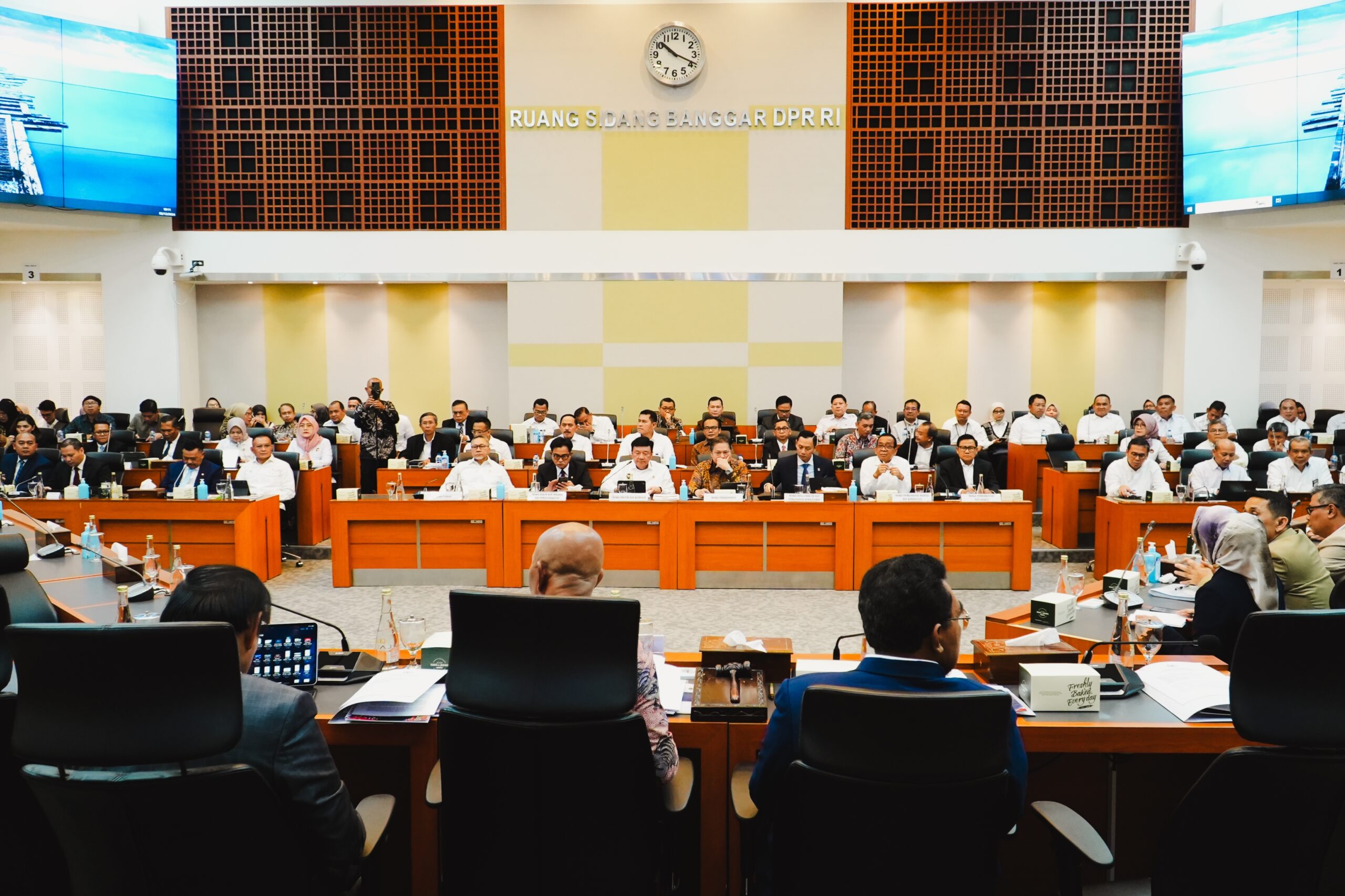
*Headline image – parliamentary session at the House of Representatives, Jakarta, Indonesia.
The opinions expressed are those of the contributor, not necessarily of the RSAA.