How Uzbekistan is Driving Eco-Diplomacy
Sophie Ibbotson is Uzbekistan’s Ambassador for Ecology and the former Chairman of the RSAA
After the Battle of Ankara in 1402, England’s King Henry IV and Amir Timur – better known in the West as Tamerlane – exchanged letters. Two years later, HE Ruy González de Clavijo was sent by King Henry III of Castile to the Timurid court in Samarkand, and his published diary is one of the most detailed accounts we have of the imperial capital and diplomatic life within the city walls. The political and cultural influence of what is today the Republic of Uzbekistan might have waxed and waned in the intervening centuries, but the past decade has seen a remarkable restoration of power and its projection well beyond the country’s borders. In 2025, UNESCO hosted its General Assembly in Samarkand, the first time since 1985 that the venue was somewhere other than Paris. The Shanghai Cooperation Organisation Summit (2022), the UN Tourism General Assembly (2023), the European Bank of Reconstruction and Development Annual Meeting (2023), and the Asian Development Bank Annual Meeting (2026) all took place in Samarkand, too, demonstrating Uzbekistan’s ambition to return to the top tier of international politics, culture, and business.
But what is arguably most interesting – and important – is the country’s growing leadership in environmental diplomacy. In the early years of independence in the 1990s, all that most foreigners knew about Uzbekistan (if they knew anything at all) was the devastation wreaked by Soviet-era cotton farming and the consequent shrinking of the Aral Sea. That disaster catalysed a generation of environmental advocacy within Uzbekistan, plus decades-long multilateral efforts such as those of the International Fund for Saving the Aral Sea.
As Uzbekistan’s economy and population – both among the fastest-growing in the world – have grown, environmental protection and climate change mitigation have become ever more pressing priorities. Air pollution and waste management are major concerns in urban areas; water is increasingly scarce; and summertime temperatures are rising, sometimes exceeding a scorching 50 Celsius. Soil degradation, dust storms, and the salinisation and contamination of agricultural lands are problematic, too.
Appreciating that such issues represent an existential threat to people and the state, the Government of Uzbekistan has grabbed the bull by the horns and elevated the former Ministry of Ecology, Environmental Protection, and Climate Change to become the National Committee on Ecology and Climate Change, reporting directly to HE President Shavkat Mirziyoyev. This gives it unprecedented power and reach across every industry and every part of the country. And it’s needed. An estimated 50% of the country’s land area is degraded; water resources declined by 20% in the past three years; and biodiversity losses have outpaced the conservation response.
The challenges that Uzbekistan faces do not stop at its borders; and there is now an acute recognition within the government that both the solutions and the financing for them must be multilateral. According to the World Bank, Uzbekistan requires $60 billion to mitigate adverse climate impacts on labour productivity, roads and bridges, livestock, and irrigation sectors; and a further $340 billion by 2060 to replace aging energy infrastructure and fund decarbonisation measures. For comparison, the IMF estimates that Uzbekistan’s GDP this year will be $181.5 billion.
Uzbekistan understands that the best way to have a seat at the table is to host the party. It started gently with events such as the Conference of the Parties to the Convention on the Conservation of Migratory Species of Wild Animals (CMS COP 14) and a UNESCO-supported conference on glacier monitoring. But now the size and impact of the events are scaling up.
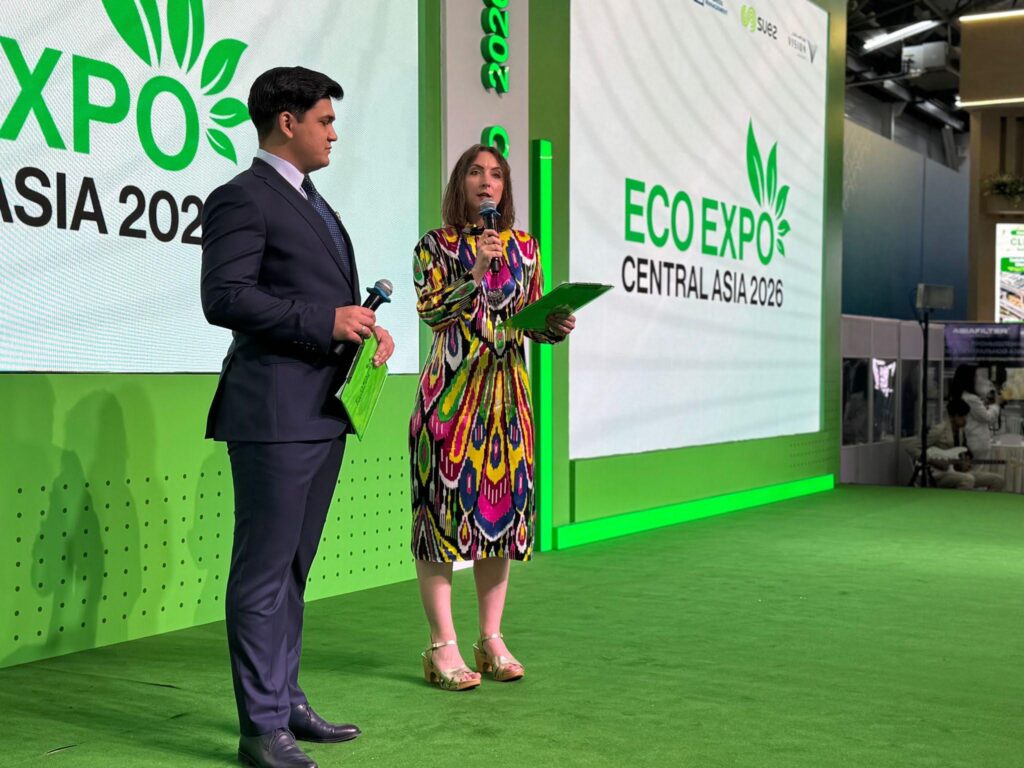
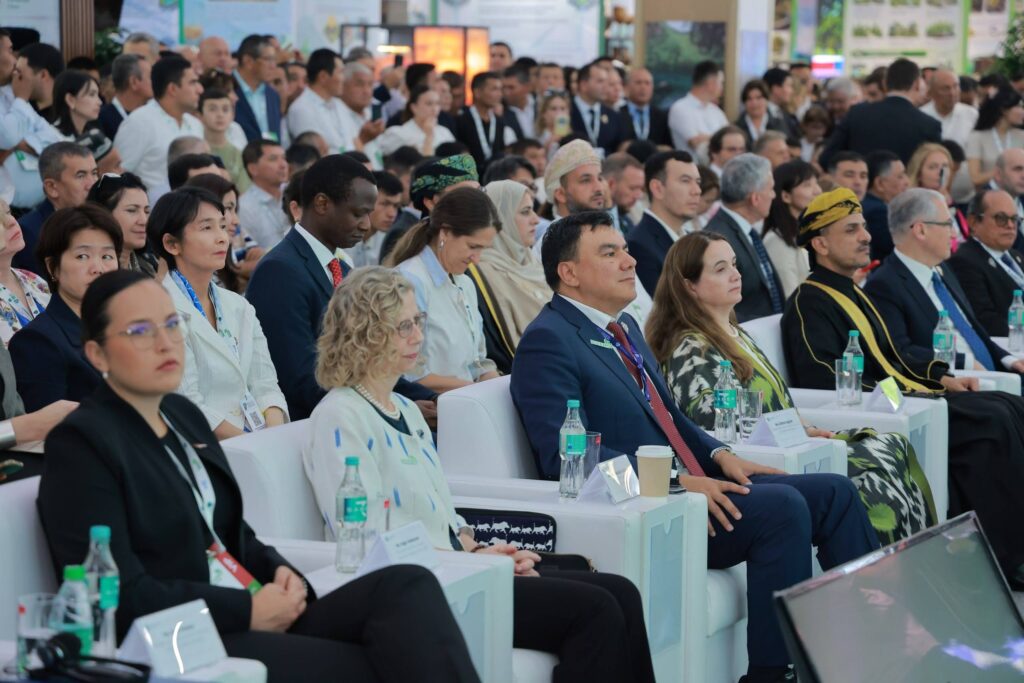
In June 2026, I was in Samarkand to participate in two international events. 2,000 delegates from 186 member countries attended the Eighth Global Environment Facility (GEF) Assembly; and alongside that, there was Eco Expo Central Asia 2026, the region’s largest exhibition for environmentalists, entrepreneurs, and activists. The sums on the table were substantial: the GEF Trust Fund – which Uzbekistan has now joined as a donor, in addition to being a beneficiary – approved $3.9 billion in project financing to support climate adaptation, biodiversity protection, and water security over the next four years. This includes $5.8 million for ecosystem restoration in the Chu and Talas river basins of Kazakhstan and Kyrgyzstan; and $12.8 million (with a further $152 million of co-financing) for the Uzbekistan Risk Mitigation Facility, which supports renewable energy projects.
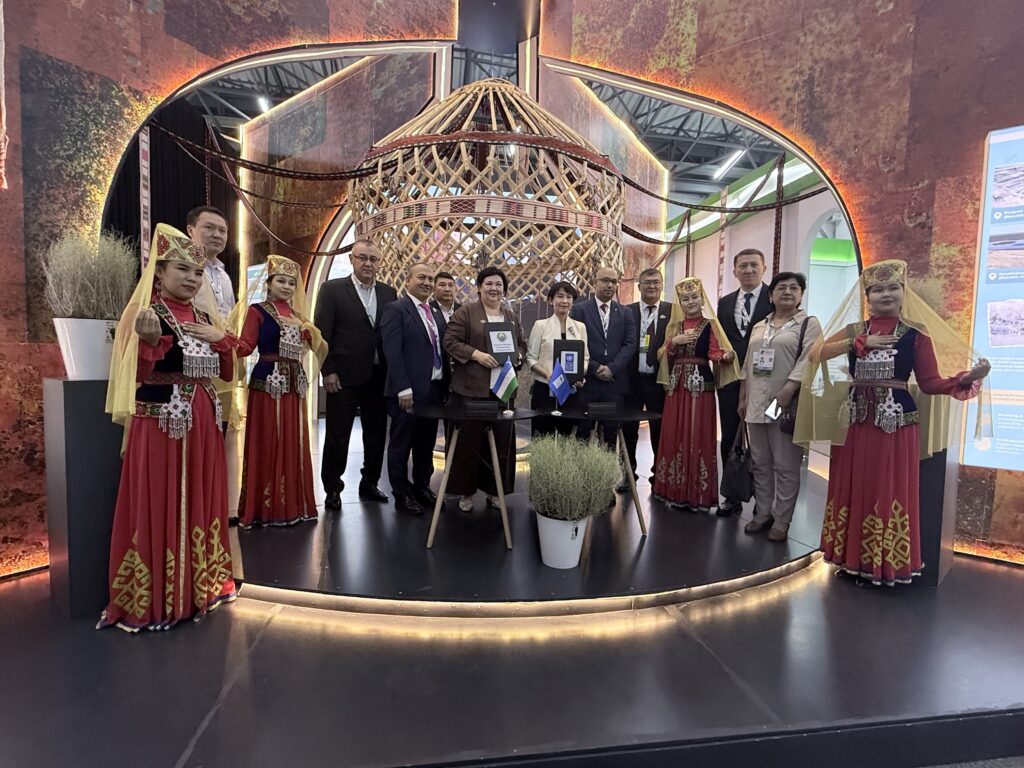
Meanwhile at the Eco Expo, the Committee on Ecology adopted national standards to bring Uzbekistan in line with the Cartagena Protocol on Biosafety, backed by the the International Union for Conservation of Nature. There was also a new integrated water management plan for the Lower Amu Darya Basin (better known to RSAA members as the River Oxus), one of Central Asia’s largest agricultural zones and an area of internationally important wetlands and wildlife habitats. The United Nations Development Programme signed a cooperation agreement directly with the Ecology Committee of the Republic of Karakalpakstan (an autonomous republic within Uzbekistan) to support ecosystem restoration, biodiversity conservation, and sustainable water management. Ministers from Kazakhstan, Tajikistan, and Uzbekistan participated in the Regional Environmental Performance Review for Central Asia. And Japan and Uzbekistan held a joint ‘Blue & Green Nexus’ session, reaffirming and advancing their ongoing ecological and scientific cooperation in the Aral Sea region.
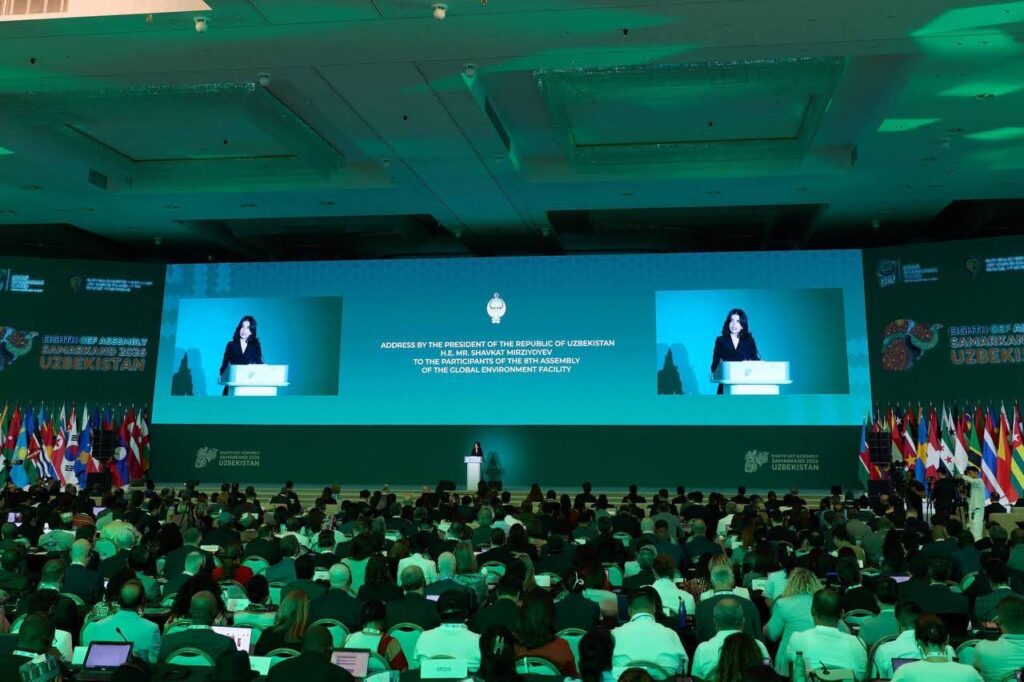
Alongside the formal sessions, Uzbekistan deployed soft diplomacy, something the country has become increasingly adept at in recent years. Traditional dancers and musicians took to the stage in opening ceremonies and in an outdoor reception at the Eternal City, a pastiche of a Silk Road city built in 2022. Delegates took field trips to the UNESCO sites of Samarkand and Shakhrisabz, the capital and birthplace of Amir Timur; and also to the Zarafshan National Nature Park to see conservation in action. Often, it is on these semi-social occasions that some of the hardest work is done. Relationships and alliances are forged. Understanding and trust grow. And participants become more determined to collaborate, share expertise, and commit to addressing complex, multi-partner challenges.
Nature knows no borders.
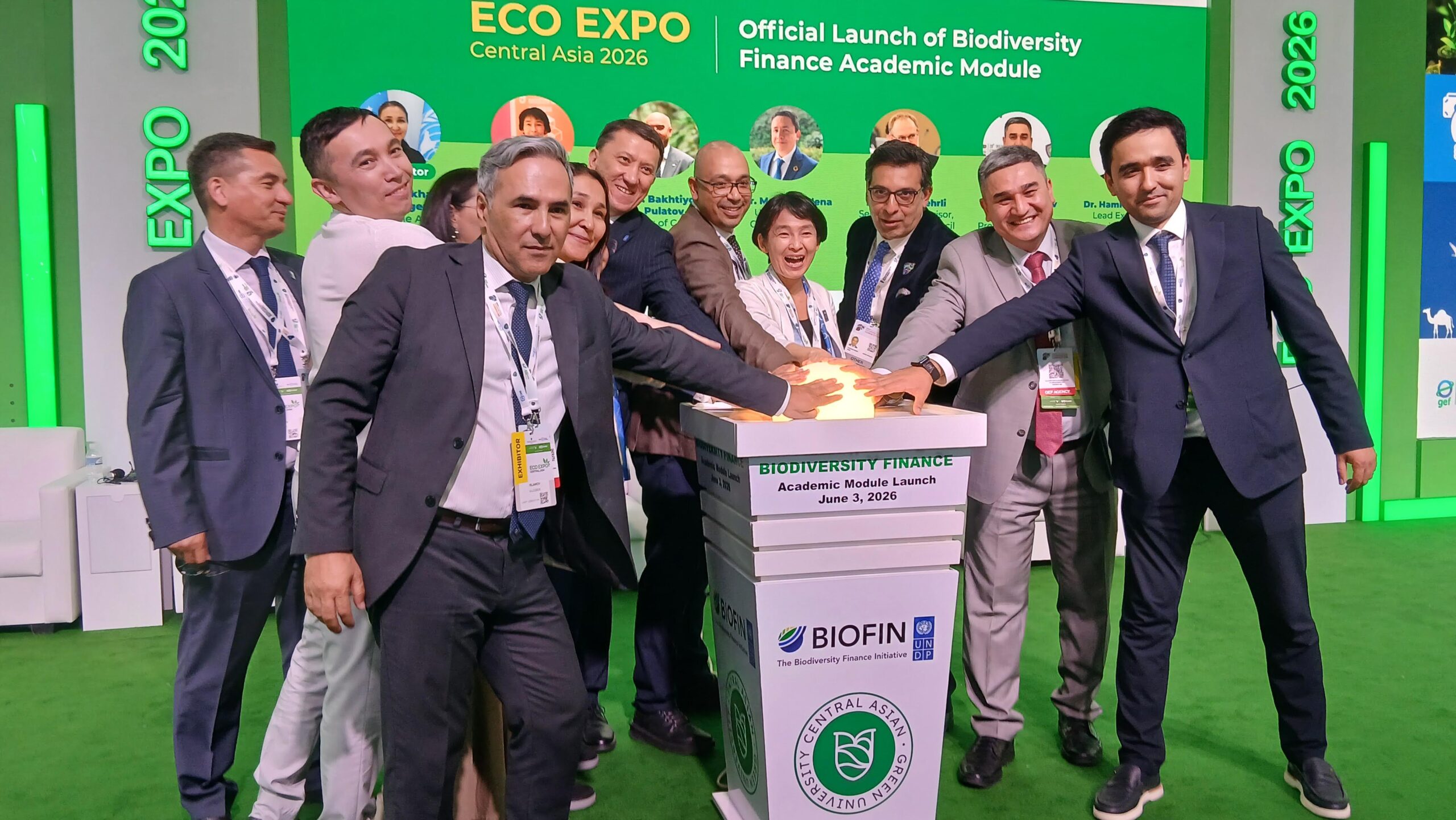
*title image – Launch of the biodiversity finance course at Eco Expo (c. Maximum Exposure)
The opinions expressed are those of the contributor, not necessarily of the RSAA.