South Asian Democracy: Between Backsliding and Revival
Sumit Sharma Sameer is an author and host of the Ink and Insights podcast and Dr Pankaj Adhikari is a political scientist and policy advisor
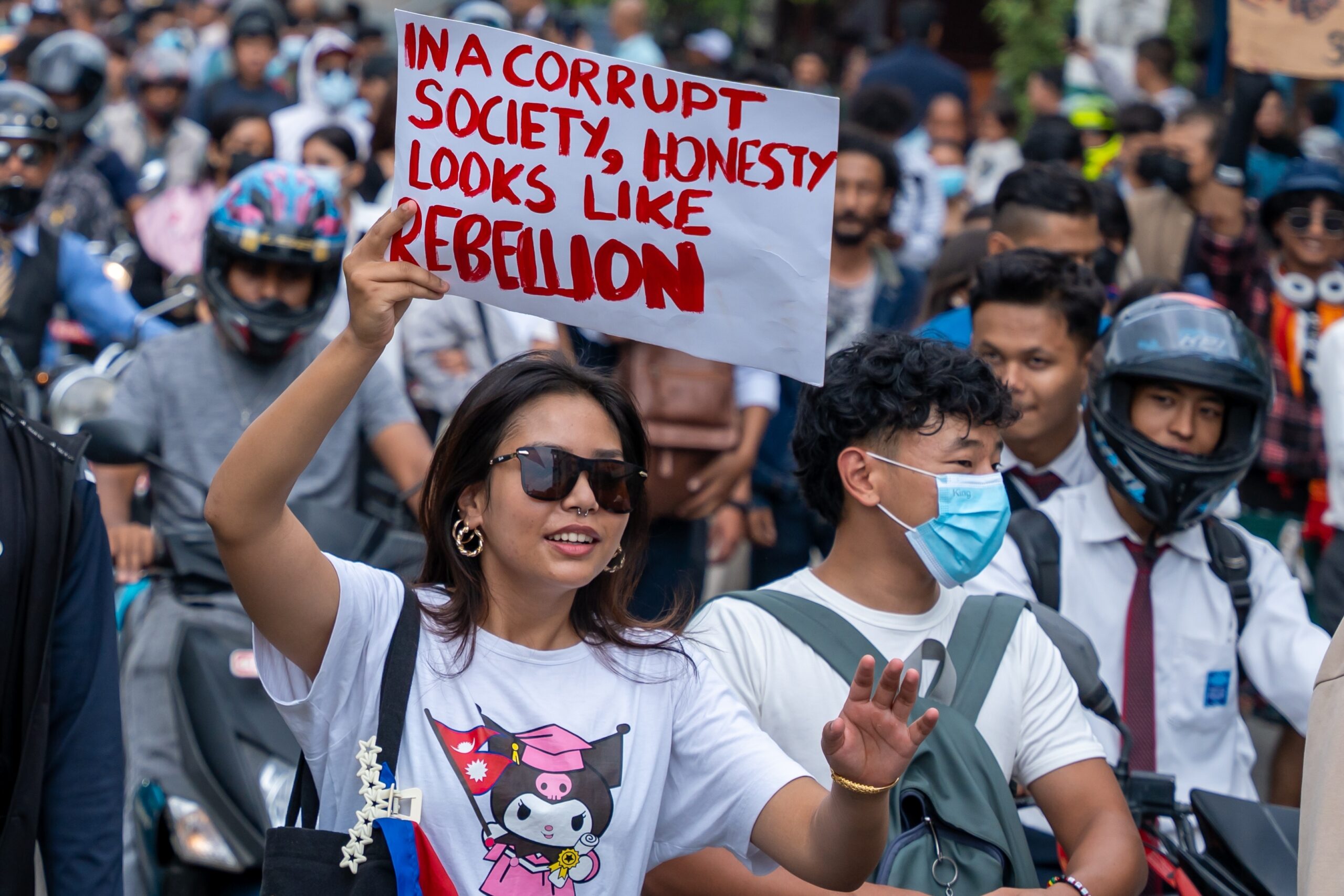
On 8 September 2025, Kathmandu did not look like a city resigned to political drift. Thousands of young people filled the streets, many carrying handwritten placards, others live-streaming the moment to audiences far beyond Nepal’s borders. The slogans were familiar – against corruption, against impunity, against a political class seen as out of touch – but the mood was different. This was not just anger. It was insistence. A generation that had grown up amid instability was no longer willing to accept that instability as normal.
Scenes like this capture something essential about democracy in South Asia today. The dominant narrative is one of decline: democratic backsliding, institutional erosion, creeping authoritarianism. There is truth in that, but it is only half the story. The other half is less often told. Across the region, moments of erosion are repeatedly met with resistance, disruption and, at times, renewal. Democracies here do not simply decay or consolidate; they oscillate.
South Asian democracies are defined less by linear decline or steady progress than by cycles of weakening and recovery. These oscillations are not an aberration. They are a feature of how democracy functions in politically contested, socially complex and geopolitically exposed environments. The question is not whether backsliding occurs – it clearly does – but what follows, and whether each cycle leaves democracy weaker or stronger than before.
Start with the mechanics of erosion. In much of South Asia today, democracy is not undone through dramatic rupture. Elections are still held. Voters continue to turn out in large numbers. The outward form remains intact. What changes are the conditions that make those elections meaningful: pressure on the media, constraints on civil society, the selective use of legal and administrative tools against opponents, and the steady accumulation of power within the executive.
India offers a clear example of this incremental shift. Its elections remain highly competitive, and opposition parties continue to win power at the state level. Yet over the past decade, concerns have grown about the use of state institutions against political adversaries, the tightening of regulations on non-governmental organisations, and the shrinking space for dissent. None of this amounts to democratic breakdown. It is closer to what scholars call constitutional retrogression: a gradual rebalancing of the system in favour of the executive, achieved through legal and institutional means rather than outright coercion.
Bangladesh presents a more compressed and visible version of the same trend. The removal of the caretaker government system eliminated a key safeguard for electoral neutrality. Subsequent elections have been marked by boycotts, allegations of intimidation and questions about credibility. Opposition leaders have faced sustained legal pressure. The result is a political environment in which elections continue but competition is constrained – a form of strategic electoral manipulation that preserves the appearance of democracy while narrowing its substance.
Pakistan’s story is different again, but it points to the same underlying dynamic. The country has long been shaped by military intervention, yet the current pattern is less about overt coups and more about managed democracy. Civilian governments operate, but within limits set by powerful unelected actors. The removal of Imran Khan in 2022, and the protests that followed, exposed these tensions. Streets filled, arrests mounted and the political system strained under pressure. Yet even in this constrained environment, politics remained contested. Authority was challenged. Public mobilisation mattered.
Sri Lanka shows how quickly such dynamics can turn. For years, power was concentrated in the presidency, with constitutional changes strengthening executive authority and weakening institutional checks – executive aggrandisement in its clearest form. Then the economy collapsed. Fuel queues stretched for kilometres. Hospitals ran short of supplies. What followed was not quiet discontent but mass mobilisation. Protesters occupied public spaces, demanding accountability and change. The eventual resignation of President Gotabaya Rajapaksa was not the product of institutional correction; it was forced from below. A system that had seemed tightly controlled unravelled in a matter of weeks.
Nepal’s trajectory is less dramatic at any single moment, but more revealing over time. Since 1990, the country has cycled through governments with remarkable frequency. Coalition after coalition has risen and fallen. Political parties have secured large mandates, only to disappoint. Corruption has been persistent, institutions politicised, and governance often reduced to negotiation among elites. For many citizens, democracy has felt procedural rather than substantive. Elections happen; change does not.
That is what made the protests in Kathmandu in September 2025 feel different. The crowds were young. Many had no memory of the monarchy, only of the frustrations of the democratic era that followed. Their anger was not directed at a single leader or party. It was aimed at a system that, in their view, had normalised failure. When new political actors began to emerge – most notably the Rastriya Swatantra Party – they tapped into this sentiment. Their appeal was not ideological. It was generational and moral: enough of the same, enough of politics as usual.
Nepal has seen new parties rise before, and not all have delivered. What distinguishes the current moment is the depth of public disillusionment and the scale of engagement. Social media has amplified voices that were previously marginal. Young voters have become more organised and more assertive. The political class, long insulated from public pressure, is finding it harder to ignore.
None of this guarantees success. Nepal’s structural challenges remain formidable. Its geography places it between two major powers, India and China, whose influence shape its economic and political choices. Its social fabric is extraordinarily diverse, with more than a hundred ethnic groups and languages. Governance in such a context is inherently complex. But complexity cuts both ways: it makes consolidation difficult, but also ensures that politics remains open, contested and hard to monopolise.
Across these cases, a pattern emerges. Democratic backsliding rarely goes uncontested. Efforts to centralise power provoke responses. Courts intervene – sometimes decisively, sometimes hesitantly. Civil society adapts, even under pressure. Citizens protest. New political actors emerge. Each episode of erosion generates its own countercurrent.
This is what distinguishes oscillation from simple decline. In a linear story of backsliding, each step moves in the same direction. In South Asia, movement is uneven. Gains are followed by losses, and losses by attempts at recovery. Sri Lanka swings from concentration of power to mass mobilisation. Pakistan oscillates between control and contestation. Bangladesh narrows political space, but opposition and civil society continue to push back. India’s institutional balance shifts, yet electoral competition and civic activism remain alive. Nepal cycles through instability, yet continues to regenerate.
There are costs to this pattern. Repeated cycles of erosion and recovery can exhaust institutions and erode public trust. Citizens may become cynical, viewing politics as a game that changes little regardless of outcomes. Institutional capacity can weaken if reforms are repeatedly reversed or undermined. Oscillation is not inherently benign.
But nor is it inherently damaging. Under certain conditions, it can act as a corrective mechanism. Periods of backsliding expose weaknesses in the system. They reveal how power can be concentrated, how institutions can be bent, how rights can be constrained. In doing so, they generate pressure for change. Protest movements become more organised. Voters become more willing to punish incumbents. New actors find openings.
The key question is whether these cycles produce net gains. Does each round of contestation leave behind stronger expectations of accountability? Does it expand participation, even marginally? Does it reinforce the idea that power can – and should – be challenged?
There are signs that it does. In Sri Lanka, the protest movement reshaped public expectations about accountability, even if the long-term institutional impact remains uncertain. In Pakistan, repeated political crises have not eliminated electoral politics, but have entrenched it as a central arena of contestation. In India, despite concerns about institutional erosion, elections remain meaningful and governments continue to lose power. In Nepal, the entry of new political actors reflects a shift in what voters are willing to tolerate.
These are not dramatic transformations. They are incremental, uneven and often fragile. But over time, they can accumulate. Democracy in South Asia is unlikely to follow a smooth path to consolidation; it is more likely to advance through disruption, through cycles that test and reshape the system.
This has implications for how democratic health is assessed. Snapshots can be misleading. A single election, legal change or protest movement does not capture the full trajectory. What matters is the direction of travel across cycles. Are freedoms expanding or contracting over time? Is participation broadening or narrowing? Are institutions becoming more resilient or more vulnerable?
The answers are mixed – which is precisely the point. South Asia does not fit neatly into categories of success or failure. It sits in between, moving back and forth. That movement can be frustrating, but it also reflects systems that remain contested, open and capable of change.
Oscillation, in this sense, may be less a flaw than a condition. In societies marked by deep diversity, economic inequality and external pressures, stability is difficult to sustain. Political equilibrium is constantly disrupted. The challenge is not to eliminate that disruption, but to channel it.
That means strengthening institutions that can absorb shocks without collapsing. It means protecting spaces for dissent and organisation, even when they are inconvenient for those in power. It means recognising that public mobilisation, while disruptive, is often a sign of democratic vitality rather than decay.
It also means paying attention to speed. If backsliding is slow and recovery slower, the net effect will be negative. If recovery is swift and effective, it can offset periods of erosion. The tempo of oscillation matters as much as its direction.
The scenes in Kathmandu in September 2025 were not an endpoint. They were part of a longer cycle. Whether they mark the beginning of sustained renewal or merely another moment of temporary disruption remains to be seen. The same is true across the region. South Asia’s democracies are under pressure, but they are not passive. They are arenas of constant negotiation, where power is contested and re-contested.
In the end, the future of democracy in South Asia will not be decided by a single election or a single crisis. It will be shaped by the accumulation of these cycles. If they produce stronger institutions, deeper participation and greater accountability, then oscillation will have served a purpose – pushing democracy forward, even if unevenly.
That is a less comforting story than one of steady progress. It is also a more accurate one.
The opinions expressed are those of the contributors, not necessarily of the RSAA.