Shanghai: Turbulent Past and Herald of China’s Future?
Professor Michael Dillon is a historian and biographer specialising in the history, politics and society of China
Shanghai has had an extraordinary history. The squalor and sleaze of the early twentieth century have more or less disappeared although pockets of sub-standard housing in the midst of ultra-modern high-rise buildings reflect newer manifestations of inequality.
Treaty Port
As a Treaty Port in the nineteenth and early twentieth centuries, Shanghai was the focus for the rivalries of Western colonial powers, and the upstart Japanese, who were forced into compromises to confront China’s domestic social and political turmoil as the torrent of nationalism grew unabated.
In the 1920s Shanghai was the bastion of Chinese capitalism with a wealthy commercial and industrial middle class, but it was also the birthplace of the Chinese Communist Party (CCP) and the powerful labour movement that nurtured it. It was also home to a highly organised criminal underworld and a louche high society lifestyle that arrogantly transgressed conventional morality and cut across social, national and racial boundaries
Communists and Nationalists
Shanghai became the main battleground in the conflict between the Communists and the Nationalists. Chiang Kai-shek’s Nationalist Guomindang did not hesitate to harness the muscle of their gangland allies to attack the Communists who were almost annihilated by nationalists in 1927 and retreated to rural backwaters, only to emerge in 1949 to become the rulers of the entire nation.
Within the CCP there were conflicting opinions on how to deal with this strange city that had come under their control. Some even suggested demolishing the entire city and starting from scratch but wider counsels prevailed.
Differences emerged between local Communists, and the Central Committee in Beijing which was based chiefly on the group around Mao Zedong that had survived the Long March. These differences came to a head in political campaigns, particularly those that targeted ‘counterrevolutionaries’.
Jiang Qing and the Cultural Revolution
Shanghai was the city that had nurtured the artistic and political career of Mao’s wife, Jiang Qing. In the 1930s Shanghai had provided her with her first starring roles in theatre and the infant cinema industry. After 1949 it became her political power base where, with the rest of the Gang of Four, she cultivated a fanatical coterie that played a key role in the Cultural Revolution. Shanghai in 1967 saw the greatest upsurge of industrial protests in post-1949 China: stoppages in the docks and on the railways merged into a general strike, paralysing the economy and dividing the city between supporters and opponents of Mao.
After Mao
Following the death of Mao Zedong in September 1976 and the trial of the Gang of Four, which concluded in January 1981, Shanghai began to recover some of its pre-1949 character. Under new local CCP leaders, particularly Jiang Zemin and Zhu Rongji, the city reinvented itself as the commercial and financial powerhouse of Deng Xiaoping’s economic revival. Thousands of migrants from all regions of China flocked to take advantage of Shanghai’s development: some native Shanghainese worried that their local culture and even their distinctive regional Wu language could disappear.
Premier Li Qiang
Former Party Secretary, Li Qiang, became premier in Xi Jinping’s administration that emerged from the 20th Communist Party Congress in October 2022. This also enhanced the status of Shanghai nationally. As Premier, Li Qiang is officially responsible for economic matters, but as deputy to a tough minded and supremely confident General Secretary such as Xi Jinping, it was thought that his influence would be limited. Whether this has been the case is difficult to assess but when there has been a relaxation of the tensions between the CCP and big business, Li deserves much of the credit.
Speaking at the World Economic forum in Tianjin (popularly referred to as the ‘summer Davos’) in June 2023, Li Qiang embarked on a robust criticism of Western policies of ‘derisking’ and reducing economic engagement with China. As an alternative, he insisted that ‘international economic cooperation’ was necessary and the ‘politicisation of economic issues’ had no place in developing trade relations. Speaking later at a roundtable that included international business leaders, his tone was more measured, and he insisted that there would be continuing support for the development of foreign companies in China and there would be ‘no abuse of security reviews’. This was widely assumed to refer to the previous harassment and pressure suffered by some top CEOs and entrepreneurs. Notwithstanding Li’s conciliatory tone, Beijing remained intent on controlling the narrative of China’s economic growth and demonstrated this by blocking online bloggers who offered independent online commentaries on the Chinese economy, accusing them of ‘spreading harmful information’. As if to drive the point home, in late July 2023 the feared Central Commission for Discipline (CCDI) descended on Shanghai hospitals. Nationwide at least 176 hospital managers had been detained and placed under investigation for bribery, embezzlement and fraud.
In spite of his experience with the rapidly developing economies of the east and southeast, Xi Jinping began to turn on some of the most powerful companies in China. Li Qiang, his premier and former Party Secretary of Shanghai, appears to have moderated these confrontations, which had the potential to threaten Shanghai’s economic future. There was no simple reversal of the extreme measures taken against business, but, with a Shanghai man in charge of the economy, businesses could have some confidence that the economy was beginning to return to some kind of normality.
Shanghai Today
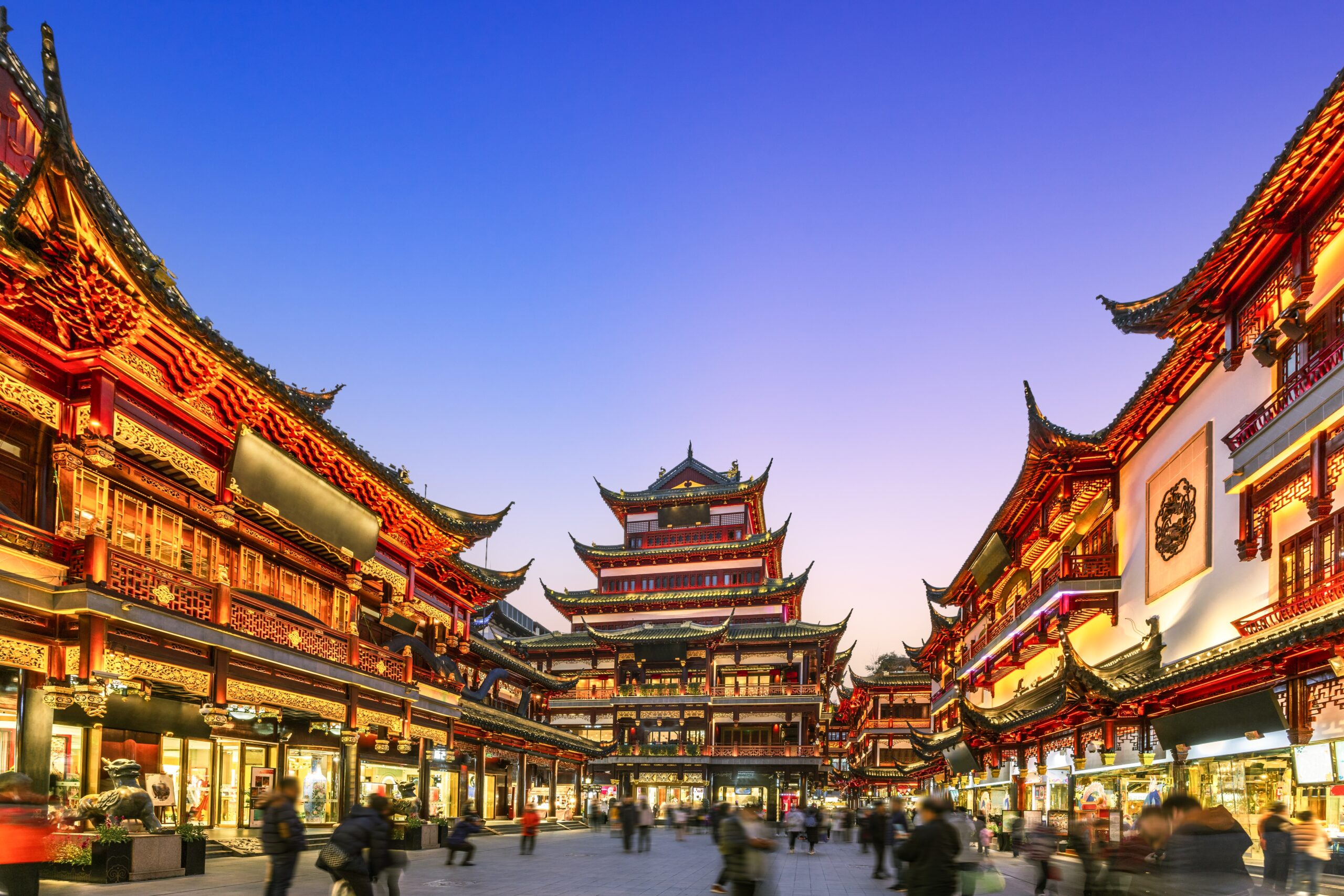
It is hardly surprising that Shanghai today is not the Shanghai of the late nineteenth century, of the turbulent 1930s and 1940s, or even of the Cultural Revolution. Some of central Shanghai looks superficially similar and the grander, more solid buildings remain. Other areas are less recognisable as new housing, especially high-rise apartments, have mushroomed to cater for the city’s rapidly increasing population from the 1980s onwards.
Shanghai Tomorrow
This is of course a selective account of Shanghai’s past and present, but it does serve to indicate the variety, complexity and contradictory nature of Shanghai life. At the time of writing, the commercial and fashionable side of Shanghai is not being criticised or attacked as it was in the early years of Xi Jinping’s administration. As the city’s middle class grows in size, and possibly wealth depending on the state of the Chinese economy, its political influence is not going to decline.
This will to a large extent depend on national politics and Shanghai’s relationship with Beijing. Xi Jinping’s unprecedented extended term of office as CCP General Secretary and President comes to an end in 2027. Whether he will attempt to secure another extension is not known at this stage. If he does not succeed, whoever replaces him will be crucial for China, and for Shanghai particularly. There are many able political leaders waiting in the wings, but if Xi is succeeded by someone of the approach of Li Qiang, that would be seen as a positive development for the economic future of the city.
The opinions expressed are those of the contributor, not necessarily of the RSAA.

Join us online on 15 October 2026 when Professor Dillon will be giving a talk to the Society exploring the full history of Shanghai, from its origins as a small fishing village to the bustling financial hub of today
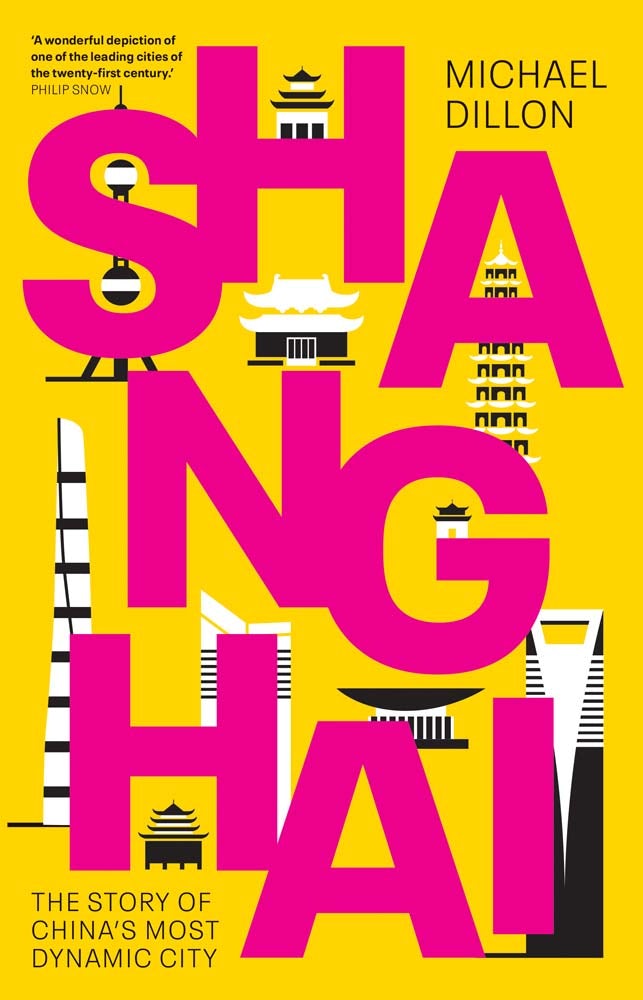
Shanghai: The Story of China’s Most Dynamic City
A comprehensive new history of Shanghai, revealing its vital place in Chinese history and politics across the centuries. The city has been central to some of the most turbulent events in China’s modern history, from the British and French colonial concessions of the nineteenth century, to the birth of the Chinese Communist Party and its vital role in Chinese economics and politics today. Shanghai is a fascinating portrait of China’s most dynamic city – and explores its future role in the country’s development.
You can purchase your copy from Yale University Press London by clicking here.