If the West Wants Deeper Dialogue with China, It Must Understand the Historical Context of May Fourth
Dr Michael Luk is an Honorary Associate Professor at the University of Hong Kong and Bryan Luk is a Programme Director at the Institute for Greater China Studies
As Western leaders increasingly travel to Beijing in search of dialogue on trade, security and strategic clarity, China is once again at the centre of global attention. Recent and expected high-level exchanges – including visits by German Chancellor Friedrich Merz, UK Prime Minister Keir Starmer and Canadian Prime Minister Mark Carney, as well as the latest round of senior-level talks between Washington and Beijing – reflect a renewed push for engagement at a time of mounting international uncertainty.
That these developments come as China marks the 107th anniversary of the May Fourth Movement is more than a coincidence of timing. It is a reminder that meaningful engagement with China requires more than short-term policy analysis or technical expertise. Many in the West still approach China largely through the lens of contemporary policy without sufficient historical understanding. That is precisely why May Fourth still matters for anyone seeking to understand China today.
May Fourth: More Than a Protest
For many outside China, and even in Hong Kong, May Fourth is remembered primarily as a student protest in 1919 against the Versailles settlement, which transferred German concessions in Shandong to Japan. To the May Fourth generation, however, it was much more than a moment of diplomatic grievance. Coming at a time when China was experiencing profound political weakness and foreign encroachment, it crystallised a painful lesson: a divided and weak China would remain vulnerable to humiliation by foreign powers.
National survival required more than anger. It required renewal.
The student movement emerged in the midst of the broader New Culture Movement, which had been spearheaded by members of China’s intellectual elite. As the protests spread across society, they helped trigger a nationwide period of cultural and intellectual ferment marked by intense debate and remarkable diversity of thought. Yet despite their differences, participants were united by a common concern: the need for national salvation and regeneration.
That conviction changed China. May Fourth gave modern China one of its most enduring beliefs: that national dignity depends on national strength, and that strength requires transformation in intellectual, cultural, institutional and economic life. Its spirit combined patriotism with self-examination, openness to new ideas with resistance to foreign domination, and demands for reform with a commitment to national renewal. In doing so, it helped shape the trajectory of China’s modern development for generations to come. China’s Reform and Opening Up, as well as aspects of its contemporary diplomacy, can be seen as later chapters in this broader May Fourth tradition.
This helps explain why sovereignty occupies such a central place in Chinese political discourse. To many Western observers, China’s sensitivity on questions of territorial integrity, foreign interference or international status may appear excessive or tactical. Viewed through the lens of modern Chinese history, however, it is less a matter of political theatre than of historical memory. The experience of foreign encroachment is not a distant backdrop but part of the moral and political foundation of the modern Chinese state.
The Roots of China’s Development Path
May Fourth also helps explain why development in China has never been understood merely in terms of growth rates or material prosperity. Economic modernisation has long been tied to a broader historical purpose: ensuring that China will never again be poor, weak and vulnerable in a world shaped by stronger powers. This is one reason Chinese leaders have consistently treated development as a strategic and even civilisational imperative.
From industrialisation and technological upgrading to educational expansion and infrastructure building, the pursuit of national strength has carried an urgency shaped by history as much as by economics.
The movement’s legacy is also visible in China’s approach to learning from the outside world. May Fourth emerged from a crisis that convinced many Chinese thinkers that the country needed to absorb new knowledge if it were to survive and regenerate. Yet the longer lesson drawn from decades of experimentation, mistakes, successes and failures was that China should not simply become a copy of the West.
The conclusion reached since Reform and Opening Up began in 1978 has been that China should remain highly open to foreign capital, trade, technology and managerial expertise while resisting foreign political tutelage or ideological remoulding. Reform and Opening Up was never intended to be synonymous with Westernisation. Rather, it formed part of China’s search for modernity on its own terms.
This is precisely what many in the United States and Europe still struggle to grasp. Too often, Western analysis reduces China to familiar binaries: authoritarian versus liberal, state versus market, nationalist versus globalist. These frameworks are not entirely irrelevant, but they often overlook the historical experiences and political consciousness that help explain China’s governing philosophy and development trajectory.
It is also worth noting that during the darkest periods of China’s modern history, including the years surrounding May Fourth, many Chinese intellectual and political leaders across different schools of thought did not envision a strong China as one that would simply follow the laws of the jungle in international politics. A large body of historical literature and documentation supports this view. The experience of humiliation at Paris reinforced among many Chinese thinkers the belief that justice and peace should be foundational principles of the international order. This, too, is part of the May Fourth legacy, although it is often overlooked.
Why the West Still Misreads China
As a result, Western governments frequently misread Chinese behaviour. They interpret China’s insistence on autonomy as simple intransigence. They see historical references as propaganda rather than as clues to genuine political psychology. They assume that if China participates in global markets, institutions and diplomacy, it must eventually internalise Western preferences regarding political order.
When that does not happen, disappointment often hardens into suspicion. Yet part of the disconnect may stem from a tendency to underestimate the historical experiences that continue to shape Chinese priorities.
If the United States and its allies seek deeper cooperation with China, this gap matters. Future cooperation cannot rest on economic interdependence alone. It must also rest on a more serious effort to understand the historical experiences that continue to influence China’s worldview and policy choices.
This does not mean that Western countries must agree with China on every issue, nor abandon their own values and strategic concerns. It does mean, however, that effective engagement requires historical literacy. Without it, policymakers risk talking past China – misjudging what motivates it, what alarms it and what kinds of external behaviour make cooperation easier or harder.
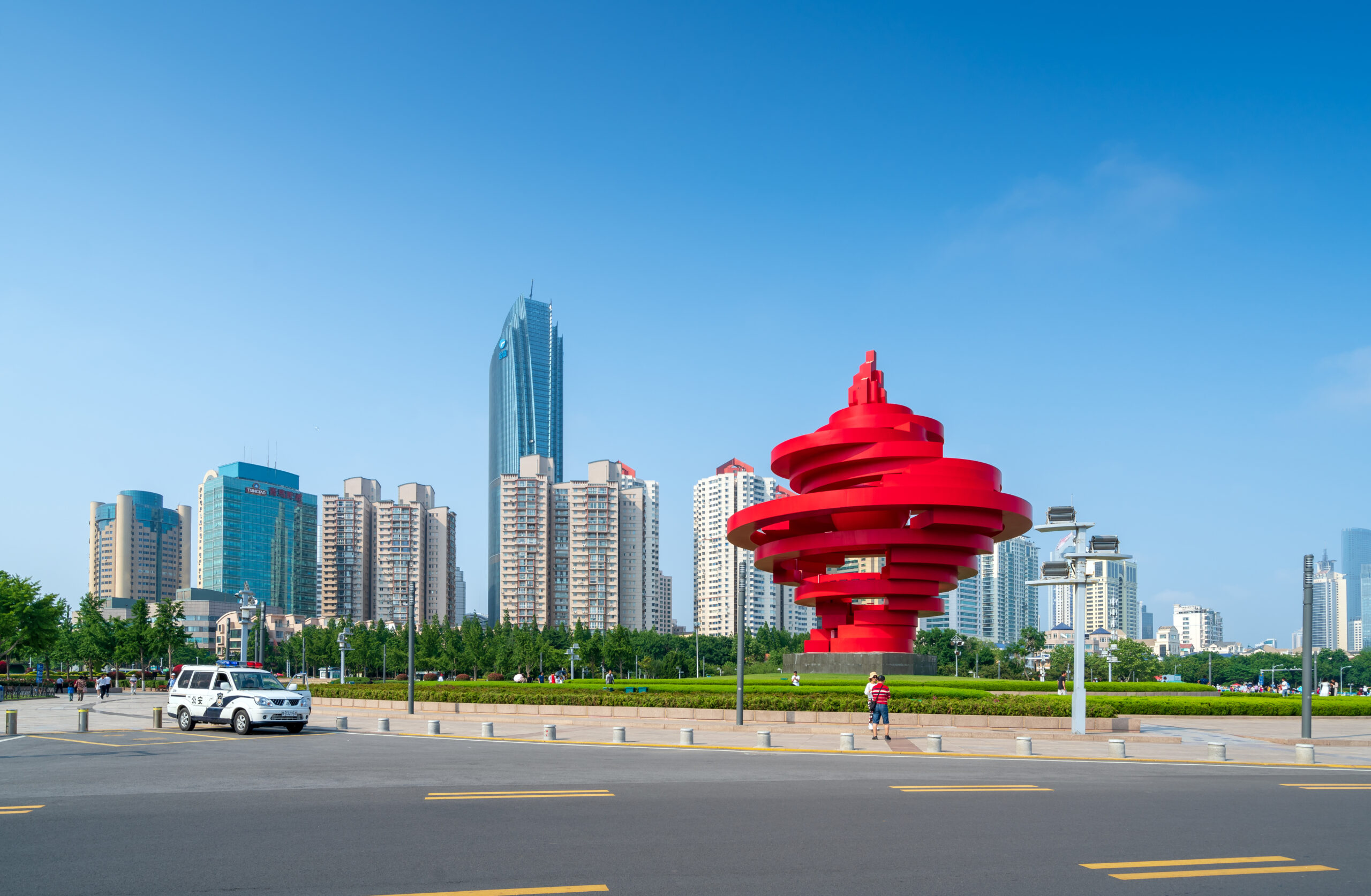
*The headline image shows the “Wind of May” sculpture on May Fourth Square in central Qingdao, Shandong.
The opinions expressed are those of the contributors, not necessarily of the RSAA.