Indonesia’s Indirect Election Proposal: Party Bossism and the Risk of Illiberal Democracy
Muhammad Aqshadigrama is a postgraduate student at the Indonesian International Islamic University and a researcher at the Think First Institute in Indonesia
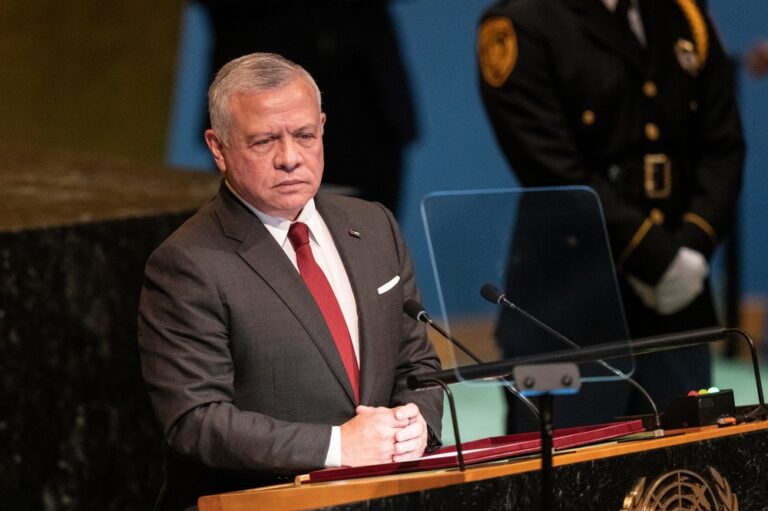
Indonesia may soon reconsider one of the key reforms of its post-authoritarian democratic system: the direct election of regional leaders. A proposal gaining traction in parliament would return the power to elect governors, mayors, and regents to the Regional Representative Councils (DPRD), effectively ending direct regional elections (pilkada). President Prabowo Subianto publicly expressed support for this idea in December 2025 during the 61st anniversary of the Golkar Party.
Supporters argue that indirect elections would make regional leadership contests more efficient and less costly. Direct elections, they claim, are expensive and encourage widespread money politics. Allowing local legislatures to choose regional leaders, political party elites argue, could address these problems.
Yet such a reform would significantly curtail democratic participation at the local level. More importantly, it risks strengthening the already dominant role of political party elites in Indonesia’s political system. Rather than addressing the problem of money politics, indirect elections could instead concentrate political power even further in the hands of party leaders. The real challenge facing Indonesian democracy is therefore not the electoral system itself, but the lack of internal democracy and accountability within political parties.
Without addressing these structural problems, shifting to indirect elections risks returning Indonesia to a system dominated by political elites rather than citizens.
Political Party Bossism in Indonesia
One of the defining features of Indonesian political parties is their strong dependence on individual leaders. Party decisions often reflect the preferences of dominant elites rather than the outcome of internal democratic processes. As a result, candidate selection is frequently shaped by personal networks, patronage, and dynastic connections.
This pattern has been visible in several prominent regional elections. The 2017 Jakarta gubernatorial election, for example, highlighted the central role played by party elites in determining candidates. Agus Harimurti Yudhoyono’s candidacy demonstrated the influence of Susilo Bambang Yudhoyono – Indonesia’s sixth president and chairman of the Democratic Party – in shaping the party’s political direction. At the time, Agus had no prior political experience and was still serving in the Indonesian National Armed Forces, yet he was nominated as a gubernatorial candidate largely due to his close relationship with the party leader.
Similarly, the candidacy of Anies Baswedan reflected the significant influence of Gerindra chairman Prabowo Subianto in directing party support. More recent elections also illustrate the continued role of elite decision-making. In the 2024 Jakarta gubernatorial election, candidate Pramono Anung was directly chosen by Megawati Soekarnoputri, while Ridwan Kamil – originally expected to run in West Java – was instead encouraged by party elites to compete in Jakarta.
This pattern is not limited to major urban contests. In many regional elections, political dynasties have emerged as an important feature of candidate selection. During the 2020 regional elections, for example, former President Joko Widodo’s eldest son, Gibran Rakabuming Raka, ran for mayor of Solo, while his son-in-law Bobby Nasution ran for mayor of Medan. Similar family-based candidacies have appeared in other regions as well.
These examples illustrate a broader phenomenon commonly described as party bossism. In such systems, political power is concentrated in the hands of a dominant individual who controls key decisions within the party, particularly the nomination of candidates. This concentration of authority weakens internal party democracy and limits opportunities for alternative candidates to emerge.
The consequences extend beyond party organisation. Regional leaders who rise to power through elite patronage networks often remain politically dependent on those elites. As a result, governance may become more responsive to party leadership than to the broader public.
Why Indirect Elections Would Worsen the Problem
Introducing indirect regional elections would likely strengthen this system of party bossism. If regional leaders were selected by DPRD members rather than voters, the process of candidate selection and election would become even more concentrated within elite political circles.
In practice, this would mean that political bargaining would take place primarily between party leaders and legislators, often outside public scrutiny. Rather than eliminating money politics, such a system could simply shift political transactions from voters to political elites. Campaign costs might decrease at the public level, but political negotiations within elite networks would likely intensify.
Public trust in political parties has already been weakened by numerous corruption cases involving party members. Concentrating even more power in party leadership structures could further undermine democratic accountability.
In many ways, this arrangement would resemble political practices during Indonesia’s New Order era, when regional leaders were formally selected by local legislatures but were ultimately determined by national political elites. Returning to such a system risks reviving the centralised and elite-driven politics that Indonesia sought to dismantle after the fall of authoritarian rule.
The Need for Political Party Reform
The deeper challenge facing Indonesian democracy lies in the internal structure of political parties themselves. Candidate selection processes remain highly centralised, often requiring direct approval from party chairpersons. This creates significant barriers for independent candidates or individuals who genuinely represent local communities.
Strengthening democracy therefore requires reforms that increase transparency and accountability within political parties. Greater internal democracy could open opportunities for broader participation and reduce the dominance of political dynasties and patronage networks.
At the same time, civil society organisations play an important role in balancing the power of political parties. Although Indonesian civil society remains fragmented and loosely organised, it has demonstrated its political influence in several elections. Research by Ririn Sefsani and Patrick Ziegenhein (2015), for example, highlights the role of civil society mobilisation in the victory of Joko Widodo and Jusuf Kalla in the 2014 presidential election.
Their findings suggest that voters and volunteer groups often place greater trust in individual candidates than in political parties. Because civil society organisations operate relatively independently from party structures, they can mobilise public participation in ways that challenge traditional patron–client relationships.
For this reason, strengthening civil society engagement remains essential for maintaining democratic accountability. At the same time, political parties must evolve into more genuinely mass-based organisations capable of representing grassroots interests rather than simply serving elite networks.
***
The proposal to replace direct regional elections with indirect ones is often justified as a solution to high election costs and widespread money politics. Yet such arguments overlook the deeper institutional problems within Indonesia’s political system.
Money politics and elite dominance are not primarily the result of direct elections. Instead, they stem from the concentration of power within political parties and the persistence of party bossism. Without meaningful reform of party institutions, shifting to indirect elections risks concentrating political authority even further in the hands of political elites.
Rather than weakening democratic participation, Indonesia should focus on strengthening internal party democracy and supporting civil society engagement. Only through these reforms can the country prevent democratic backsliding and ensure that political power remains accountable to the public rather than to a narrow circle of elites.
The opinions expressed are those of the contributor, not necessarily of the RSAA.