Seven Days or Seven Years: Time and Hospitality in Kazakhstan
Marcin Kusztal is a business Executive, Strategic Advisor and Author of The Steppe Rules
In the winter of 1937, trains began arriving at a remote station in Kazakhstan carrying women – wives, mothers, and sisters of men arrested in Stalin’s purges. The camp they were taken to, known by the acronym ALZhIR, held tens of thousands of detainees over the following years. Among those imprisoned were women deported from across the Soviet Union: Russians, Ukrainians, Poles, Germans, Latvians, and others, many of whom had never been to Kazakhstan and knew nothing of the country they had been sent to.
Survivor accounts describe something unexpected at the moment of arrival. Local Kazakh children – themselves members of a people that had lost roughly a quarter to a third of their population to the Soviet induced famine just years earlier – gathered at the edge of the tracks and threw objects at the passing prisoners. The Soviet guards watched with amusement, assuming the gesture was hostile. But the women who bent to pick up what had landed around them found not stones. They found kurt: small, hard spheres of dried salted cheese, dense with the protein and fat that a body needs to survive a Central Asian winter.
The story appears in survivor recollections and has become part of Kazakhstan’s collective memory of the camp. It is told and retold at Kazakh dinner tables not as a historical curiosity but as a statement about identity. It encodes something that many Kazakhs understand as foundational to their culture: that the correct response to a stranger’s need is to share what you have, even – perhaps especially – when you do not have enough. That hospitality is not merely a social performance. It is a moral obligation.
For the Western visitor arriving in Kazakhstan today, this history is not merely background. It is part of the context for everything that follows.
The Table and the Meeting Room
Kazakhstan’s major cities – Almaty and the capital Astana – are sophisticated, cosmopolitan, and thoroughly connected to global commerce. International hotel chains and ATMs are not hard to find. The business class is internationally educated, often multilingual, and comfortable with the pace and vocabulary of global deal-making.
And yet the rules of the table remain distinct from the rules of the meeting room, in ways that even experienced international operators can misread.
The dastarkhan – literally, the cloth spread for a meal – is a central institution of Kazakh hospitality. Its origins lie in the nomadic tradition, in which settlements were few and the steppe between them was vast. A traveller who was turned away from shelter could die. The imperative to receive and feed a guest was therefore not etiquette but ethics, encoded into the culture as a minimum obligation owed to any human being who appeared at the threshold.
This history shapes how many Kazakh hosts understand a dinner invitation. The table is not simply a preliminary to the meeting. It is not relationship-building in the strategic sense – the calculated investment of social time to produce commercial return. It is a space governed by different laws than the meeting room, in which the expectation is that a guest will be genuinely present: to the food, to the conversation, to the person across the table. For many hosts, discussing business at the dastarkhan is not merely inappropriate, it can register as a category error – a failure to understand what is being offered, which is something considerably more than an opportunity to negotiate.
The consequence for visitors who miss this distinction is rarely dramatic. There is no confrontation, no visible offence. There is instead something subtler: a slight withdrawal, a polite redirection, a room that remains warm but stops moving forward.
The Long Arrival
The second major misreading concerns time – not the pace of individual interactions, but the timeline on which trust is built.
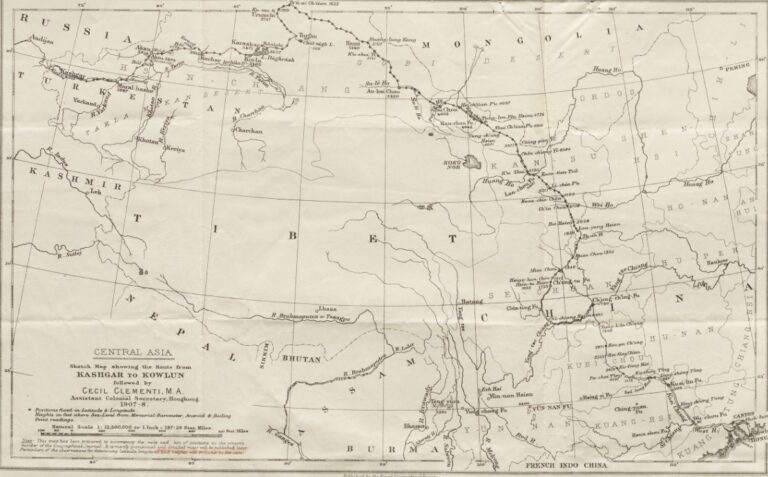
Kazakhstan is the ninth-largest country in the world by land area, and its history has been shaped by the logic of that space. The nomadic cultures that dominated the steppe for centuries did not accumulate trust through the exchange of professional credentials. They accumulated it through human encounters: shared winters, known quantities, established character. Historically, trust was often mediated through extended kinship and tribal networks, including the three great juz confederations that continue to form part of Kazakh social identity beneath the surface of modern professional life.
This orientation toward relational depth over transactional speed has a direct consequence in how relationships – including professional ones – develop. The Western model assumes that a signed contract is a milestone: the beginning of a working relationship. In Kazakhstan, a contract often functions more as a public acknowledgement of a relationship that has already been established. The trust that makes it meaningful is frequently built before the signing, not after it.
For the foreign visitor with a reasonable timeline and a strong reason to be there, this can be disorienting. The meetings go well. The counterpart is engaged and professional. And yet decisions seem to be deferred, introductions multiply without resolving into commitments, and the process that was supposed to take three months stretches into its second year.
What is actually happening, in many cases, is not delay. It is evaluation – of a kind that does not appear on any agenda and is not conducted in any meeting room. It is the accumulation of evidence about who the visitor actually is: their reliability under pressure, their consistency between formal and informal settings, their genuine curiosity about the country they are in. Kazakhstan is large enough, and its communities interconnected enough, that this evidence often travels through networks the newcomer cannot see.
Those who understand this do not try to accelerate it. They invest in the time that cannot be scheduled – the dinner with no agenda, the weekend in Burabay, the pine-forested lake district north of Astana where Kazakh families go to rest, the conversation that has nothing to do with any plan and everything to do with who you are when no plan is in play.
What the Kurt Teaches
Return, briefly, to those children at the railway siding in 1937.
The kurt they threw was not a symbol. It was food – hard, portable, sustaining, produced by Kazakh families who were themselves surviving on inadequate rations in the aftermath of Soviet collectivisation and famine. The gesture that looked, from the outside, like hostility was, in the moral economy of people who understood hospitality as an obligation, an act of generosity within the constraints of the moment.
This interpretive gap – between what a Kazakh gesture looks like from the outside and what it actually means – is the central challenge for any outsider in Kazakhstan. The dinner invitation is not a social courtesy in the way a Western business lunch is a social courtesy. The weekend in the countryside is not a perk. The time spent not discussing the matter at hand is not time wasted. Every element of Kazakh hospitality that appears to be one thing is, on examination, something else: more serious, more generous, and more morally demanding than the surface suggests.
Kazakhstan has one of the fastest-growing economies in Central Asia, an expanding role in global energy and commodity markets, and an increasingly significant position as a regional hub for international commerce. Those who operate most effectively there are not necessarily the ones who arrive best prepared on paper. They are often the ones who have learned to receive hospitality as it is intended – not as a prelude to something else, but as the thing itself.
The children throwing kurt at the frozen tracks were not making a calculation. But they were demonstrating, in the starkest possible terms, the principle that underlies every dastarkhan in Kazakhstan today: that what you offer a stranger, at cost to yourself, is a measure of who you are.
In Kazakhstan, many would say it remains among the deepest measures of character.
The opinions expressed are those of the contributor, not necessarily of the RSAA.

The Stepp Rules: What Western Companies Get Wrong Before The First Meeting
In The Steppe Rules, Marcin Kusztal draws on more than fifteen years of experience working across Kazakhstan’s energy, infrastructure, and technology sectors to explore the often-overlooked cultural and social dynamics that shape business and decision-making. Challenging conventional assumptions, the book argues that success depends not only on strategy or expertise, but on understanding the unwritten rules of trust, relationships, hierarchy, and time. While grounded in Kazakhstan, its insights resonate far beyond Central Asia, offering a fresh perspective on how culture influences international engagement in complex business environments.