Yurts, Starlink and the Future of Kyrgyzstan
Patrick Whiteford spent a year teaching english in Bishkek between 2025 and 2026
*Image taken by Elizabeth Ray
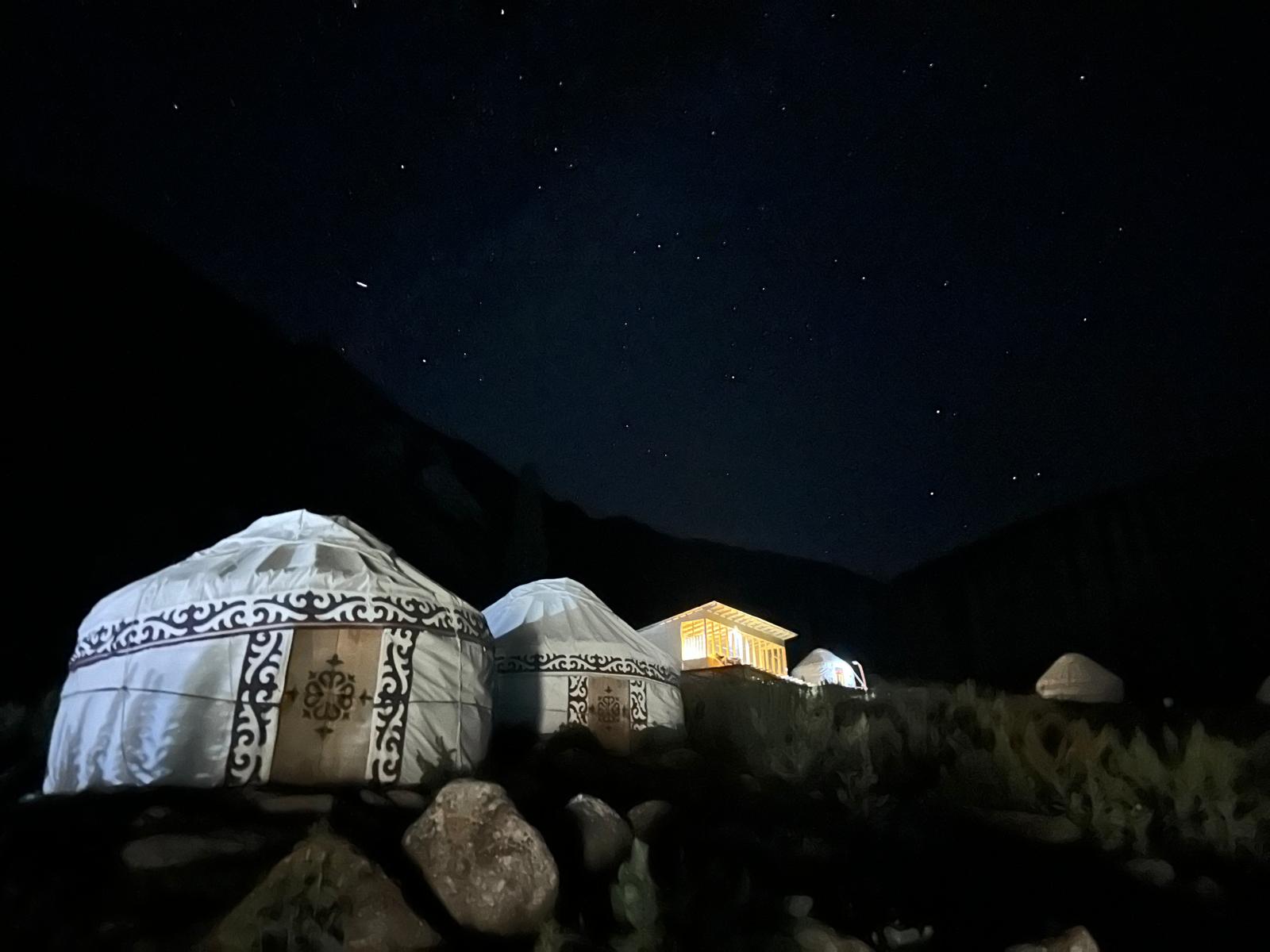
It had been a long day. Fourteen kilometres snaking through the deep valleys and lush forests of the Kyrgyz countryside, the ferocious Central Asian sun beating down. I think it is fair to admit that, as the valleys descended and the yurt camp came into view, its little domed roofs scattered marvellously across the hills, there was a sense of relief. It was an amazing place, an utterly tranquil oasis of Kyrgyz nomadic traditions, far removed from the car horns and noise of its capital, Bishkek. Once we had settled in, the thing that struck me most was how isolated this place was from the outside world. It had communal showers with no warm water and was accessible only by Soviet-era off-road vehicles. Yet, of course, it had Wi-Fi, courtesy of Elon Musk’s Starlink. To me, this best captures the dichotomy of this amazing nation, which this year celebrates its 35th anniversary of independence. Kyrgyzstan is a nation with proud nomadic traditions dating back millennia, but those yurts now have an internet connection. This is a nation rooted in the past but looking firmly to the future.
My goal for this article is not to write a travel guide. It is wonderful that Kyrgyzstan is increasingly being promoted as a tourism destination, but there are other writers better placed to cover this. Nor do I want to focus solely on the issues that often dominate Western media coverage: bride kidnapping, corruption and Kyrgyzstan’s place in a shifting world order. These are all extremely important issues, the first two being concerns that trouble young and old alike. But I love Kyrgyzstan, and I believe that media reporting on the country can often be overly negative. Instead, my goal is to sing the praises of Kyrgyzstan’s younger generation, whom I see as intellectually curious, technologically savvy and globally minded. It is my firm belief that they will transform their country for the better.
I spent a year working with young people in the capital, Bishkek, teaching them English while aiming to improve my Russian and taking baby steps with the Kyrgyz language. I will be the first to admit that my sample is far from representative. Teenagers who live in the capital and have the money for English lessons are likely to be a self-selecting group, many of whom hope to study abroad or, more permanently, emigrate.
The first thing that struck me was how much more young Kyrgyz people knew about the outside world than the outside world knew about Kyrgyzstan. This is perhaps to be expected: US-dominated Anglophone culture has seeped into local traditions in many parts of the world. However, what impressed me most was Kyrgyz teenagers’ genuine interest in the outside world. They often had flawed views of what Western countries like the UK were actually like, but they were interested.
As somebody who now works in a British school, it can sometimes seem that mobile phones and social media are a persistent curse. However, when used responsibly, they can promote curiosity about places and topics that are distant from us, geographically or culturally. It was my impression that many of Kyrgyzstan’s young people used them in this way. Of course, they, like anyone with a pulse and an internet connection, must wade through more than their fair share of fake news and distorted headlines. But in an age when many countries are witnessing growing hostility towards outsiders, and even towards the outside world more generally, this curiosity is a positive. This is not to say, of course, that Kyrgyzstan is free from intolerance. The attack on Indian medical students in 2024 shows that this, too, remains an important issue to address. Nevertheless, I believe in recognising the positives where they exist.
I was also impressed by Kyrgyzstan’s creativity and problem-solving. It is a nation grappling with serious environmental challenges, particularly water scarcity and severe air pollution during the winter months. A frequent topic of discussion in class was how to tackle these issues in Bishkek, and my students came up with some creative solutions, including the sometimes comically absurd suggestion of buying large quantities of bottled water and creating a new sea in Central Asia! These were the young urban planners and, hopefully, politicians of the future.
This brings us to an important point, however. The story of modern Kyrgyzstan is one of emigration, and many talented young people see little future for themselves in the country. This is a major motivation for learning English and other European languages. An informal survey of my students revealed that around 80% wanted to study abroad, with many hoping to emigrate permanently, particularly to Europe or the United States. Hopefully, some of these students will return to Kyrgyzstan to help drive positive change in their own country. But this also raises a broader question: how can Kyrgyzstan create the opportunities that would encourage its young people to build their futures at home?
Particularly since Russia’s invasion of Ukraine in 2022, many Kyrgyz people have returned from previous employment in Russia. This has contributed to growing urban pressures in Bishkek, including overcrowding, while also highlighting the need for resourcefulness and a more dynamic domestic labour market. It is not my place to meddle in Kyrgyz politics or society, a point on which I have always felt clear. Nevertheless, it feels important that Kyrgyz society creates a place for these people and makes the most of their talents. Russia’s war in Ukraine, in which Kyrgyz men and women have also been drawn into the fighting, and increasingly restrictive migration routes elsewhere may reshape the choices available to young Kyrgyz people. Whether this encourages more of them to focus on the development of their own country will depend, in part, on the opportunities Kyrgyzstan can offer them.
So, the closing question becomes: why is all this important? You, of course, are somebody interested in Central Asia, and thanks to British television shows like Race Across the World and stunning Instagram reels, interest is growing. However, the fact remains that most people, if they are honest with themselves, do not know where Kyrgyzstan is. Central Asia has struggled to shake the spectre of Borat.
The fact is that the world order is changing, and Kyrgyzstan is once again caught, like its Silk Road ancestors, between East and West. There are some positive developments, with Central Asian leaders, including Kyrgyz President Sadyr Japarov, meeting US President Donald Trump at the White House late last year. Such developments suggest that Central Asia is, at long last, appearing more prominently on the international stage. Kyrgyzstan is not simply a pawn in global geopolitics; its people deserve the best country they can have. They are a hospitable, kind-hearted people who have shown tremendous resilience throughout their long and difficult history.
As night fell gently over the yurt camp, the locals who still worked this land, as their ancestors had for hundreds of years, packed up for the evening. While this particular yurt was connected to the internet, one could not help but be struck by the beauty of the stars. This is one of those parts of the world where the stars are incredible, and they shone faithfully, as they have done every night for millennia, guiding the nomads of this small nation. In a recent ARTE.tv documentary on Kyrgyzstan’s current political situation, activist and musician Jama Bekten declares that she has faith in the future of Kyrgyzstan. We all should.
The opinions expressed are those of the contributor, not necessarily of the RSAA.