How Nepal’s Gen Z Movement Sparked an Historic Election

Suprina Thapa is an early-career journalist focusing on Nepal and South Asia
Nepal has just witnessed one of the most extraordinary political transformations in its modern history.
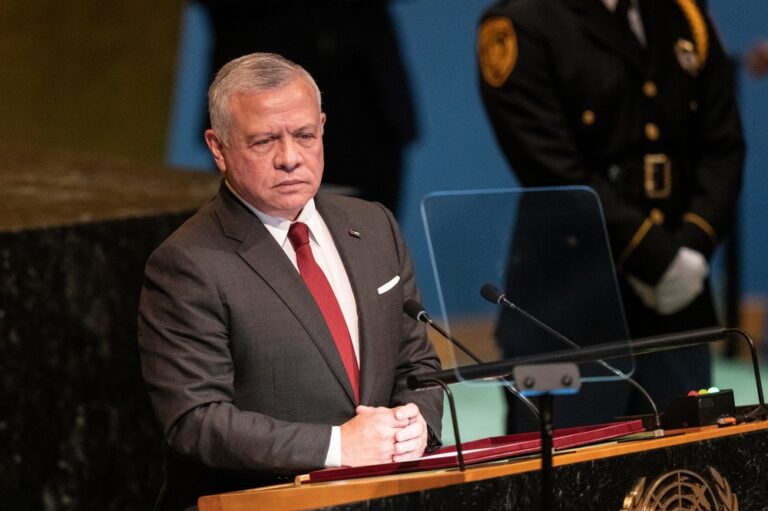
For the first time, a single party has secured more than 5 million votes in the proportional representation category, surpassing every record previously held by the traditional political forces that had dominated the country for decades. The Rastriya Swatantra Party, formed less than four years ago, won 125 of the 165 directly elected seats and more than 50 of the 110 proportional representation seats. Five former prime ministers, KP Sharma Oli, Madhav Kumar Nepal, Baburam Bhattarai, Jhala Nath Khanal and Sher Bahadur Deuba, will not be part of the new parliament. Leading this new era is Balendra Shah, universally known as Balen, a man who, before entering politics, was a rapper and structural engineer with no conventional political experience whatsoever. In a country whose prime ministers have almost exclusively emerged from the same tight circle of career politicians and party elites, Nepal is now set to be led by someone who built his public profile through music. Nepal has never seen anything like it.
But to understand how Nepal arrived here, you must go back to September 2025, when protesters set the parliament building, the Supreme Court and the Singha Durbar ablaze after decades of being ignored. The September protests were not a sudden outburst. They were the culmination of decades of political frustration in a country where three leaders, Prachanda, KP Oli and Sher Bahadur Deuba, had rotated power between themselves since 2015 despite belonging to different political parties. The government’s decision to block major social media platforms on September 4th was the immediate trigger but what brought hundreds of thousands onto the streets was something far older and far more entrenched. Seventy-seven people were killed and over two thousand were injured. By September 10th, the prime minister had resigned, and the army was the only institution still maintaining order. Nepal’s Gen Z movement no longer wanted simply to change who held power; it wanted to change what power meant altogether.
The first concrete outcome of that movement came with the appointment of Sushila Karki as interim prime minister, selected through a process that was as unprecedented as anything else about this period. Protest organisers used the “Youths Against Corruption” Discord channel as an impromptu public forum, with over 7,500 people voting on the platform to nominate their preferred candidate in what became known simply as the Discord Election. Karki, a former Chief Justice with a reputation for integrity, guided Nepal through its most fragile political transition in recent history and is now widely credited for delivering on her promise to organise free and fair elections. Without the mobilisation of September, none of what followed, including the election itself, would have been possible.
In another historic first, the Nepali Army was assigned responsibility for transporting ballot papers to counting centres, a role previously held exclusively by the police. Turnout came in at approximately 60 per cent, one of the lowest figures in Nepal’s recent electoral history – surprising, given the scale of public engagement just months earlier. Whether that reflects residual fear of renewed violence or a scepticism about whether any election could deliver real change, it is hard to say with certainty.
However, the people who voted made their position very clear, and nowhere more so than in Jhapa-5. Balen, who became Mayor of Kathmandu in 2021 after sweeping the mayoral election with 61,767 votes, comfortably defeated two major political parties. As mayor, he overhauled the city’s waste management and traffic systems and built a reputation for practical governance over political theatre. When the Gen Z movement erupted, he aligned himself firmly with the protesters and was identified early on as a natural leader of the new political moment. Gen Z leaders wanted him to serve as interim prime minister following Oli’s resignation and he declined, choosing instead to contest the election. When he contested, he could have chosen any constituency in the country. He chose Jhapa-5, the four-time stronghold of KP Oli, the man whose government had presided over the crackdown on protesters. The result was one of the most historic upsets in Nepal’s electoral history. Balen received 68,348 votes. Oli received 18,734. The margin of 49,614 votes was not just a personal defeat for Oli; it was a collective verdict on the political era that has just ended. Balen has promised free healthcare for the poor, clean water, and reforms to both agriculture and citizenship rights.
The father of Sulav Raj Shrestha, a 23-year-old martyr of the Gen Z movement, spoke about what his son had believed in the weeks before he died. He had admired Balen Shah, convinced that a new kind of leadership could bring real change to Nepal. “My son believed Balen Shah could change the country,” his father said. “I hope he gets justice now.”
Twelve candidates aged 30 and under won seats in the House of Representatives, eleven of them from the RSP. Among them was Sudan Gurung, who founded the humanitarian organisation Hami Nepal and was one of the movement’s key negotiators, helping secure Karki’s appointment as interim prime minister. A result like this would have been unimaginable under the political order that preceded September 2025.
The RSP itself was founded by Rabi Lamichhane, a former television journalist whose personal history sits awkwardly against his party’s anti-corruption platform. Lamichhane is currently under investigation for fraud and organised crime, having been arrested over allegations of misappropriating cooperative funds. He was in judicial custody during the September protests and released on bail before publicly expressing solidarity with the movement. The tension between a party built on the promise of clean governance and a founder facing those specific charges is one that the RSP has not credibly resolved, and it will follow them into government.
What the RSP now inherits is a formidable set of obligations, and three in particular will define whether this moment becomes a genuine turning point or another false start.
The first is justice. A commission formed to investigate the killings and injuries of the September protests submitted its report to the government with recommendations on accountability and the measures required to prevent a future recurrence, and the RSP has vowed that acting on its findings will be among its earliest responsibilities in government. The second is corruption, the grievance that brought hundreds of thousands of Gen Zs onto the streets in the first place. The RSP’s Citizens Contract treats each vote as a financial loan the party is obligated to repay, backed by formal thumbprints and a penalty clause committing them to electoral accountability if they fail to deliver. Moreover, the party has pledged term limits on its own leaders as a direct response to the decade-long rotation of the same politicians through power. The third is employment. Youth unemployment stands at 20 per cent, the highest in South Asia. The RSP has committed to creating 1.2 million domestic jobs and raising the average income to US$3,000 per person.
However, a party commanding a super majority with a decimated opposition faces very little institutional pressure to honour any of those promises. Laws can be passed with minimal scrutiny and Shah, who governed Kathmandu with considerable personal authority as mayor, will need to operate within a parliamentary system that demands a fundamentally different kind of democratic discipline.
The question of democratic accountability is not the only structural challenge this new government inherits. Nepal has long grappled with the underrepresentation of marginalised communities in its political institutions, and the election results raise important questions about whether that will change. Madhesh-based parties, historically the political voice of some of the country’s most marginalised communities, failed to win a single seat, swept aside entirely by the RSP wave. Women made up just 11 per cent of the RSP’s direct constituency candidates. Nepal’s constitution requires that at least 33 per cent of parliamentary seats go to women, and with only 13 elected through First Past The Post so far, the RSP will need to fill much of that gap through its proportional representation list. The RSP’s manifesto acknowledges generations of caste and gender-based discrimination and pledges structural reform alongside a formal state apology, but the scale of that commitment will only become clear in government.
Nepal’s problems are not ones that a single electoral cycle can resolve. Corruption is entrenched and the wealth gap remains wide. What these elections have demonstrated is that a generation with genuine and long-accumulated grievance, organised through social media, can dismantle a political order that had entrenched itself for decades. The harder question now is whether the political leaders this movement has put in power will deliver the institutional change they promised, not just for some, but for all.
The opinions expressed are those of the contributor, not necessarily of the RSAA.