Born to Ride: Horses and Heritage in Mongolia’s Altai Mountains
Claire Thomas is an award-winning photojournalist, fine art photographer, and writer
Nine-year-old Dastan, the son of a Kazakh eagle hunter, rode his pony beside me, cantering effortlessly without a saddle. He laughed at my attempts to pat my pony’s neck – a gesture the animal was clearly unaccustomed to. For Dastan, horses are not objects of affection. They are simply part of life.
We rode together through a sweeping valley near his family’s summer home in the Altai Mountains of western Mongolia’s Bayan-Ölgii province. Horses grazed along the banks of a winding river, their heads lowered against the wind. Beyond them, the land rose into rocky slopes that stretched toward jagged ridgelines in the distance. A dusting of early snow clung to the higher peaks, signalling the approach of winter.
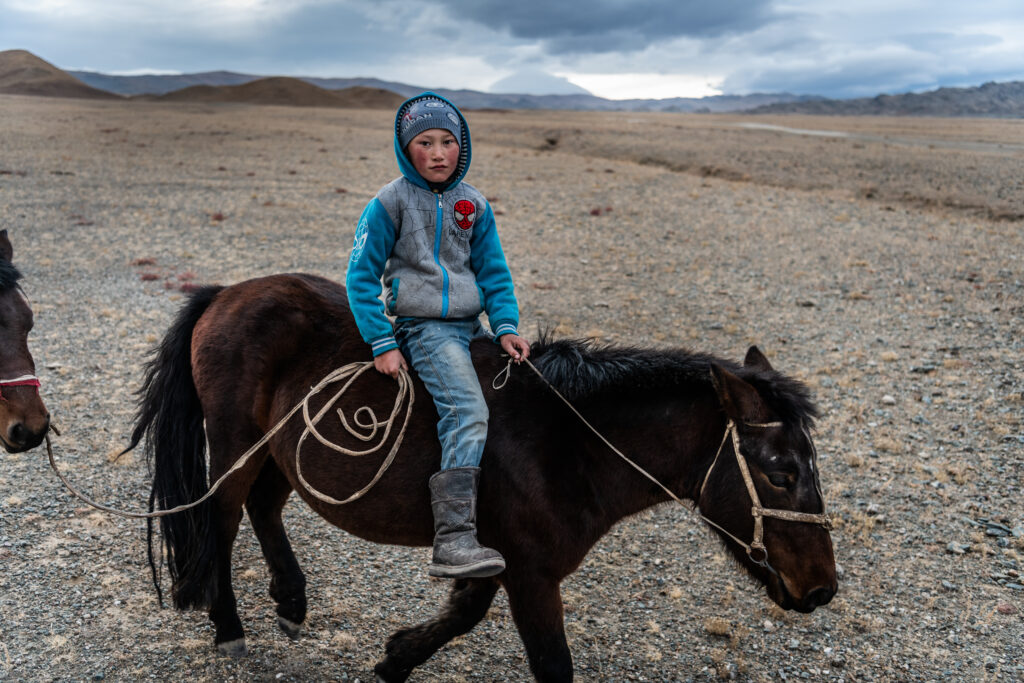
Riding with Dastan, I found myself reflecting on my own childhood in Wales, where I had spent countless hours exploring the countryside on horseback. I grew up in a landscape shaped by rain, woodland, and rolling green hills, and horses were part of my life from a young age. Riding gave me a sense of independence long before I understood the word. It taught me patience, humility, and trust, and above all, attentiveness to another creature’s instincts and moods.
At the time, I could never have imagined that those early experiences would one day lead me to the mountains of western Mongolia.
A Journey to the Altai
After three years living in northern Iraq, covering the battle against the so-called Islamic State and the country’s long road to recovery, I found myself searching for something grounding and deeply personal. I decided to return to my roots and begin a long-term photography project inspired by my lifelong connection with horses.
In October 2019, that search brought me to western Mongolia, a region that had long fascinated me. Encompassing the westernmost part of the country, Bayan-Ölgii is Mongolia’s only Muslim-majority and predominantly Kazakh province, or aimag. Deep in the Altai Mountains, where Russia, China, Kazakhstan and Mongolia meet, Kazakh people have for centuries maintained a special bond with golden eagles, training the birds to hunt foxes and other small animals for their meat and fur.
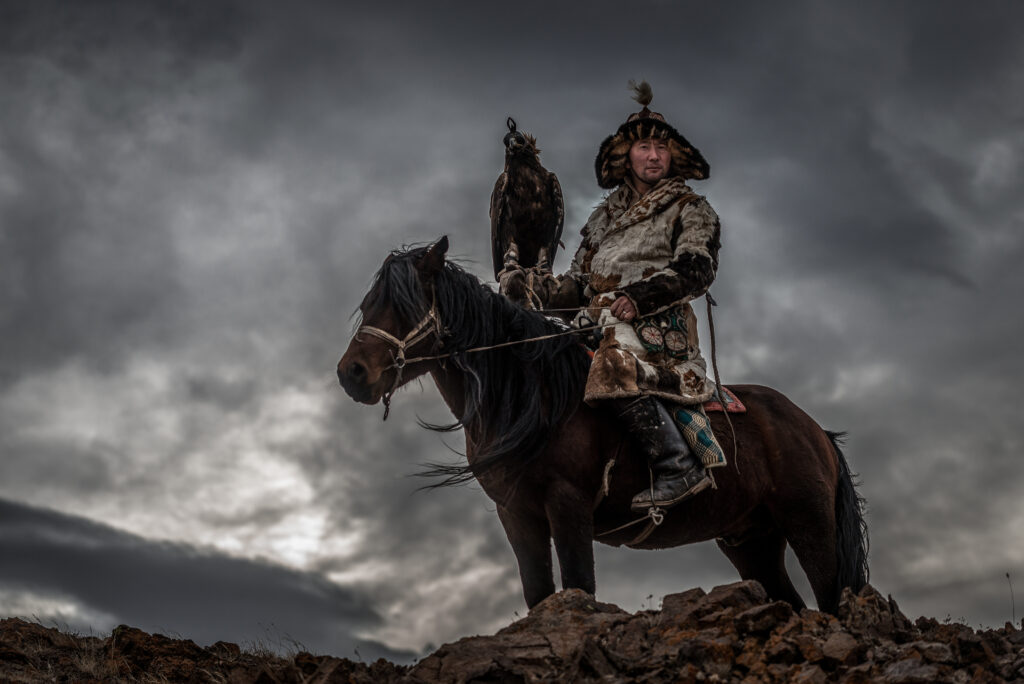
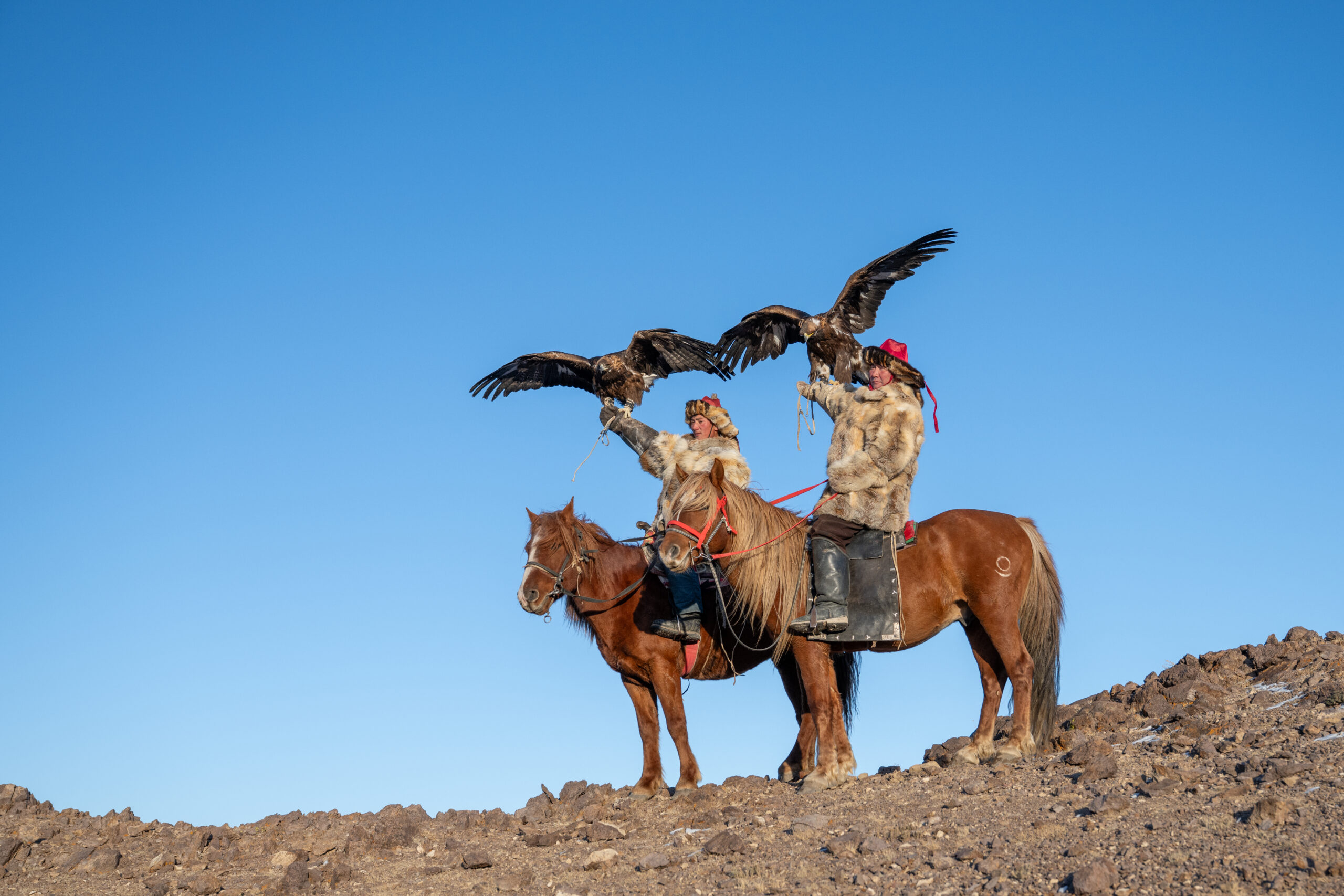
The dramatic image of a rider in the Altai with a golden eagle perched on their arm has become emblematic of the region. Yet beneath that iconic image lies something even more fundamental: the horse.
Horses as Lifelines
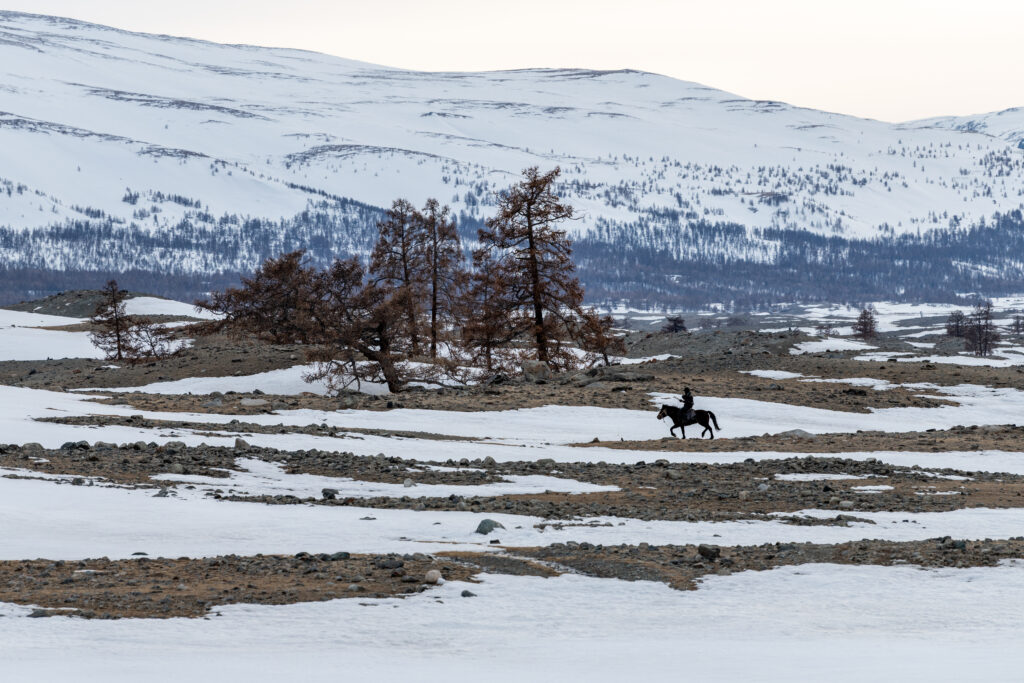
In the Altai Mountains, horses are not recreational animals or symbols of leisure. They are essential to survival. The terrain is expansive and often inaccessible by vehicle, with rough tracks winding through river valleys and across high mountain passes. In winter, when temperatures can plunge below minus forty degrees Celsius and deep snow blankets the land, many routes become impassable. Under such conditions, the horse remains the most reliable means of transport.
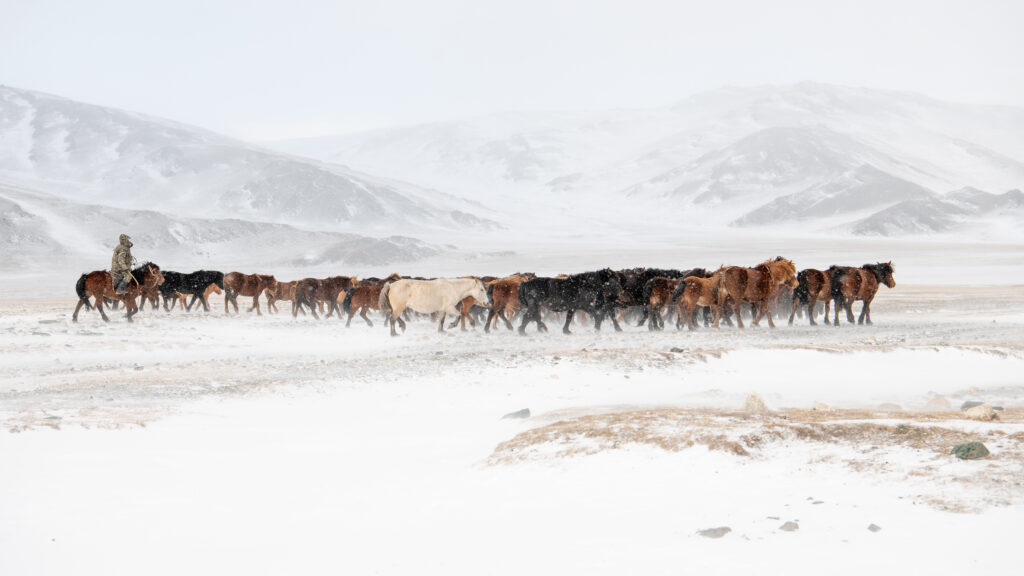
The horses of Bayan-Ölgii are small compared with many Western breeds but exceptionally hardy, adapted over centuries to one of the harshest environments on earth. They graze freely across open pastures, enduring fierce winters and hot summers with remarkable resilience.
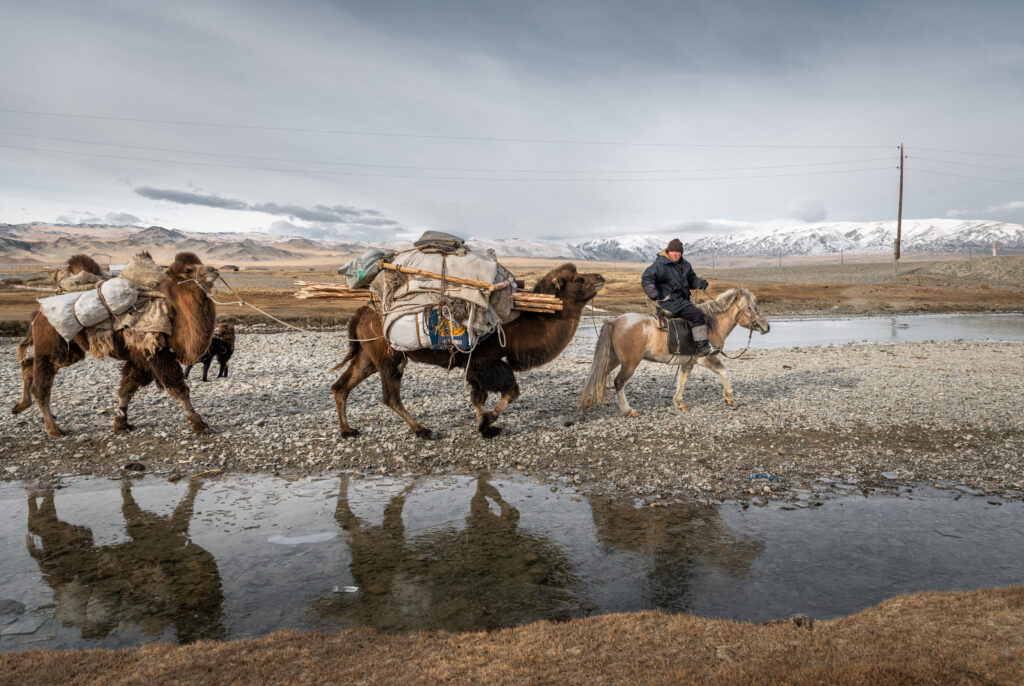
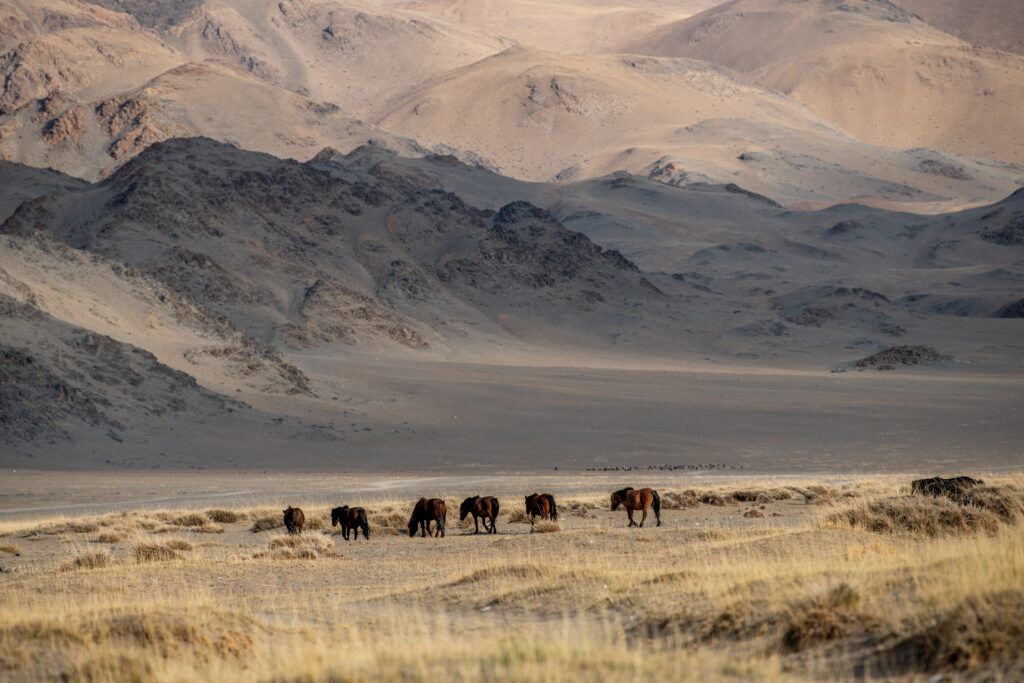
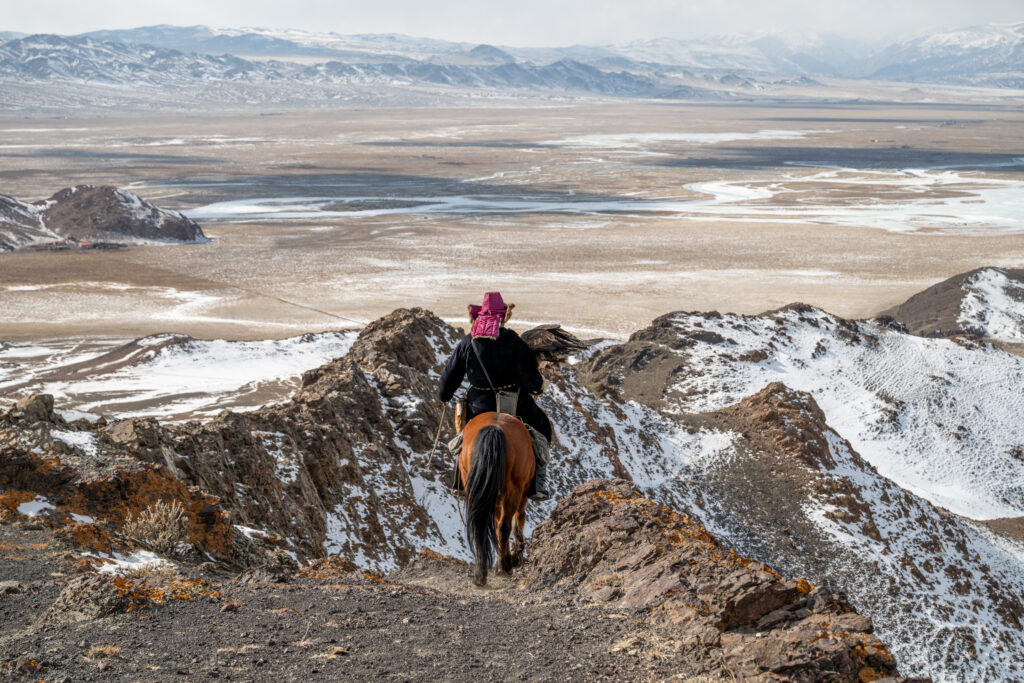
Watching them move through the landscape, their sure-footedness becomes immediately apparent as they pick their way down steep rocky slopes and navigate narrow mountain trails that would challenge even experienced riders elsewhere.
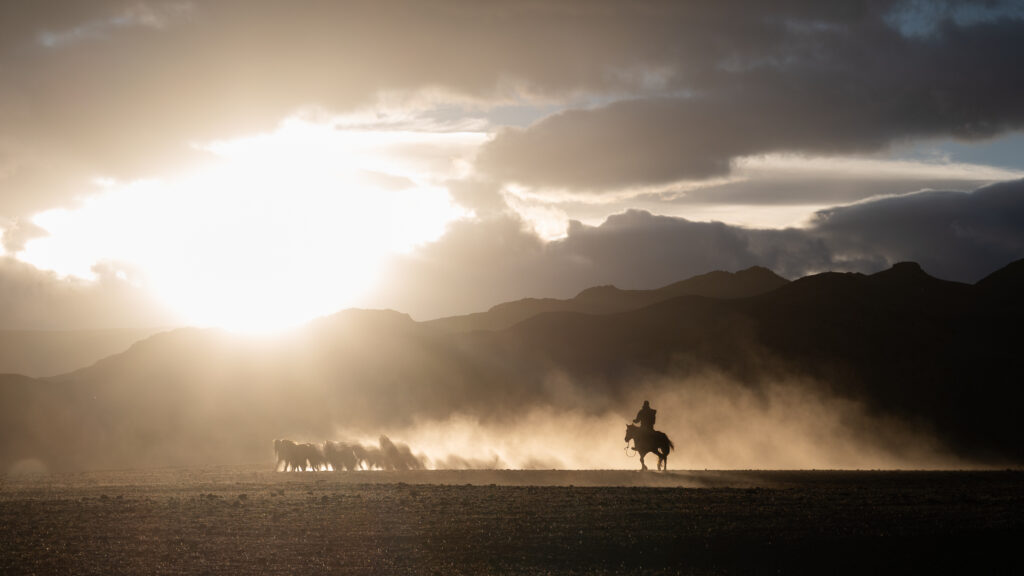
Their endurance allows herders to travel long distances while tending livestock – sheep, goats, yaks, and camels – which sustain nomadic life across the region. Each year families move their gers, traditional felt tents, between winter shelters and summer pastures, following grazing cycles essential for their animals’ survival.
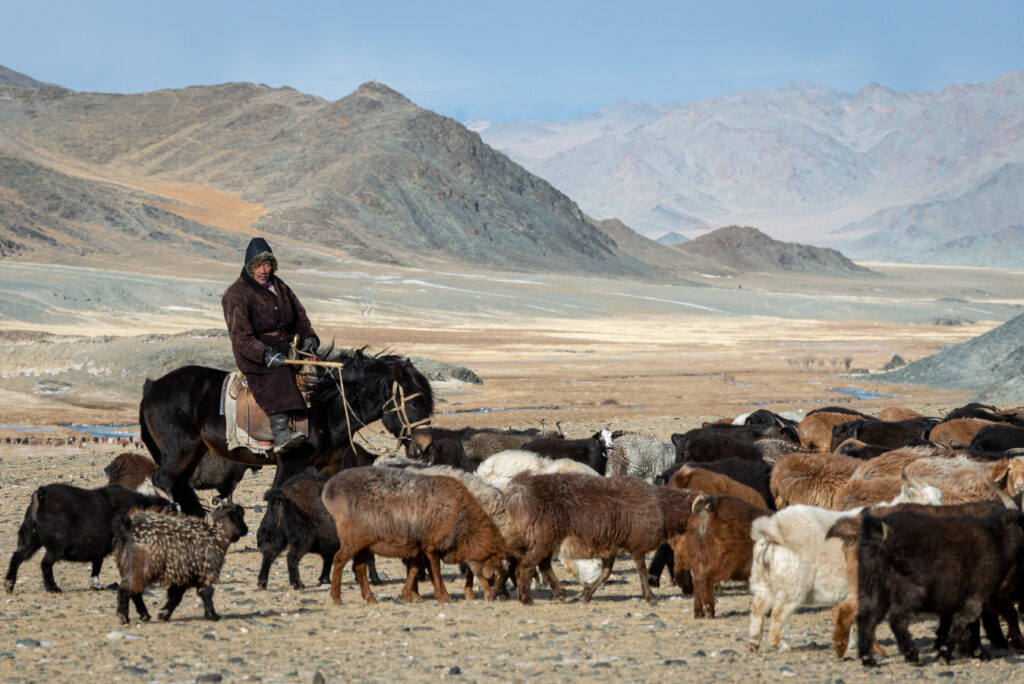
The Horse and the Eagle
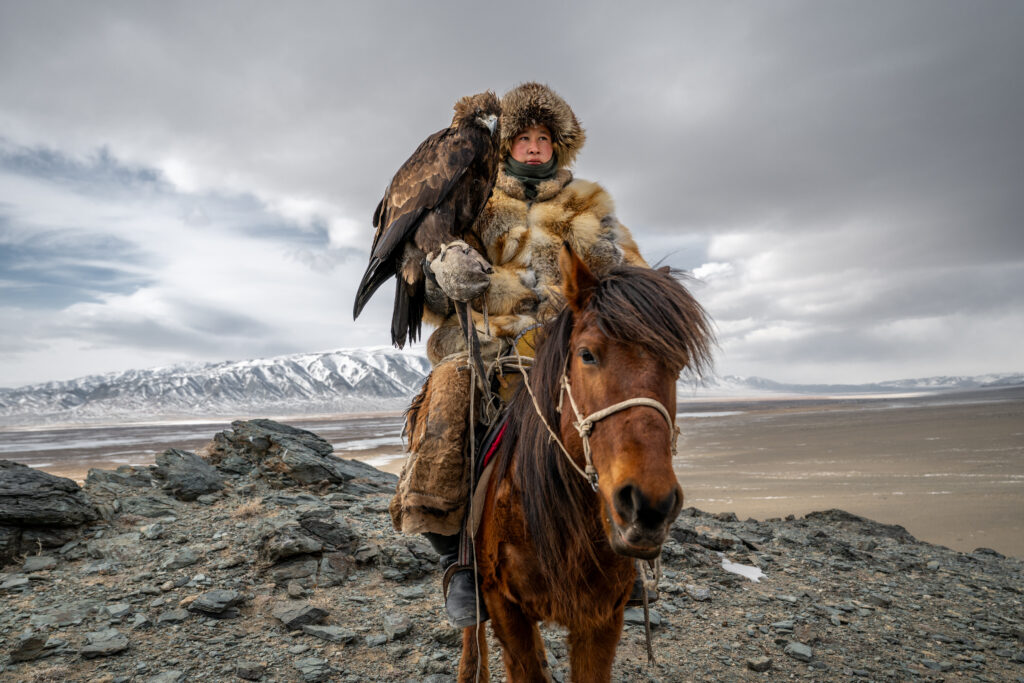
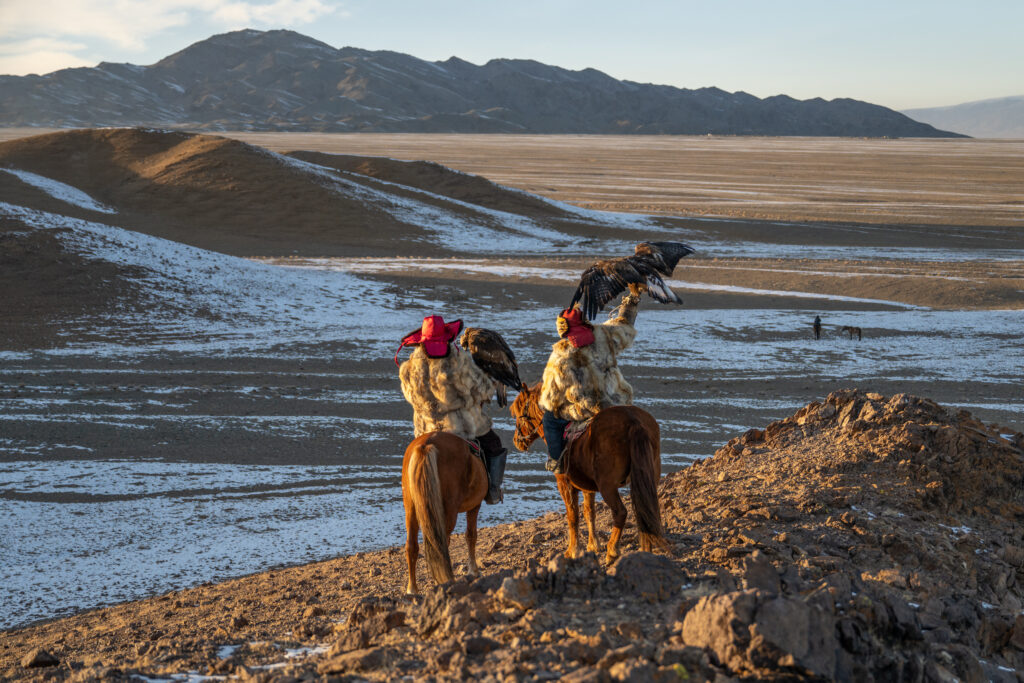
Nowhere is the partnership between horse and human more visible than in the tradition of eagle hunting. Horses are relied upon not only for travelling through high mountain passes, but also as an integral part of the hunt itself. From the saddle, the hunter releases the eagle, maintains sight of its flight, and gallops to retrieve bird and prey from the rocky ground. With a golden eagle weighing up to seven kilograms perched on one arm, the stability and strength of the horse become essential. The eagle may be the eye in the sky, but the horse is the heartbeat that carries hunter and tradition across the landscape.
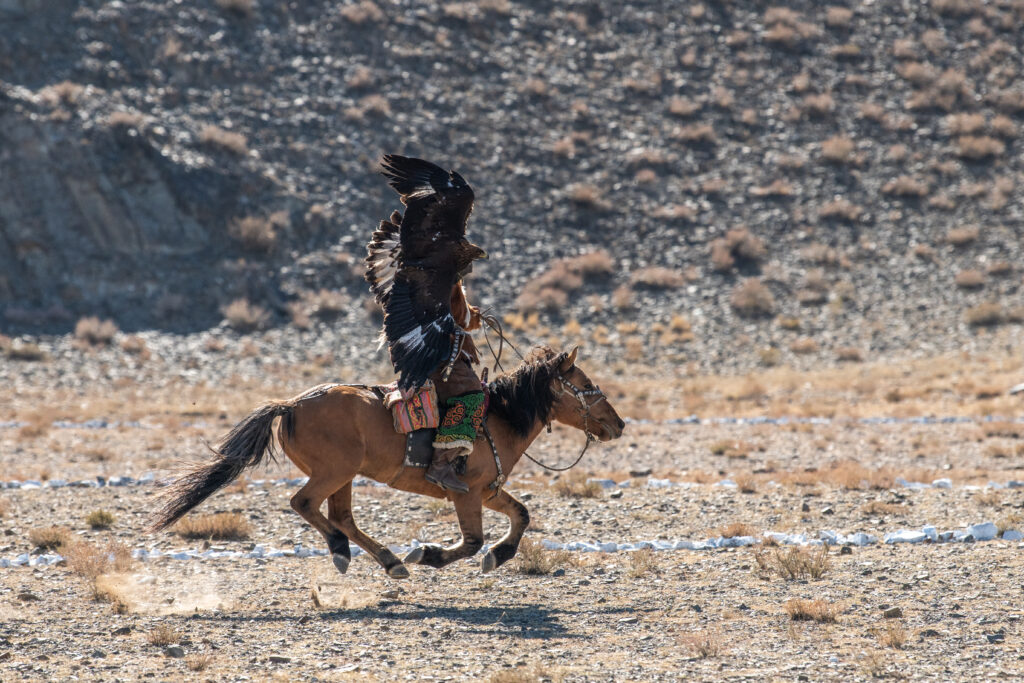
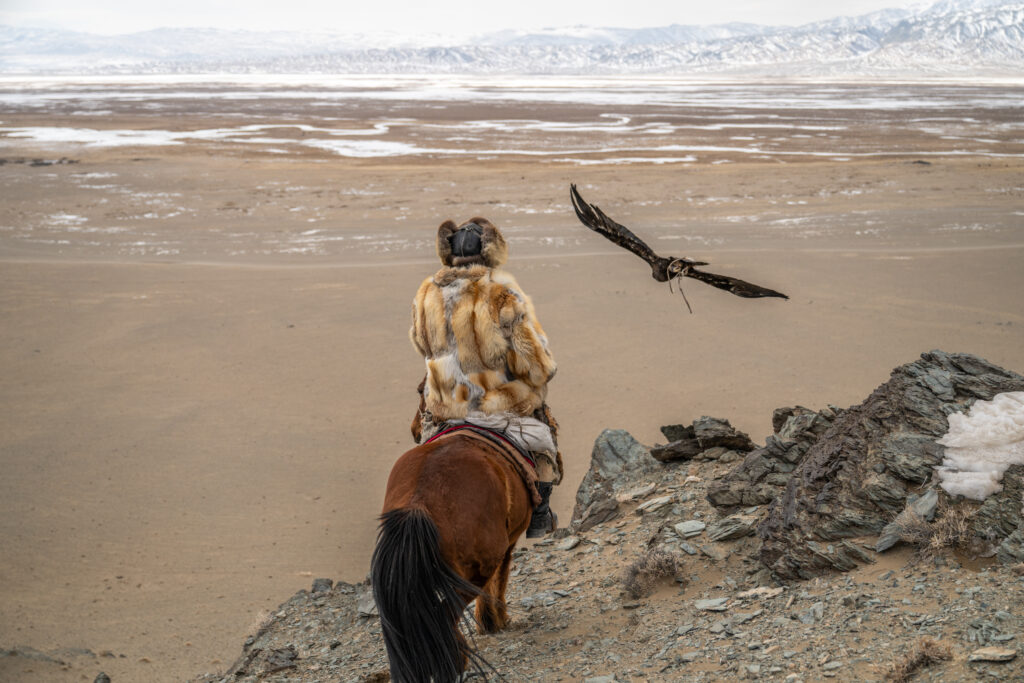
The eagle inevitably draws the viewer’s attention, yet the horse remains just as vital to the practice. Without it, hunters could not travel the distances required to track and recover their birds. Together, rider, horse, and eagle form a partnership that reflects a remarkable balance between human skill, animal instinct, and the demands of the landscape.
Children of the Saddle
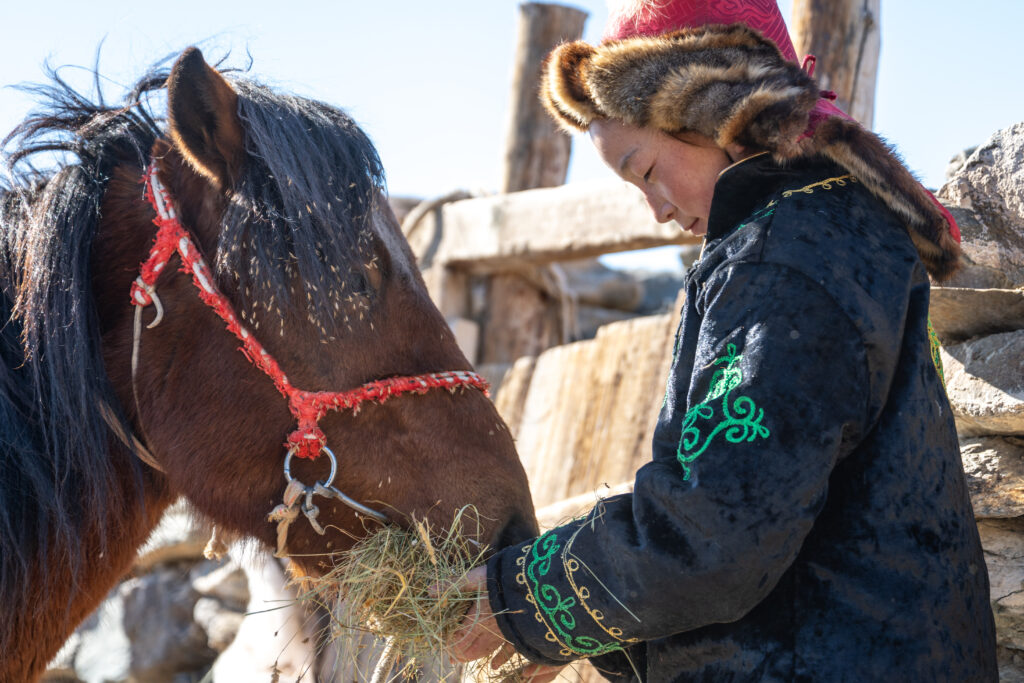
Perhaps the most remarkable riders in the Altai are the children themselves. From an early age, boys and girls alike learn to ride, often before they are tall enough to reach the stirrups. Watching them handle horses with ease, it becomes clear that horsemanship here is not a hobby acquired later in life, but a skill absorbed almost from birth.
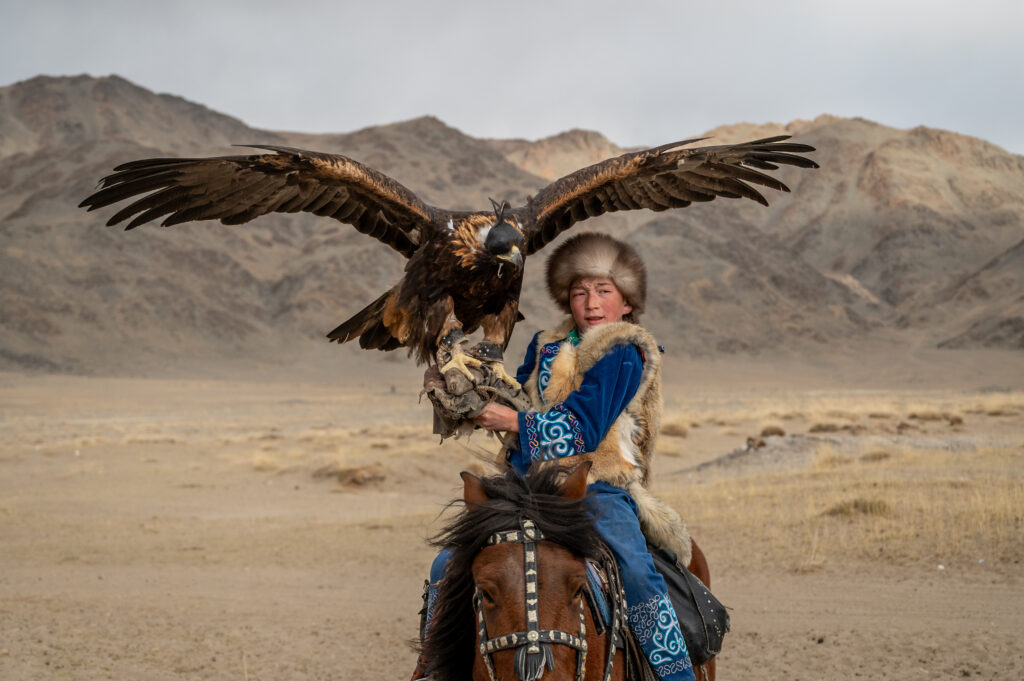
One young rider left an especially strong impression on me. Aykerim, then twelve years old, rides with extraordinary skill and composure. In a region where eagle hunting has traditionally been dominated by men, she has already earned recognition as both a capable horsewoman and eagle huntress.
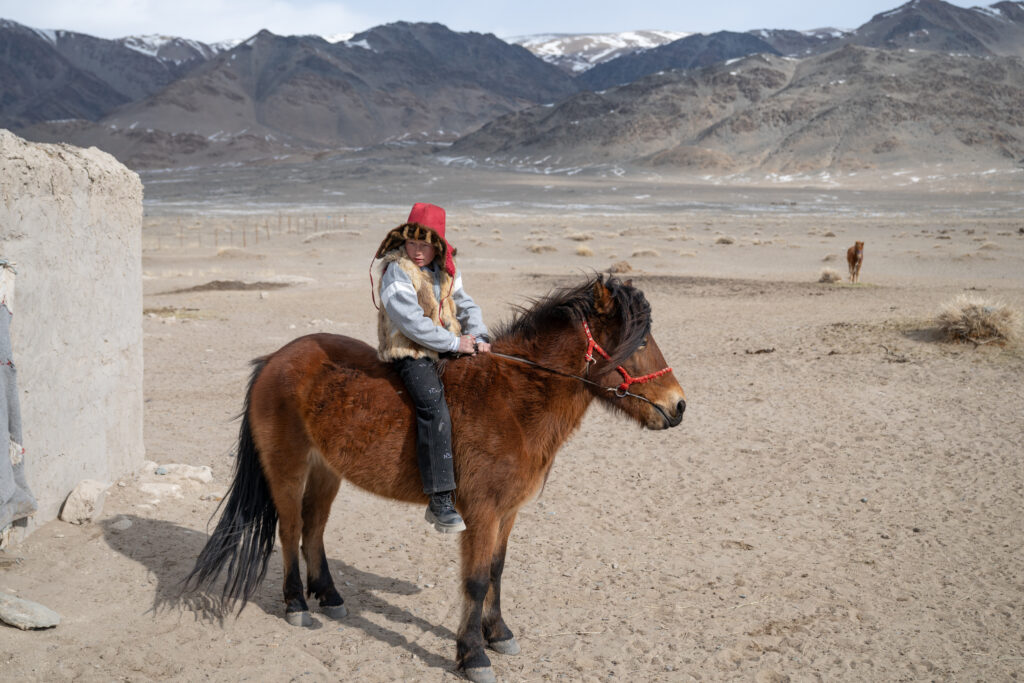
One crisp morning I watched her guide her horse across the valley into the surrounding mountains, riding bareback with subtle shifts of weight and a high-pitched whistle to urge the horse forward. The horse responded instantly, weaving between rocks and low shrubs with remarkable agility.
Observing her ride brought back vivid memories of my own childhood galloping across the Welsh hills. The landscapes were vastly different – soft green pastures compared with Mongolia’s rugged mountains – yet the sense of freedom was strikingly familiar. For Aykerim, however, riding is not merely a childhood pastime. It’s preparation for adult life. The ability to ride well is essential for anyone growing up in a herding family.
Change in the Mountains
Aykerim’s father, Rakhimbyek, is proud of his daughter but reflects on uncertain times. “Now it’s not so easy to hunt – children prefer to study and move to UB,” he says, referring to Mongolia’s capital, Ulaanbaatar. “Maybe in the future, the tradition could be lost … Some children don’t even know how to ride horses anymore.” In a place where horsemanship has long anchored identity, these shifts hint at broader changes in both lifestyle and cultural priorities.
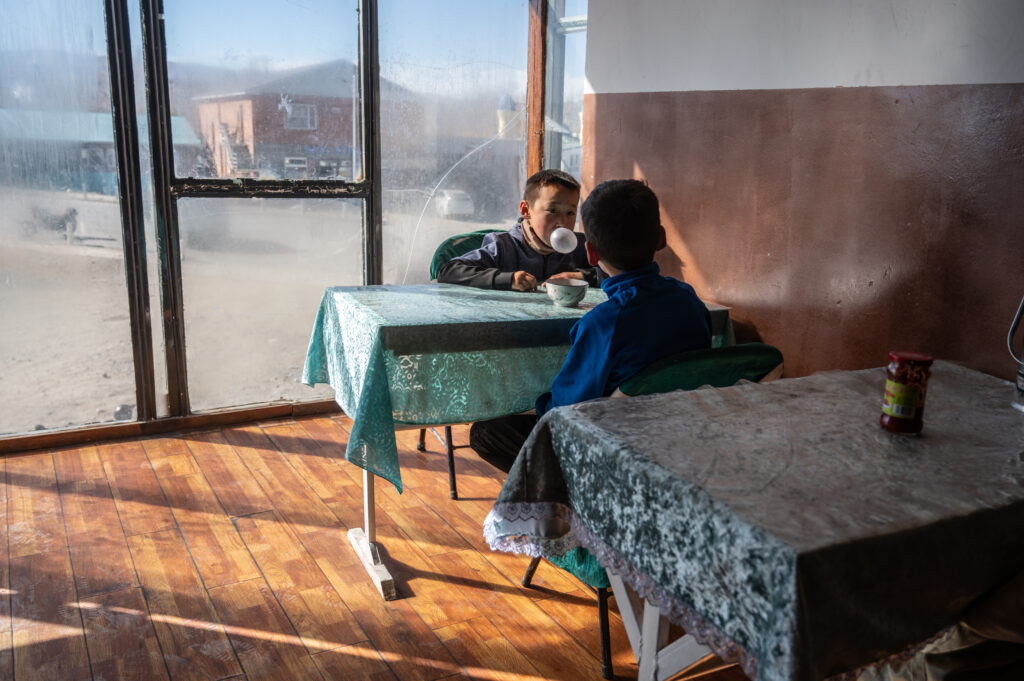
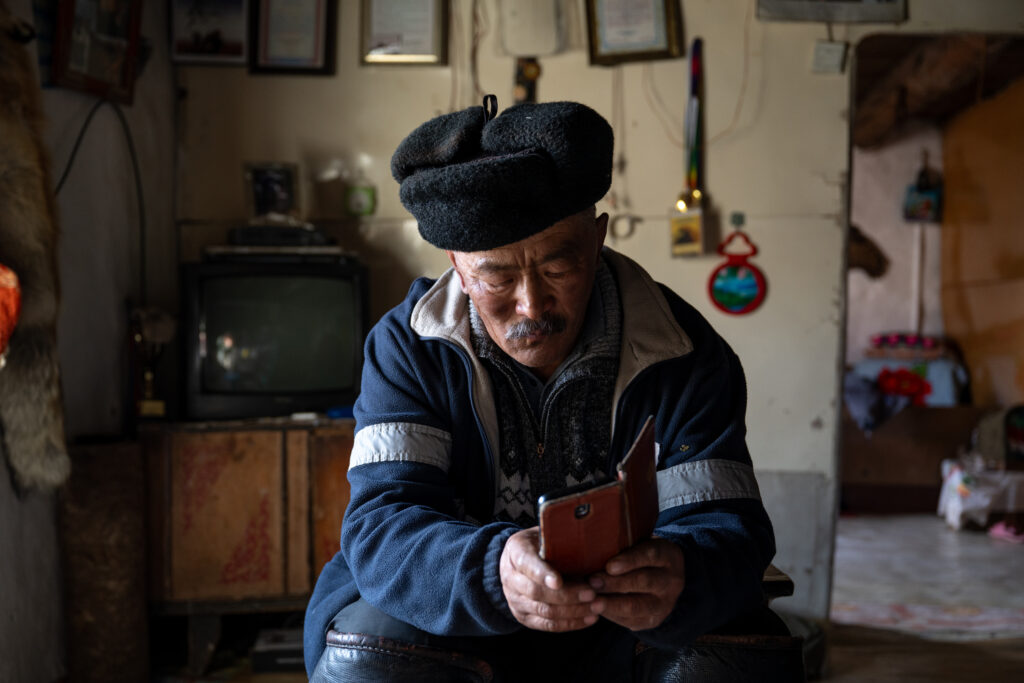
The effects of modern life are increasingly visible. While older hunters speak of their eagles with reverence, some teenage boys seem more captivated by their phone screens than by the mountains around them. Even seasoned hunters adapt in quiet ways. Master hunter Khairatkhan can sometimes be seen scrolling through his phone at home, or pausing mid-ride to check messages while his horse snatches a few blades of grass.
Though digital connectivity remains limited in the Altai, mobile phones are gradually becoming part of daily life. Hunters now share fox sightings and coordinate outings through group chats – a striking example of tradition and technology coexisting.
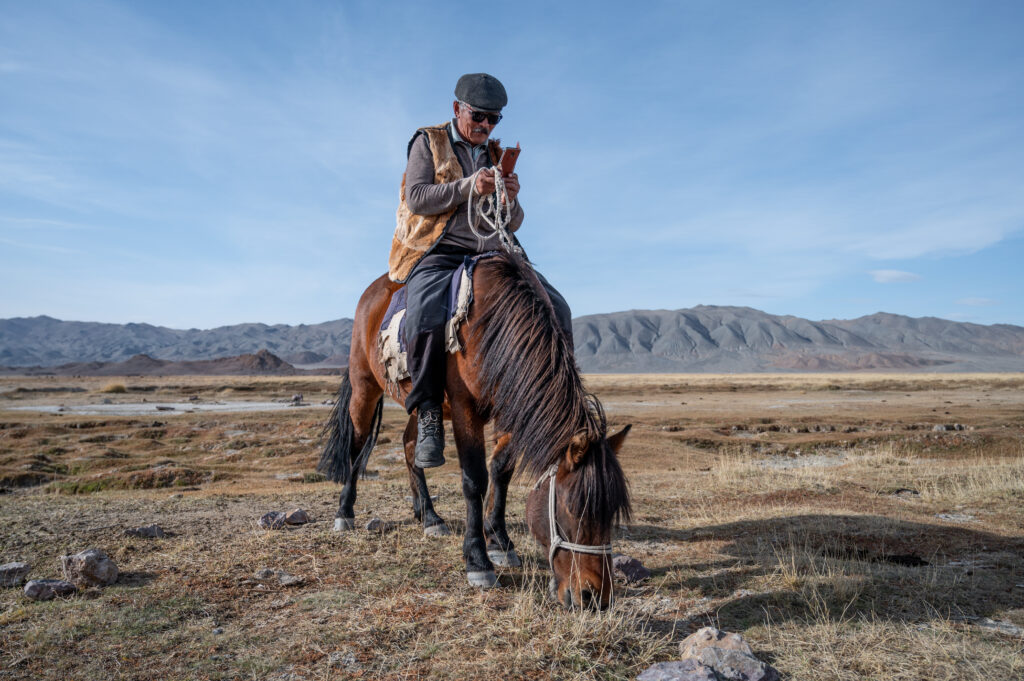
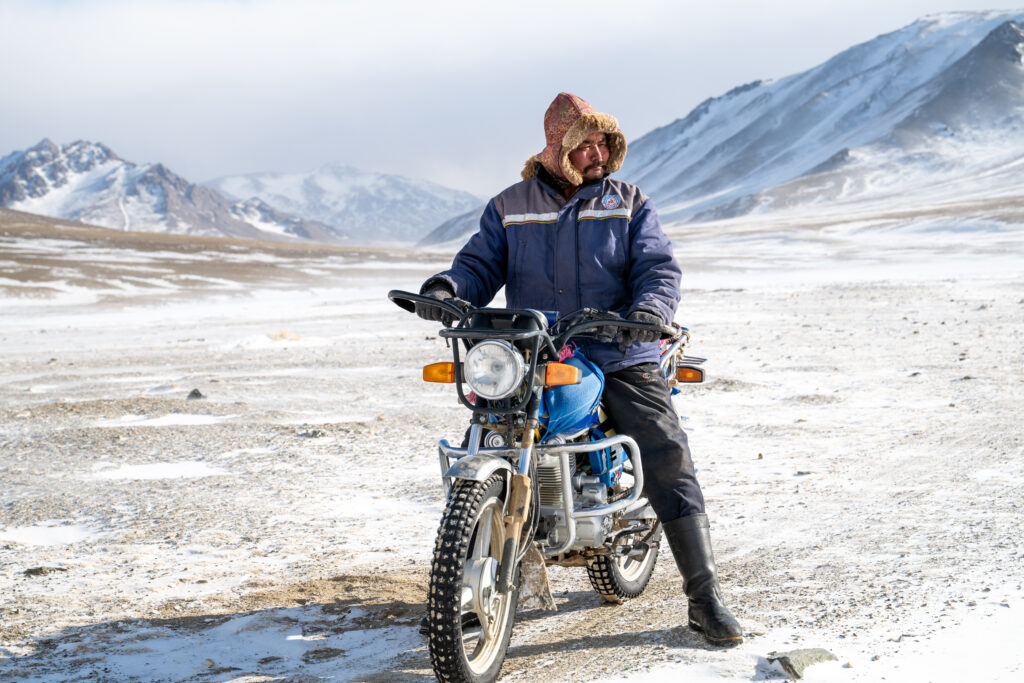
Change is also evident in how people move across the landscape. During my first visit in 2019, motorbikes were still relatively uncommon, and riders frequently travelled into villages on horseback to buy supplies or visit relatives. In recent years, however, motorbikes have become increasingly widespread, and many herders now use them to gather livestock, their engines echoing across valleys that were once silent except for the wind and the sound of hooves.
Yet despite their growing presence, horses remain indispensable. When snow deepens or mountain trails become icy and treacherous, machines struggle, while horses continue to navigate terrain that vehicles cannot. Rather than replacing horses entirely, motorbikes represent another adaptation – a sign of a community balancing tradition with the practical realities of modern life.
A Universal Language
For me, photographing the communities of the Altai was not simply a photography assignment. It was also a return to something deeply personal. Although the cultures of Wales and western Mongolia differ enormously, I recognised something familiar in the relationship between rider and horse. Confidence in the saddle, the subtle communication through movement and balance, and the quiet understanding built over time speak to a deep bond between human and animal that transcends geography and culture.
Across much of the modern world, the close bond between people and horses has gradually faded as roads and vehicles replaced trails and hooves. In the Altai Mountains, however, that relationship remains woven into daily life – not as a romantic relic of the past, but as a living and evolving connection between people, animals, and the land they depend upon.
Riding with Dastan that day, watching him guide his pony across the valley with effortless confidence, I was reminded how enduring that connection can be. With the Altai mountains rising around us and the sound of hooves striking rocky ground, it felt as though the quiet language between horse and rider required no translation at all.
The opinions expressed are those of the contributor, not necessarily of the RSAA.

ALTAI: Hunters and Herders of Mongolia
18 June 2026 15.00 BST
Join us for this online talk with photojournalist Claire Thomas, creator of ALTAI: Hunters and Herders of Mongolia, inviting us into the highlands, homes, and hearts of ethnic Kazakh herders.
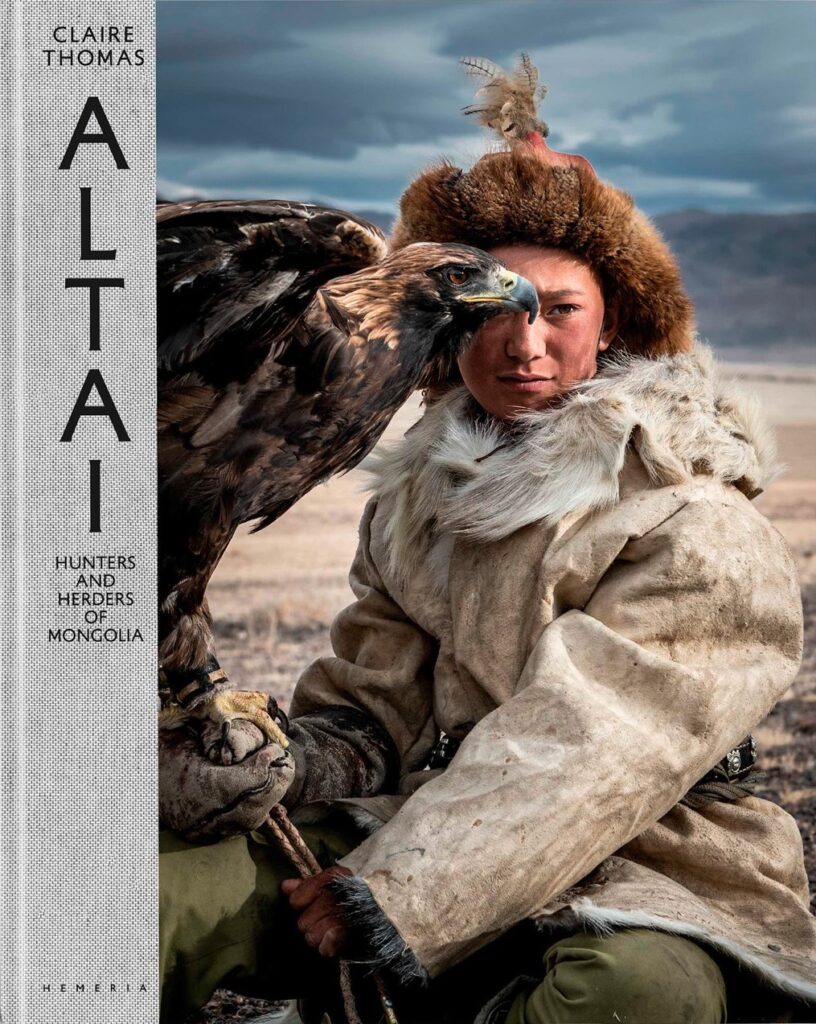
ALTAI: Hunters and Herders of Mongolia
Claire’s first book is the result of more than six years documenting Kazakh eagle hunters and herding families in western Mongolia. ALTAI is a journey into a vanishing way of life, where every image tells a story of resilience, reverence, and the profound connection between humans, animals, and the land they share. Discover a culture at the edge of the world – and at the edge of transformation. The book is a tribute to beauty, survival, and the fragile threads of heritage.
This book is published by Hemeria and is available to purchase on their website.