Places Forgotten by Maps: Myanmar’s Rohingya Refugees Face Starvation
Dr Rónán Lee is a Leverhulme Trust Early Career Fellow at Loughborough University and the author of Myanmar’s Rohingya Genocide: Identity, History and Hate Speech
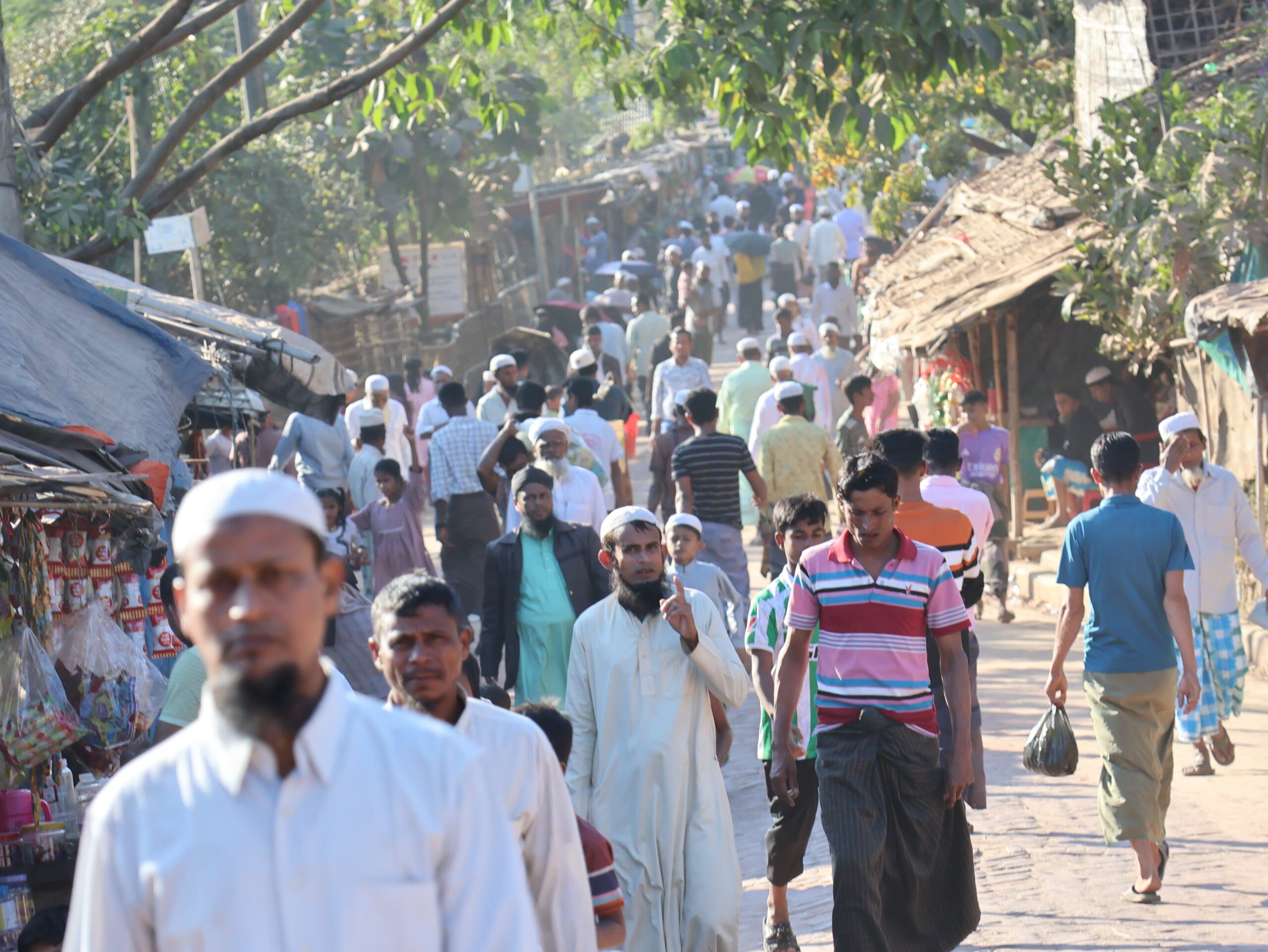
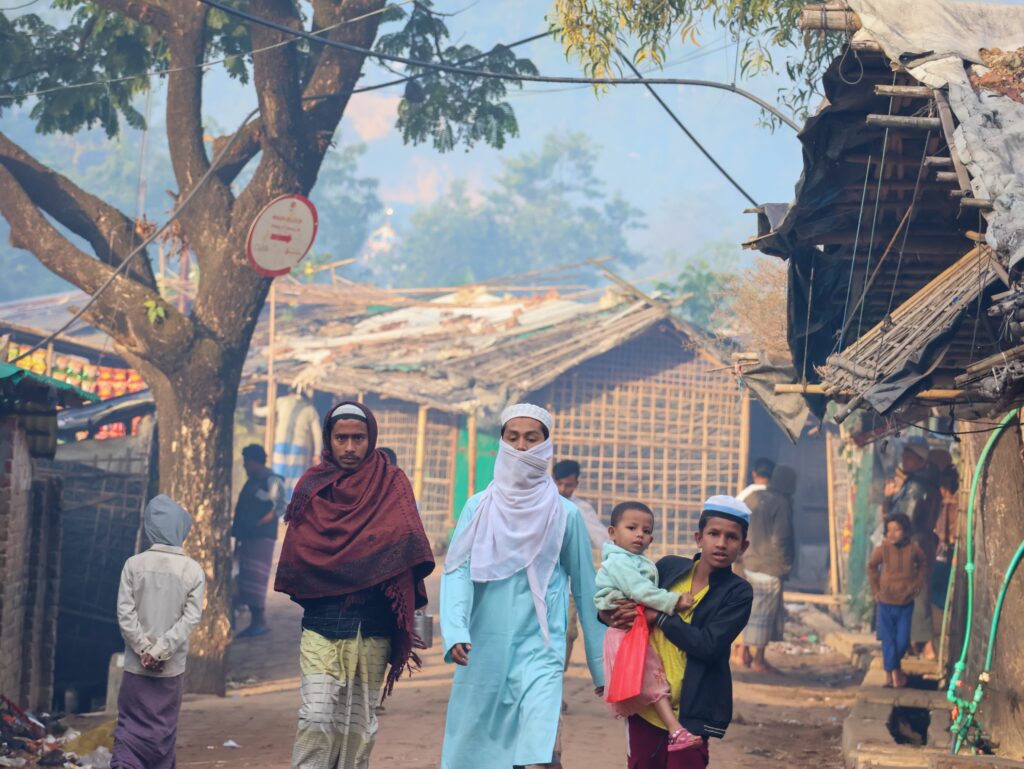
“Places forgotten by maps” is how Rohim Ullah describes the sprawling complex of refugee camps where he lives alongside more than one million of his fellow Rohingya. It is a particularly apt description because these places are commonly identified using numbers rather than proper names and for eight years Bangladesh’s government has prohibited the building of permanent shelters lest the refugees put down local roots. Refugees are prevented from leaving the camps, giving the place the feel of a massive open-air prison. Rohim Ullah photographs camp life and has worked with my Rohingya Futures research project to document the lived everyday experience of his community. His photos are confronting but compassionate, highlighting his community’s struggles and transforming everyday life into acts of cultural memory and resistance. In recent times, this photography has shown a community struggling to survive.
Forcibly deported from their ancestral lands in Myanmar (also known as Burma) and denied recognition of their citizenship, the Rohingya have long feared their displacement could be made permanent but without legal recognition of a right to live freely anywhere else. Life here is bleak and with crises in the Middle East and Ukraine dominating international media, this community of genocide survivors understandably feels abandoned by the international community. Recent announcements by the World Food Programme (WFP) that Rohingya rations are to be slashed mean many Rohingya refugees now face the prospect of starvation if they remain in the camps.
Forced Displacement from Myanmar
A Muslim minority from Buddhist-majority Myanmar, in 2017 most Rohingya were violently deported from their ancestral lands by Myanmar’s military (a group known as the Tatmadaw or Sit-Tat). Claiming a search for militants, Tatmadaw troops depopulated Rohingya communities in northern Rakhine state using scorched earth tactics against civilians, obliterating hundreds of villages with fire, killing at least 9,000 men, and unleashing a gut-wrenching campaign of sexual violence against women and girls. United Nations investigation teams have rightly identified the Rohingya as victims of an ongoing genocide, and there are concurrent legal cases being considered by the International Criminal Court and the International Court of Justice.
The Tatmadaw’s brutal campaign prompted the region’s largest forced migration since the Second World War with around one million Rohingya fleeing their ancestral lands for the relative safety offered by Bangladesh. They arrived on foot, carrying whatever possessions they were able to salvage before their homes were destroyed – some rice, a cooking pot, sometimes a portable solar panel. Some carried infants or frail elderly relatives for the days-long trek to safety over mountains and across rivers. The UN’s High Commissioner for Human Rights, Zeid Ra’ad Al Hussein, described this catastrophe as “A textbook example of ethnic cleansing”.
Rohingya Refugees and Aid Dependency
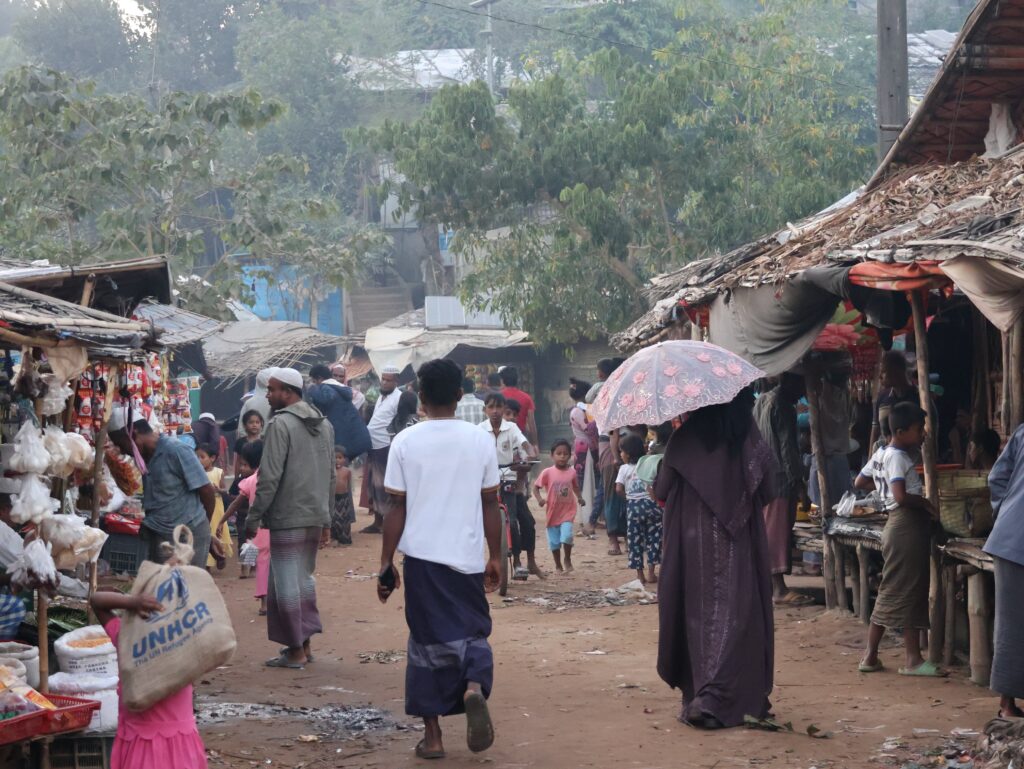
Eight years after the 2017 crisis, the Rohingya’s circumstances are grim. Those Rohingya remaining in Myanmar, around half a million people, live in apartheid conditions locked down in their villages and fearing further military violence. The refugee community, now comprising the world’s largest Rohingya settlement, are confined to camps that might as well be prisons. Bangladesh regards the Rohingya as temporary residents and prevents them from leaving the fenced-in camps, many now surrounded by barbed wire. Some refugees risk arrest, beatings and the loss of rations by taking low paid work in agriculture, labouring, or domestic work close to the camps. Basic education for children has been painfully slow to be authorised and the refugees have not been allowed to legally work or operate camp-based businesses. Rohingya are prohibited from owning mobile phones, a restriction that limits access to online banking making even remittances difficult to access. An obvious consequence of this situation is that the refugee community has been made almost wholly reliant on humanitarian aid.
Bangladesh is admittedly far from a rich country and it should have been expected that public sympathy for the long-term residence of a large population of foreign nationals reliant on humanitarian aid was always likely to decline. Bangladesh officialdom has grown increasingly frustrated with the protracted nature of the Rohingya’s residency and the slow pace of progress towards repatriation to Myanmar. The country’s previous Awami League government welcomed the involvement of China in brokering a repatriation, discussions that did not include Rohingya representatives. Worryingly Bangladesh’s government and the UN seemed willing to swallow the Myanmar military’s official assurances of the safety of Rohingya repatriation. During 2023, Myanmar officials made multiple visits to the refugee camps and were ferried around on UN boats with UN branding removed. Many Rohingya legitimately fear forced repatriation to an unsafe and conflict-riven Myanmar where a genocidal military heads an unstable national administration.
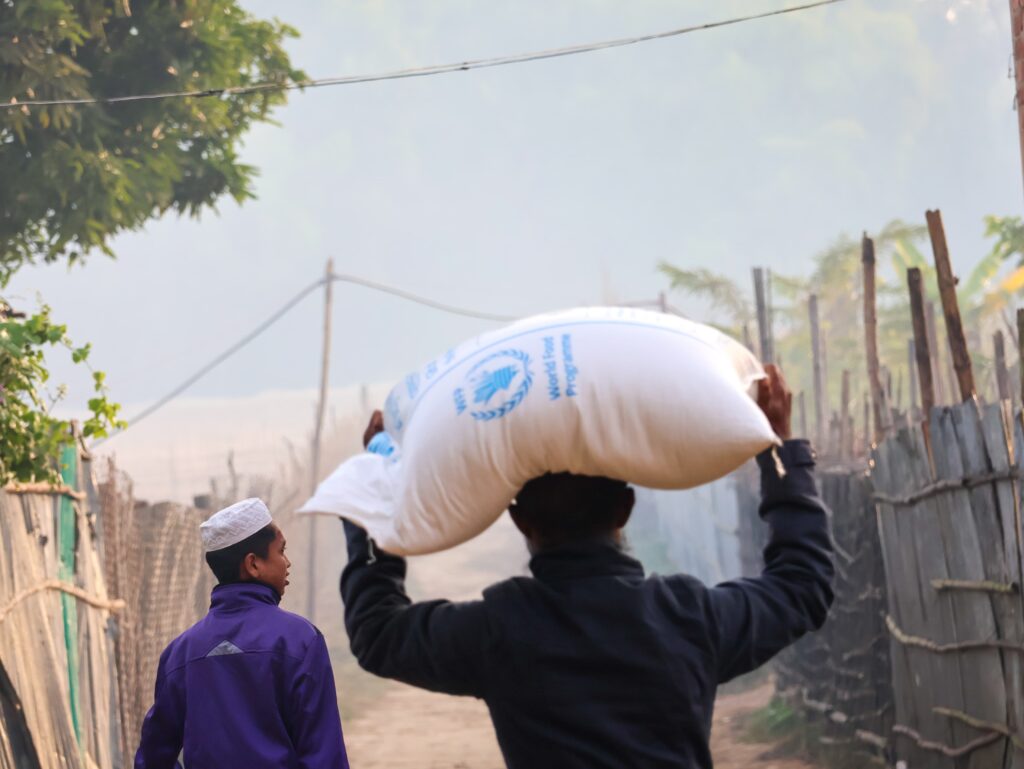
Today, Rohingya refugees might be safe from Myanmar’s military but they face an existential challenge because of substantial cuts to the humanitarian assistance available to them. With its annual budget requirements only around half funded, the WFP has announced that from April rations for the refugee community will substantially shrink. For some refugees this will mean a drop to starvation levels. Refugees currently get by on a monthly ration of just US$12. Families might be able to stretch this to buy 10 kilos of rice and some other staples like lentils or oil. A caloric intake that barely allows subsistence. The latest cuts will mean many refugees will receive just a $6 monthly ration – that’s just seven cents per meal and is well below the requirement to meet basic dietary needs. The refugee community is desperately vulnerable and children are particularly at risk from this latest ration cut. Already 12 per cent of Rohingya children are acutely malnourished, four in ten suffer from stunted growth and half are anaemic.
Without regime change in Myanmar, convincing Rohingya refugees to voluntarily repatriate was always likely to be a challenge, but the threat of starvation certainly has the potential to change minds and prompt many to reluctantly agree to repatriate to an unsafe Myanmar. Some Rohingya legitimately fear a repeat of the 1978 repatriation when Rohingya displaced by previous Myanmar military violence were starved to death in their hundreds within Bangladesh refugee camps. Those refugees reluctantly repatriated to a military-ruled Myanmar where they faced immediate persecution and, in time, further violent deportations like those of 2017.
A Path Forward
Pressuring refugees by squeezing their rations to starvation levels will potentially make the WPF and Bangladesh’s government complicit in the genocide against the Rohingya. Rich countries that have talked tough on human rights should urgently match their talk with funds to return rations to liveable levels. Bangladesh’s new Tarique Rahman-led government could immediately ease the pressure of looming ration cuts with two policy changes. Allowing the refugees to work and establish small businesses within the camps seems an obvious solution. At considerable risk, some refugees already work outside the camps. Making this legal will not attract more refugees as the Bangladesh authorities fear – most Rohingya who can have already fled Myanmar. Instead it will provide a path to self-sufficiency. Also helpful would be lifting restrictions on refugee access to mobile phones. This could give refugees access to banking, remittances and even microfinance. With every refugee already biometrically registered, there should be few administrative hurdles to allowing all refugees speedy access to SIM cards. With humanitarian aid donations dwindling and the prospects of a safe return to Myanmar some time distant, it is little wonder the Rohingya refugee community feels forgotten.
With thanks to Rohim Ullah for the photos.
The opinions expressed are those of the contributor, not necessarily of the RSAA.
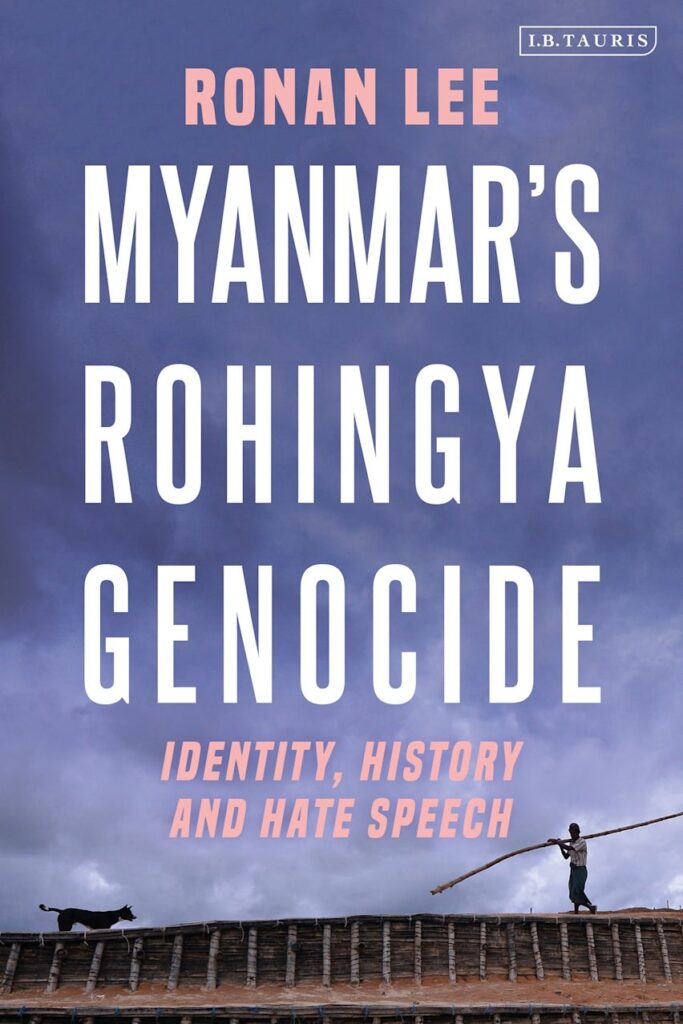
Myanmar’s Rohingya Genocide: Identity, History and Hate Speech
The genocide in Myanmar has drawn global attention over human rights violations, forced migrations and extra-judicial killings on an enormous scale. This unique study draws on thousands of hours of interviews and testimony from the Rohingya themselves to assess and outline the full scale of the disaster. Casting new light on Rohingya identity, history and culture, this is an essential contribution to the study of the Rohingya people and to the study of the early stages of genocide. This book adds convincingly to the body of evidence that the government of Myanmar has enabled a genocide in Rakhine State and the surrounding areas.