When Songs Carry History: Bhojpuri Folk Music and Migration

Simit Bhagat Is an award-winning Filmmaker, Journalist, musician and cultural archivist based in Mubai, India
Some histories survive not in official archives, but in songs.
In the Bhojpuri-speaking regions of eastern Uttar Pradesh and Bihar in northern India, folk music has long carried an emotional record of departure, labour, longing, and return. These songs were embedded in village life, sung during labour, festivals, and social gatherings. They travelled by memory rather than manuscript. They were shaped by women at the grinding stone, by labourers in transit, by performers in local theatre troupes, and by communities for whom music was woven into everyday life.
Much of that world is now receding. The older singers who still remember these repertoires are ageing, often in poverty and many have no disciples to inherit their art. Rural social life has changed drastically. Migration to large cities continues, village customs have weakened and the settings in which these songs once lived have become less common. What is being lost is not only a musical tradition, but a way of remembering the past.
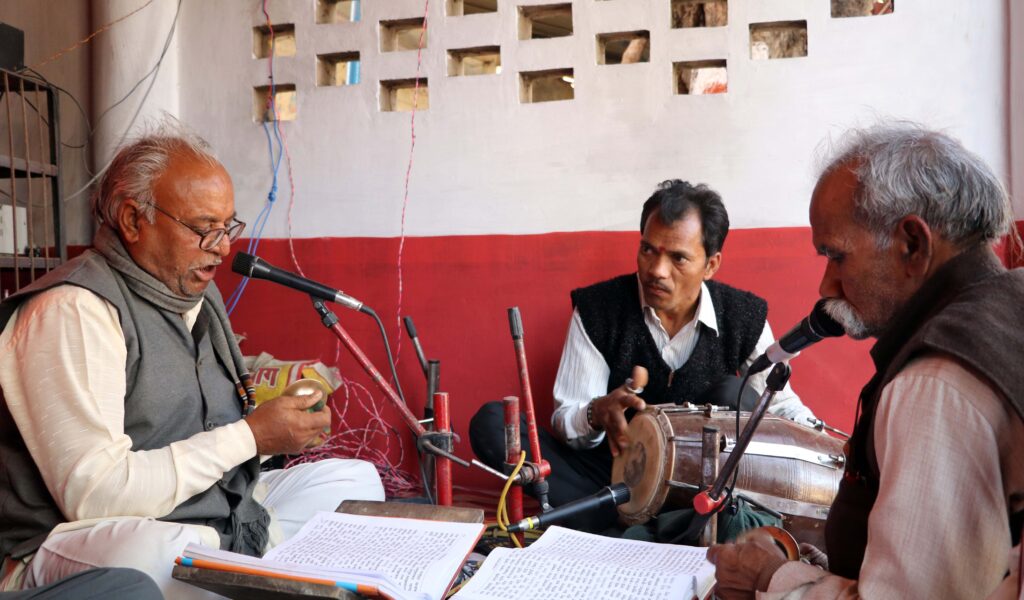
This is especially true of the songs associated with bidesia, a term that evokes the one who has gone away: the migrant, the absent beloved, the man who has left for Kolkata (formerly Calcutta) or some distant place of work. In Bhojpuri folk traditions, bidesia came to hold much more than personal sorrow. It became a language through which communities expressed the pain and uncertainty of migration. These songs speak of waiting, deception, economic hardship, broken households, and lives stretched across distance. They also preserve voices that rarely entered formal historical records.
One Bhojpuri line captures this feeling with remarkable economy: “Yesterday, my dear departed for Calcutta.” In a few words, it opens onto a much larger history. During the colonial period, Kolkata was not merely a city of work. It was also a point of departure. For many from northern India, especially the poor and landless, migration began there, whether towards urban labour or towards the far more wrenching journeys of indenture. After the abolition of slavery in 1834, the British colonial government transported large numbers of indentured labourers from India to colonies including Mauritius, Fiji, South Africa, Suriname, and the Caribbean. Many came from Bhojpuri-speaking regions. They crossed the kala paani, or “black waters”, a sea crossing long associated with rupture, caste loss, and separation from home, leaving behind families, fields, and familiar landscapes while carrying language, memory, and song with them.
In this sense, Bhojpuri folk music is more than a regional art form. It is an oral archive of migration. It preserves not just events, but feelings. Official records can tell us how many ships sailed, how labour systems were organised, or where migrants were sent. Songs tell us something else: how departure was understood in the village, how absence was endured by those left behind, how humiliation and hope sat together, and how memory travelled across oceans. They offer a people’s history of movement under unequal conditions.
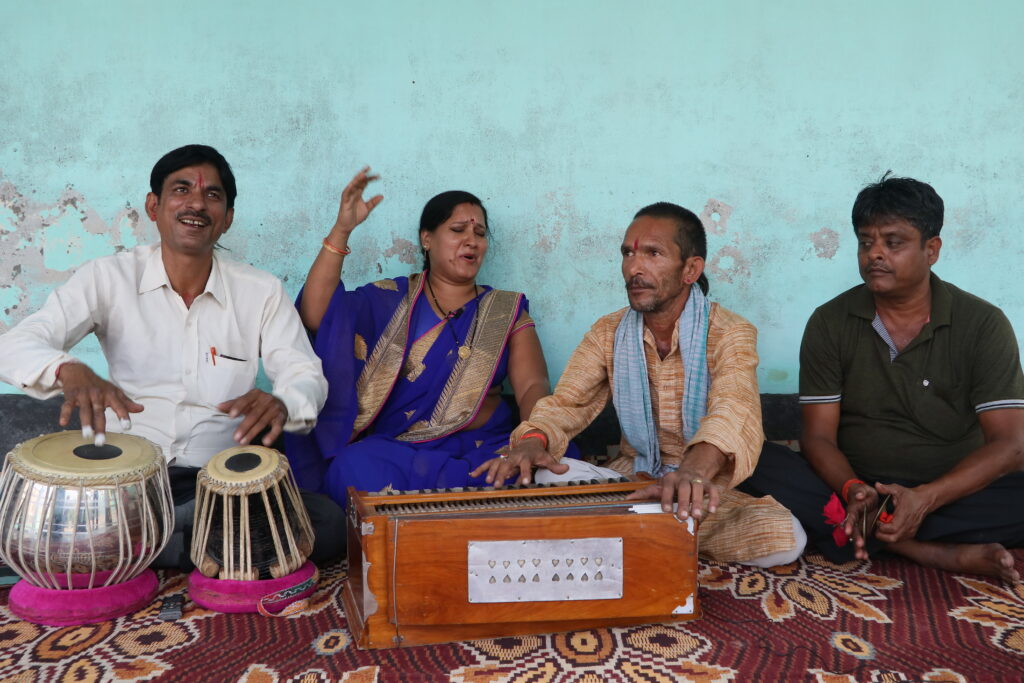
Bidesia was never only one form or one playwright’s creation. It grew as a wider Bhojpuri folk response to migration, separation, and social change and found expression across songs, performance, and oral memory. But this musical world was never limited to departure alone. Bhojpuri traditions also moved through seasons, love, devotion, and rural labour. Chaiti marked spring, Kajri carried the monsoon, Phagua belonged to Holi, Birha gave voice to longing, and Jatsaar emerged from women’s work at the grinding stone.
Together, these forms preserved an emotional record of Bhojpuri life, with migration as one powerful thread among many. Across villages in Bihar and eastern Uttar Pradesh, older singers still carry repertoires of Chaiti, Kajri, Birha, Jatsaar, Phagua and other forms that encode local histories and social worlds. Some songs belong to festivals, some to agricultural labour, some to marriage, some to grief. A Jatsaar song, once sung by women while grinding grain on stone mills, belonged to a fading rhythm of work. Passed orally from mother to daughter and from mother-in-law to daughter-in-law and to the next generations, it lived within everyday labour. As hand-grinding disappeared with mechanisation, the occasion for singing disappeared too, and the songs began to fade.
That is one reason these traditions now stand in a fragile position. Their decline cannot be reduced to one cause. It is tied to migration, changing village economies, new forms of media consumption, the weakening of intergenerational transmission, and the shrinking place of oral traditions in contemporary public culture. Many singers are not professional musicians in the formal sense. They are farmers, labourers, artisans, and workers who inherited music as part of community life. When that life changes, the chain of memory weakens.
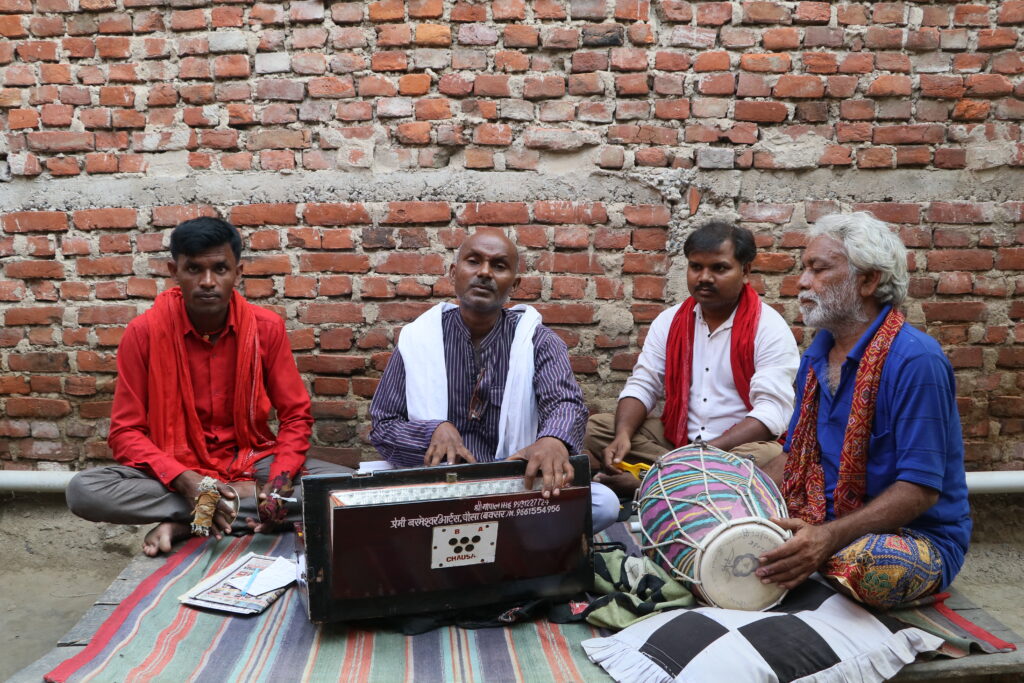
There is also a striking contradiction in the contemporary fate of Bhojpuri music. Outside India, especially in regions shaped by indentured migration, older traditions still evoke a deep emotional response. Descendants of migrants often hear in them a trace of family history, even when time and distance have transformed the surrounding cultural world. In places such as Mauritius, Suriname, South Africa, and the Caribbean, Bhojpuri-derived traditions evolved in dialogue with other musical forms, giving rise to new genres such as chutney music. Such practices were not static; they were dynamic and showed that migrant culture had not only survived but had also adapted and flourished in a new environment.
Within India, however, the public image of Bhojpuri music is often dominated by commercial forms that bear little relation to this older folk inheritance. Loud, market-driven, and frequently coarse popular music has crowded subtler traditions out of public view. This has had consequences. It has obscured the richness of Bhojpuri folk expression and made it easier to overlook the historical depth carried in its older repertoires. The decline of these forms is therefore not simply a matter of changing taste. It is also a matter of cultural memory.
The need for documentation becomes especially clear when one encounters singers whose knowledge is immense but precariously held. In village after village, it is still possible to find elderly performers who remember songs passed down by parents and grandparents, but who have rarely, if ever, been recorded. Their repertoires survive in fragments, in performance, in recall, in gesture, sometimes only when prompted by the right setting or the right listener. One elderly woman, well into her nineties, struggled at first to recollect a song she had inherited from her mother, only to gradually recover its lines and bring into the present a scene from an older village world. Such moments reveal how oral tradition works. It lives in bodies, in memory, and in practice. Once that chain is broken, recovery becomes difficult.
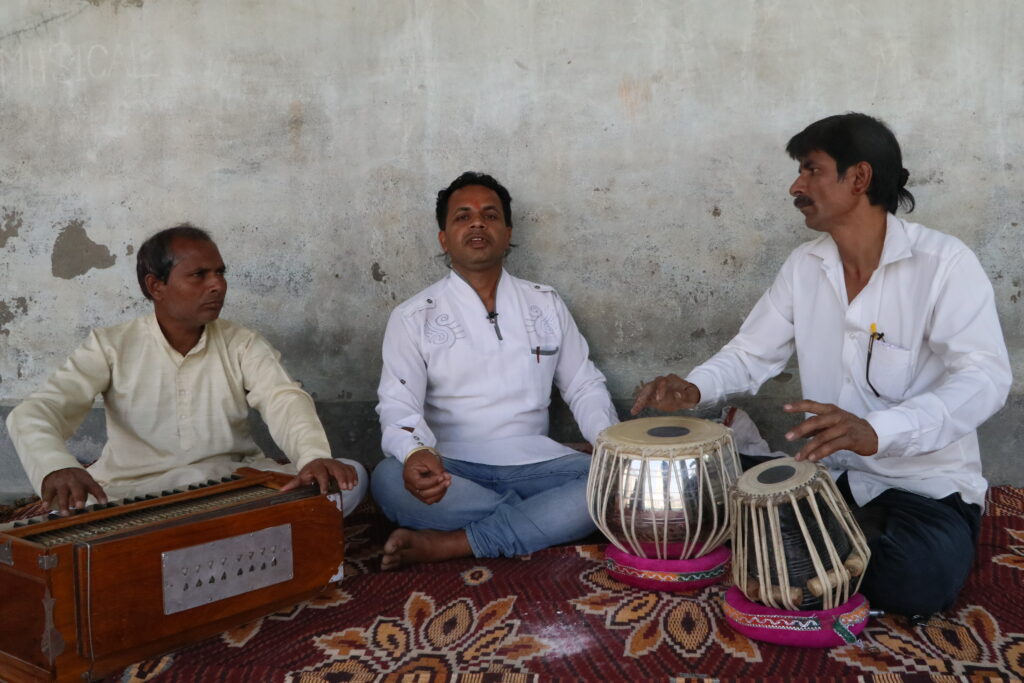
It was this urgency that led first to In Search of Bidesia, a feature-length documentary centred on the lives and songs of Bhojpuri folk artists, and later to The Bidesia Project, a not-for-profit initiative dedicated to archiving and conserving endangered Bhojpuri folk music. So far, the project has recorded more than 200 songs and documented dozens of artists, building a growing digital archive of material that might otherwise have vanished without record. The documentary won Best Music Documentary at the Royal Anthropological Institute Film Festival in the United Kingdom in 2021. In February 2026, the wider effort to preserve Bhojpuri folk music was recognised at the House of Lords in the Palace of Westminster through the India-UK Achievers honours.
The value of such work, however, lies not in recognition alone. It lies in the fact that these songs still matter. They matter because they preserve voices from histories of indenture and migration that remain insufficiently heard. They matter because they offer access to women’s labouring and rural worlds that formal archives often marginalise. They matter because they connect present-day migration from northern India to much older patterns of leaving and waiting. Even now, the themes recur in new forms. Where older songs once spoke of letters that never came, newer variants may lament the unanswered phone call. And so, the technology changes, but the ache of absence remains.
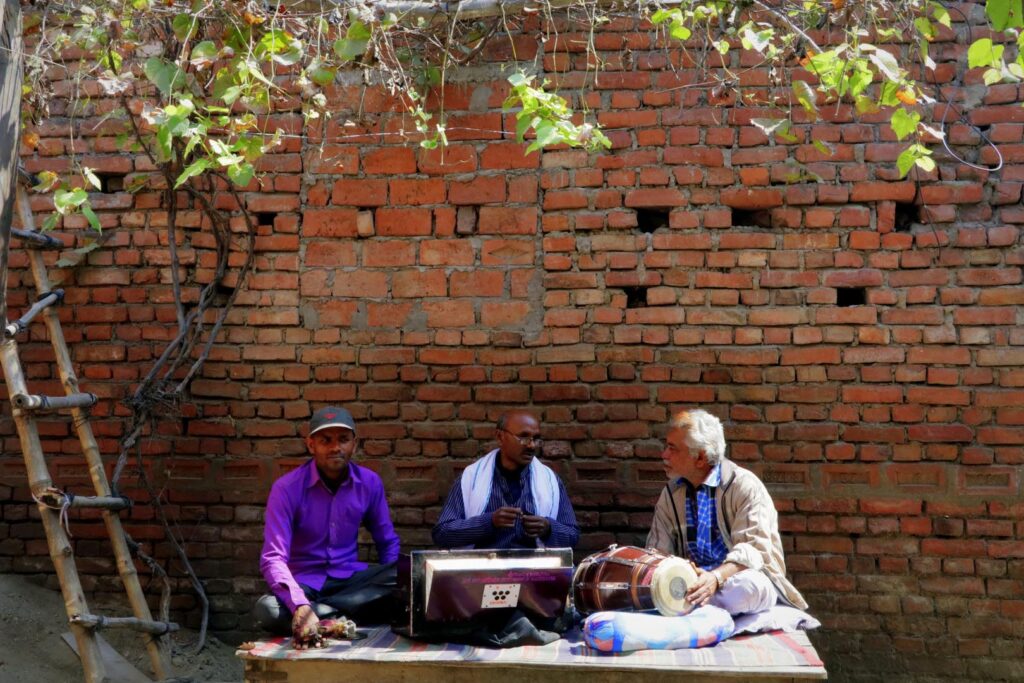
The preservation of Bhojpuri folk music is therefore not an exercise in nostalgia. It is an effort to keep open a historical and emotional record that still has much to tell us. At a time when intangible cultural heritage is discussed in increasingly formal terms, these traditions remind us that heritage is not only about monuments or classical forms. It is also about fragile vernacular memory, about the songs through which ordinary people have understood upheaval, separation, and survival.
What survives of bidesia today survives in dispersed form: in village performances, in family memory, in diaspora adaptations, and in recordings made just in time. It also survives in the recognition that these songs are not minor remnants of a fading past, but part of a much larger South Asian story. They belong to the history of labour, empire, and migration. They belong to the history of women’s speech and waiting. They belong to the afterlives of indenture. And they remind us that where written history falls silent, song often continues to speak.

Find out more about Simit Bhagat Studios here.
The opinions expressed are those of the contributor, not necessarily of the RSAA.