Easy Prey: Iran’s Targeting of the United Arab Emirates in a Time of War
Charles J Sullivan, PhD is a political scientist and the author of “The Bear, the Eagle, and the Falcon: Russia, America, and the United Arab Emirates in a Time of Great Power Rivalry” in Asian Affairs (2024).
The Islamic Republic of Iran’s targeting of the United Arab Emirates and elsewhere in the Gulf is part of waging an asymmetric war against the United States and Israel, with the global economy in Tehran’s crosshairs. Iran has obstructed substantial maritime transport via the Strait of Hormuz, driving up the price of oil and disrupting global supply chains. Iran has hit back at Israel and the United States, and is also brazenly striking the Gulf Cooperation Council states. The United Arab Emirates labels Iran’s menacing behaviour as illustrative of Tehran’s “military failure, moral bankruptcy and political isolation.” Yet, in lashing out at the UAE – the GCC state most besieged since the February 28 US-Israeli strike that killed Supreme Leader Ayatollah Ali Khamenei, among many others – Iran is firing missiles and drones to tarnish the Gulf state’s image, frighten its mostly expatriate workforce, and wreak financial havoc.
The UAE’s overarching information strategy consists of a curated narrative stressing economic ascendance coupled with political stability. UAE President Sheikh Mohamed bin Zayed Al Nahyan maintains that the UAE is “no easy prey.” So far, the UAE claims to have intercepted 300+ ballistic missiles and 1,600+ drones, but whether the GCC states can maintain adequate supplies of interceptors for a prolonged war is a matter of concern. In essence, the “easy prey” is not the UAE per se, but its narrative of a safe country where people can transit, vacation, and invest their wealth. Iran intends to make the UAE look like a high-risk country to live, work, play, and prosper.
The Strait of Hormuz has been interpreted as a “centre of gravity” in any escalatory conflict with Iran, and Tehran now seeks to throttle this vital maritime chokepoint. Yet the wider security architecture of the Gulf fully rests on an implied assurance of US defence. Iran’s targeting of the United Arab Emirates and other GCC countries with drones and missiles shows them that America cannot entirely shield them. In essence, to ensure regime survival, Iran is orchestrating a “horizontal expansion” of the war, and the UAE’s aforementioned narrative stands as a target as long as Iran can keep the regional situation in flux.
The appeal of Dubai, the UAE’s most populated city and main entrepôt, rests on its global reputation as a safe, tax-friendly, resort destination. Dubai, considered one of the world’s safest cities (in addition to Abu Dhabi, Ajman, Ras al-Khaimah, and Sharjah), seeks to protect its image. But drone debris falling onto a hotel, drones falling near Dubai International Airport, and drone-related fires near the US consulate in Dubai and at Jebel Ali port dilute the UAE’s strategic narrative.
The UAE seems reluctant to directly strike back at Iran, and the Trump administration’s apparent miscalculation concerning how Iran has responded thus far should give Abu Dhabi pause. Thus far, the UAE does not appear poised to try to reassert authority over the islands of Abu Musa and the Greater and Lesser Tunbs, territories which Iran has controlled since late 1971. The UAE has recently expressed that it could possibly play a contributory role to a US-led coalition focused on ensuring the unrestricted transit of ships through the Strait of Hormuz, but the country’s sheer proximity to this waterway leaves Abu Dhabi with very little manoeuvrability. The UAE is also considering freezing Iranian assets, though this may invite some retaliation. Iran is being militarily hobbled, yet Tehran is still sending a disturbing message to the GCC states about the costs of aligning with the United States – the Islamic Republic endures, and does not seek to deescalate.
Despite President Pezeshkian’s earlier apology to Iran’s neighbours, Tehran now seems to be doubling down on attacking the GCC states. Iran’s military has stated that it could target ports and “American hideouts” in the UAE, after America’s bombing of Kharg Island. Recent attacks in Fujairah and at Dubai International Airport indicate that Iran can still inflict damage. The volume of Iranian attacks has decreased, seemingly due to America and Israel striking Iran’s military assets. Still, it is unclear now as to whether Tehran is running low on drones, and the UAE’s image will remain vulnerable to Iranian pressure, as long as the United States struggles with unblocking the Strait of Hormuz.
The UAE insists that Iran halt its attacks, before engaging in any mediation. However, the difficulty in identifying Iran’s new leaders presents a challenge to even possibly engaging in negotiations. Tehran is also aware of the anxiety it is causing across the Gulf and appears to be betting that it can undermine GCC confidence in Washington’s overall reliability by maintaining regional instability. Whether the Iranian regime prevails – or simply endures – remains to be seen, but if it does, the UAE may well be the first GCC state to adjust its relations with the United States. Despite the UAE’s generous pledge to assist Gaza in support of Trump’s Board of Peace, relations with America have been strained for some time. It would be exceedingly optimistic to think that this war will somehow draw Washington and Abu Dhabi closer together once hostilities subside. Public criticism of Trump in the UAE has been muted (with at least one notable exception). That said, it is a safe assumption that many across the Gulf are upset with Washington. In the meantime, however, US-UAE relations could further erode, albeit quietly, for Iran likely aspires to push Trump’s “war of choice” into an “escalation trap” and fracture this bilateral relationship.
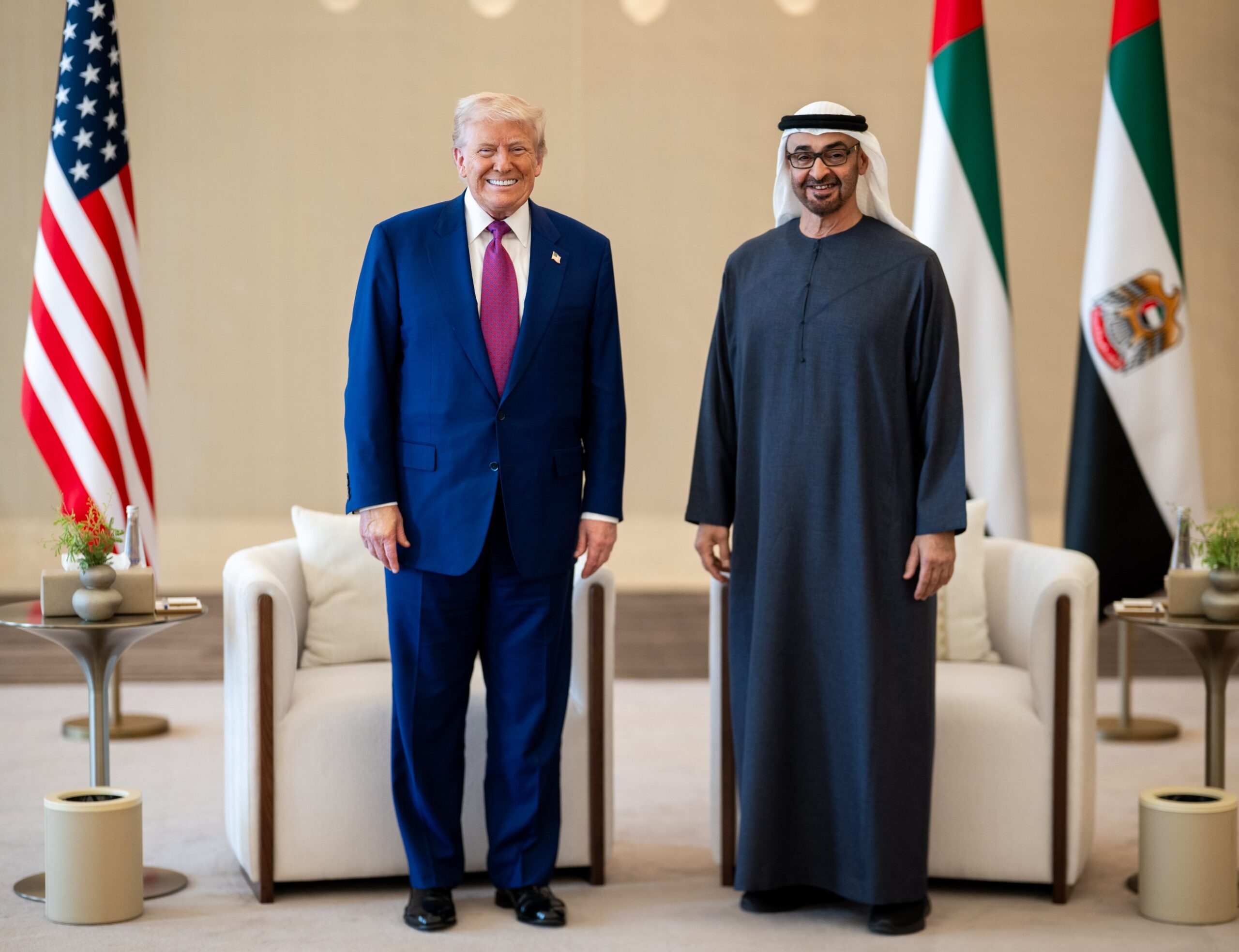
*Image credit: President Donald Trump meets with UAE President Sheikh Mohamed bin Zayed Al Nahyan, Thursday, May 15, 2025, in the Presidential Flight Terminal at Abu Dhabi International Airport in the United Arab Emirates. (Official White House Photo by Daniel Torok)
The opinions expressed are those of the contributor, not necessarily of the RSAA.