Permafrost Politics: How Thawing Ground Is Rewriting Asia’s Strategic Map
Saranya Chattopadhyay is a student of political science based in india
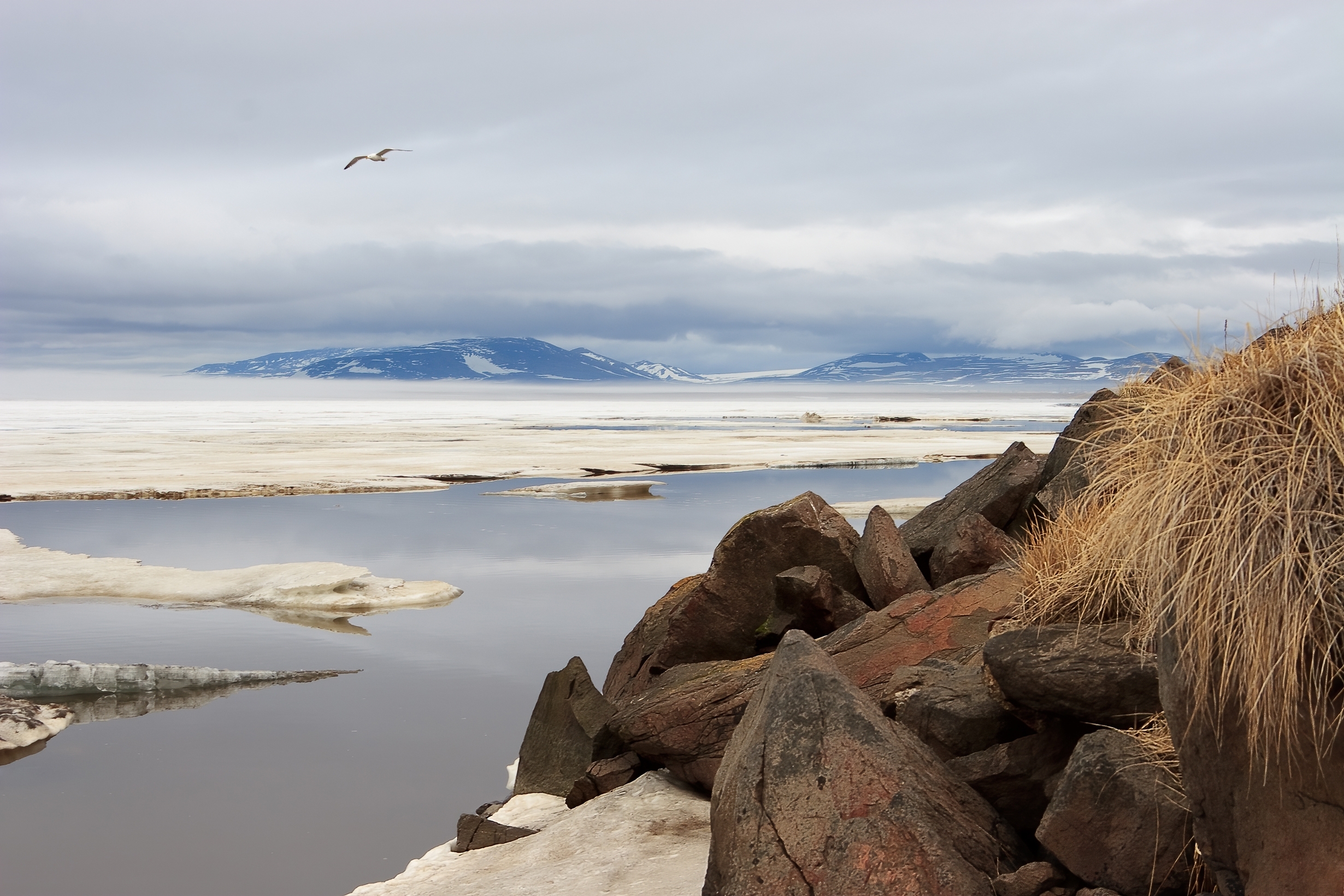
The Arctic is thawing far from Asia’s gaze, yet its silent transformations are already redrawing the contours of power across the continent’s highest mountain systems. What appears to be a remote environmental shift is, in reality, a slow strategic checkmate, where melting permafrost, fragile borders, and geopolitical ambition converge to recalibrate strategic realities once thought geographically insulated. Permafrost typically appears in policy documents as a footnote to climate change. Yet the rapid thaw now unfolding from Arctic Siberia to the Tibetan Plateau is beginning to reorder Asian geopolitics in ways that are both incremental and profound.
From Polar Ice to the “Asian Water Tower”
The most dramatic manifestations of permafrost thaw have, so far, appeared in the Arctic. Sinking infrastructure in Norilsk, ruptured pipelines, and the 2020 diesel spill in Russia’s far north have become enduring visual shorthand for a warming world under strain. Yet these spectacles mask a quieter and potentially more far-reaching reality. Through complex climatic teleconnections, Arctic thaw is intimately linked to High Mountain Asia, where permafrost and glaciers together sustain the so-called “Asian Water Tower,” a system foundational to regional hydrology, livelihoods, and strategic stability.
Across the Tibetan Plateau alone, scientific estimates suggest that nearly 240,000 square kilometres of permafrost have already disappeared – an expanse larger than Nepal and Bhutan combined. This thaw steadily erodes the structural integrity of slopes and plateaus, destabilises roads and railways, and reshapes both the timing and volume of melt water that sustains the Indus, the Brahmaputra, and other major trans-boundary rivers. What begins as a thermodynamic shift in frozen ground thus cascades into hydrological and political uncertainty, with implications for the water security and livelihoods of hundreds of millions of people across South, Central, and East Asia.
Fragile Ground and Ambitious Corridors: Shaping Infrastructure and Power
Asia’s high-mountain corridors now sit at the heart of national development and strategic integration agendas, from China’s Belt and Road infrastructure across the Qinghai-Tibet Plateau to India’s accelerated road-building in Ladakh and Arunachal Pradesh. Yet the thawing of permafrost quietly complicates these ambitions, driving up maintenance costs, heightening the risk of sudden structural failure, and steadily reducing the operational lifespan of critical assets such as highways, rail networks, and hydropower installations.
The Qinghai-Tibet Railway is frequently celebrated as a triumph of engineering over altitude and cold. Yet sections of its embankments are now deforming as the permafrost beneath them steadily loses strength. Comparable vulnerabilities are surfacing along Himalayan mountain roads that sustain remote garrisons and border posts, where warmer and wetter conditions have increased the frequency of landslides and ground subsidence. In strategic terms, thawing permafrost transforms infrastructure once assumed to be permanent into a moving target, complicating plans for rapid reinforcement, logistical reliability, and the long-term militarisation of contested high-altitude terrain.
Water Insecurity and Downstream Politics
The politics of permafrost are inseparable from the politics of water, as the Hindu Kush–Himalaya–Tibetan region feeds major trans-boundary rivers linking China and India, India and Pakistan, and China to Southeast Asia. Shifts in snow melt timing, slope stability, and the integrity of glacial and permafrost “dams” can quickly trigger floods, landslides, and disrupt base flows. These dynamics create cascading risks for agriculture, hydropower, and urban centres, while intensifying tensions over water access and strategic leverage across some of Asia’s most contested borders.
For downstream states, these changes exacerbate long-standing anxieties over upstream control and information asymmetries. In the Brahmaputra basin, for example, Beijing’s plans for large hydropower projects on the Yarlung Tsangpo intersect with growing scientific concern about permafrost degradation and slope instability on the Tibetan Plateau. While it would be simplistic to attribute any single flood or sediment surge to permafrost thaw alone, the cumulative effect is to make water futures harder to predict, increasing the political premium on data sharing, early-warning systems, and basin-wide coordination.
Arctic Openings, Asian Recalculations
At first glance, the Arctic and the Himalayas might appear to belong to entirely different strategic conversations – one dominated by shipping lanes and hydrocarbons, the other by glaciers and contested borders. Yet both are shaped by the same processes of warming and thaw, and by a growing network of Asian interests in polar governance. China’s 2018 “Polar Silk Road” white paper framed Arctic sea routes not as distant corridors, but as a direct extension of the Belt and Road Initiative, connecting northern maritime passages with overland routes through Central Asia and the Tibetan Plateau. In doing so, it revealed how the fates of high-latitude and high-altitude regions are becoming increasingly intertwined in Asia’s emerging strategic architecture.
For Asian states whose water security and high-altitude infrastructure depend on fragile mountain systems, Arctic thaw acts as a warning from the future. The gradual subsidence of pipelines, towns, and embankments in the far north presages similar vulnerabilities for energy networks, transport arteries, and settlements across Asia’s permafrost frontiers, where engineering assumptions were forged under a more stable climate. As a result, discussions of Arctic science, risk assessment, and governance – once the preserve of a narrow community of polar specialists – are increasingly resonating in Asian capitals. Policymakers are beginning to treat the Arctic as both a laboratory and a cautionary tale for managing their own high-altitude landscapes under accelerating climatic uncertainty.
Science, Sovereignty, and the Limits of Adaptation
The politics of permafrost in Asia’s mountain regions underscore a persistent tension between scientific knowledge and sovereign control. While permafrost itself transcends borders, the observational datasets needed to monitor its degradation are often generated, curated, and retained within national systems, resulting in uneven cross-boundary transparency. Although regional initiatives have advanced standardised monitoring of glaciers and snowpack, permafrost remains comparatively neglected, underrepresented in adaptation frameworks, and poorly integrated into risk-assessment models. Policymakers are thus left without the comprehensive evidence required to anticipate cascading hydrological, infrastructural, and strategic challenges.
Adaptation options such as redesigning foundations, rerouting roads, or reinforcing slopes are technically feasible, but they impose considerable financial and administrative burdens. In fragile, resource-constrained mountain regions – particularly in Afghanistan, Pakistan, and Tajikistan – these costs intersect with limited state capacity and ongoing security challenges, leaving local communities to shoulder the brunt of permafrost-related risks. This asymmetry raises stark questions of climate justice, as populations that have contributed minimally to global emissions face some of the most immediate, unpredictable, and potentially transformative impacts of thaw.
Towards a Permafrost-Aware Asian Agenda
If permafrost thaw represents a “silent checkmate” in Asia’s mountain politics, it is not because outcomes are predetermined, but because the rules of the game are evolving faster than most actors have recognised. Within this shifting landscape, three domains emerge as particularly critical for shaping an effective and forward-looking agenda.
First, explicitly incorporating permafrost into regional climate and security dialogues – from the Shanghai Cooperation Organisation to South Asian and Himalayan environmental forums – would reframe thaw as a shared strategic risk rather than a peripheral scientific curiosity. Second, expanding open, cross-border datasets on ground temperatures, slope stability, and river flows could meaningfully reduce uncertainty, even if disputes over infrastructure or water allocation persist. Third, embedding conservative climate scenarios into infrastructure planning, rather than relying on optimistic baselines, would recognise that today’s roads, dams, and railways must endure a rapidly evolving cryospheric future, where thaw and instability are the new constants.
Asia’s “mountain empire” has long been understood through the language of frontiers, buffer zones, and commanding heights. Yet as permafrost thaws, the ground beneath these enduring metaphors is literally shifting. How the region responds through incremental adaptation or the emergence of a deliberate, permafrost-aware political strategy – will determine not only the resilience of highland communities, but also the stability of interstate relations across landscapes whose frozen foundations are increasingly unpredictable. In effect, the mountains themselves are becoming active actors in Asia’s strategic calculus, and recognising their thaw is no longer optional, but central to the region’s future security, governance, and hydrological stability.
The opinions expressed are those of the contributor, not necessarily of the RSAA.