American Turbanismo in Afghanistan: How a Centuries-old Colonial Fantasy Keeps Reinventing Itself
Zohra Saed is an Afghan American Academic and Poet
In popular Anglo-American imagination, Afghanistan has long been a site where masculinity, danger, and imperial desire converge. From the nineteenth century onward, Western travel writing about the region relied heavily on a repertoire of images: turbans, rifles, barren land, and “tribal warriors” that transformed Afghan men into hypermasculine archetypes rather than subjects. “American Turbanismo” is the term I use to describe this distinct US adaptation of British colonial mythmaking, which emerged through the writings of nineteenth-century and Cold War–era American travelers such as Josiah Harlan, Januarius MacGahan, Lowell Thomas, and, later, W T Vollmann.
The persistence of this trope from early nineteenth-century travelogues and military memoirs to twentieth-century war journalism and twenty-first-century YouTube adventure channels demonstrates the durability of the fantasy.
Turbanismo: A Persistent Colonial Lens
“Turbanismo” names an inherited visual grammar through which Afghan men are rendered as the land is: rugged, inscrutable yet picturesque, and always ready for combat. It originates in British imperial writing, particularly during the Great Game, when depicting Afghans as fierce, untamable, and perpetually armed helped justify frontier policies, punitive expeditions, and the drawing of the Durand Line in 1893. The wilder the Afghan, the safer British India appeared.
By the late nineteenth and early twentieth centuries, American journalists, illustrators, and early filmmakers adopted and adapted these images. The cowboy mythos, already central to American national identity, merged seamlessly with British frontier fantasies. Afghans became props in an imagined geopolitical theatre, enabling American observers to rehearse their own imperial masculinity on distant terrain.
Josiah Harlan: An American Before Empire
The first major figure in this narrative is Josiah Harlan, a Quaker from Chester County, Pennsylvania, who arrived in Afghanistan in 1838. Unlike his British contemporaries, Harlan was not an agent of an empire. His travels, documented in A Memoir of India and Afghanistan (1842), emerged from personal ambition, curiosity, and a desire for social mobility at a moment when “self-made manhood” was beginning to displace older communal masculine ideals in the United States with Manifest Destiny.
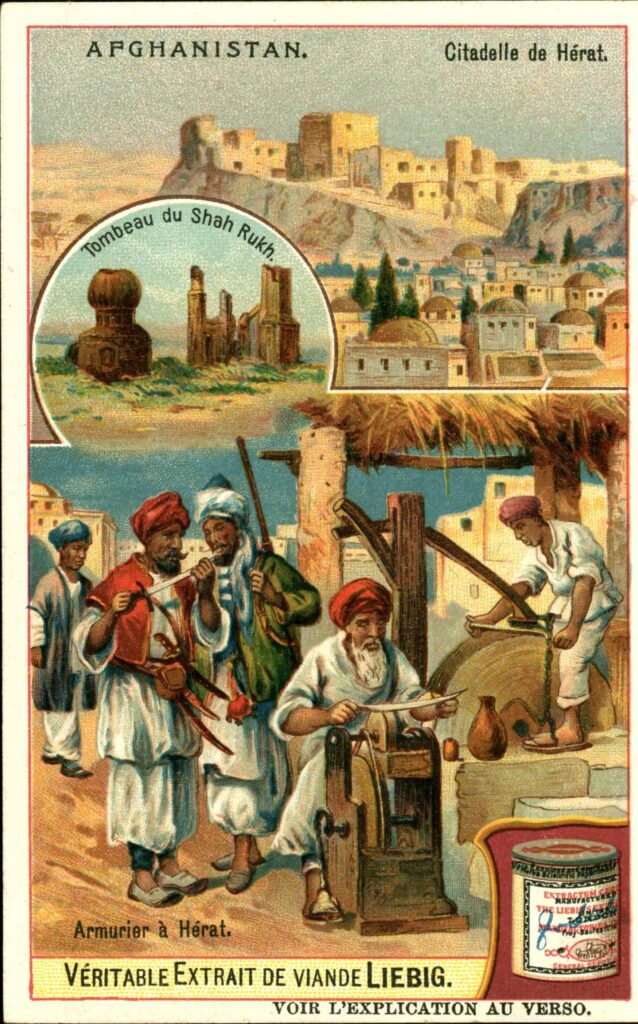
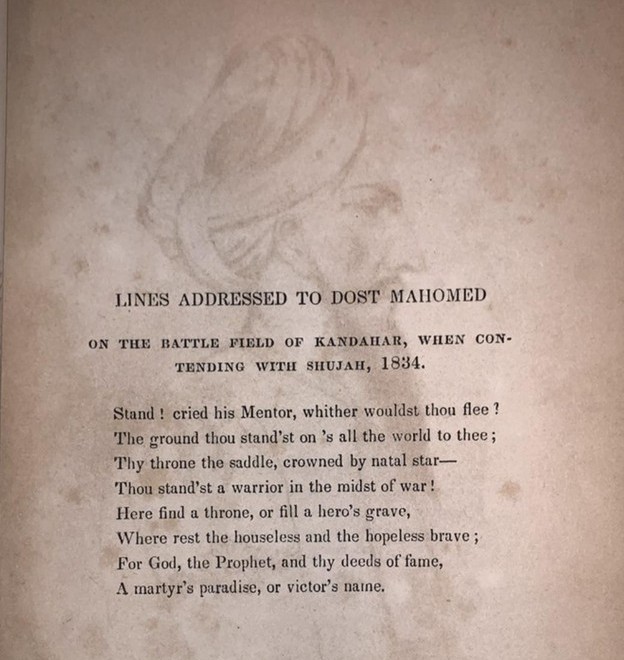
Relationships, not conquest, defined Harlan’s Afghan experiences. His collaboration with Dost Mohammad Khan, his travels into the outskirts of Kabul to fight the British, and his lyrical descriptions of orchards, grapes, and pomegranates counter the familiar image of Afghanistan. Yet when Harlan was resurrected in 2001 as “the first American in Afghanistan,” Ben Macyntire’s biography recycled the Kipling story inspired by Harlan, The Man Who Would Be King. It reshaped him into a prototype of the American adventurer-hero. That reframing replicated the very imperial masculinity that Harlan’s writing destabilised. Harlan became a symbolic prehistory for US military intervention.
Januarius MacGahan and the Desert of the Lone Man
By the 1870s, Januarius MacGahan, an American war correspondent, brought a different strand of Turbanismo into circulation. Riding with Tsarist forces during the campaign against Khiva, he became famous for crossing the Kyzylkum Desert alone to reach the khanate before it fell. His dramatic reporting fueled an emerging genre of “solo male conquest” narratives in Central Asia.
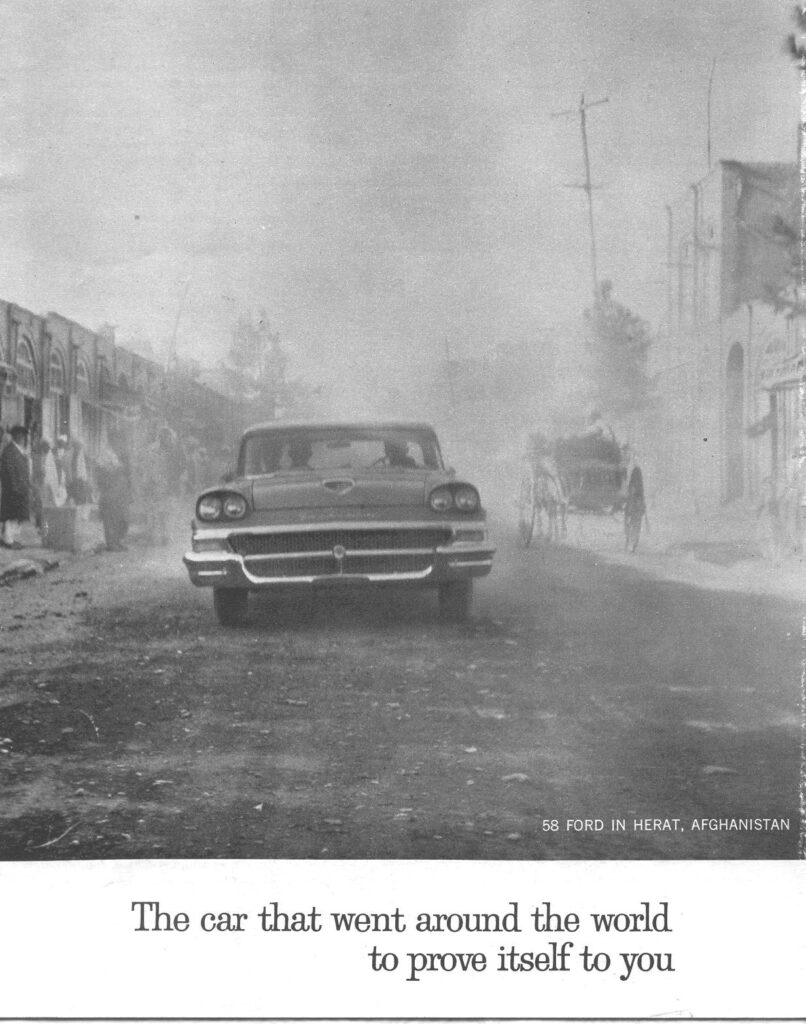
MacGahan’s journalism humanised Tsarist officers while romanticising risk, desert hardship, and frontier endurance. His reports inspired imitators: bicyclists, motorists, and later American cars retraced his route as proof of individual prowess. Although critical of British imperial policy, MacGahan seldom questioned the racialised and gendered lens through which indigenous people were rendered as dramatic scenery.
His work fed Turbanismo as the lone white male hero traversing an allegedly hostile land became a popular figure in both British and American periodicals, and later in twentieth-century travel literature.
Lowell Thomas and the Showmanship of Empire
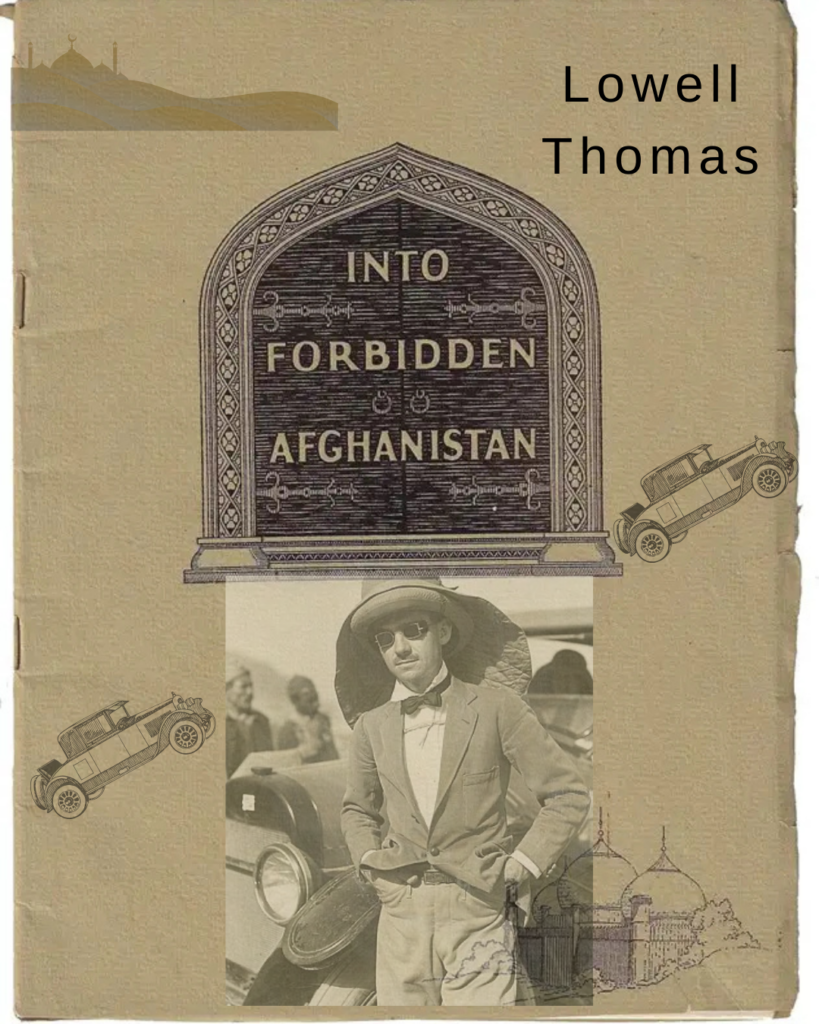
By the 1920s, the American journalist Lowell Thomas amplified Turbanismo through spectacle. Famous for creating the mythic image of “Lawrence in Arabia,” Thomas transformed Afghanistan and the surrounding region into a theatre of adventure.
For American audiences, many of whom had limited knowledge of Afghanistan, Thomas’s accounts of “forbidden” kingdoms and “fierce tribes” provided a thrilling combination of exoticism and reassurance. Afghans became narrative props: warlike, picturesque, and ultimately available for Western storytelling needs. Despite being a guest of Amir Amanullah Khan, who defeated the British in the Third Anglo-Afghan War, he sees him only through his “homemade Western clothes.”
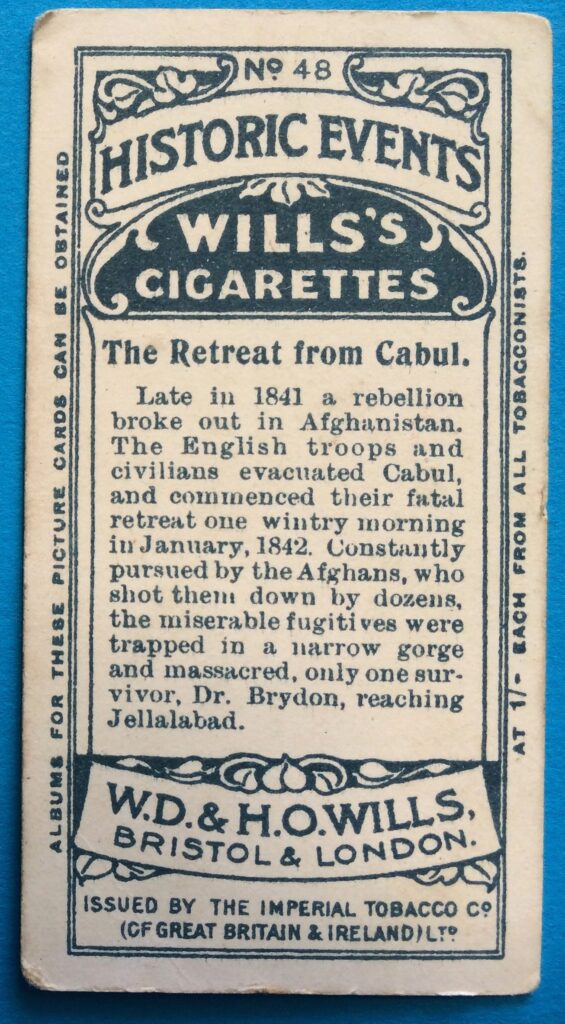
Thomas’s writings and radio programmes helped codify a transatlantic aesthetic of frontier masculinity in the US, one that remained stable across decades of geopolitical change.
W T Vollmann and the Collapse of Cold War Masculinity
The most compelling disruption of Turbanismo in the American archive emerges a century after Harlan, in W T Vollmann’s An Afghanistan Picture Show, or How I Saved the World. Written after his 1982 journey to the Afghanistan–Pakistan border, but published only in 1992, the book refuses the Cold War script of the heroic American aiding anti-Soviet fighters by providing interviews with Afghans in Afghanistan and in the diaspora.
Where mainstream US media portrayed Afghan mujahideen as noble, hypermasculine freedom fighters, a framing embraced by the Reagan administration, Vollmann depicts confusion, illness, insecurity, and the ethical limits of his own presence. When Vollmann records bewilderment and includes a multiplicity of voices, he begins to lose the Cold War narrative grammar. Yet he was not immune to editorial pressures. The book was not published until there was clarity, confidence, a plot, or heroism.
From Harlan to YouTube: Why Turbanismo Still Matters
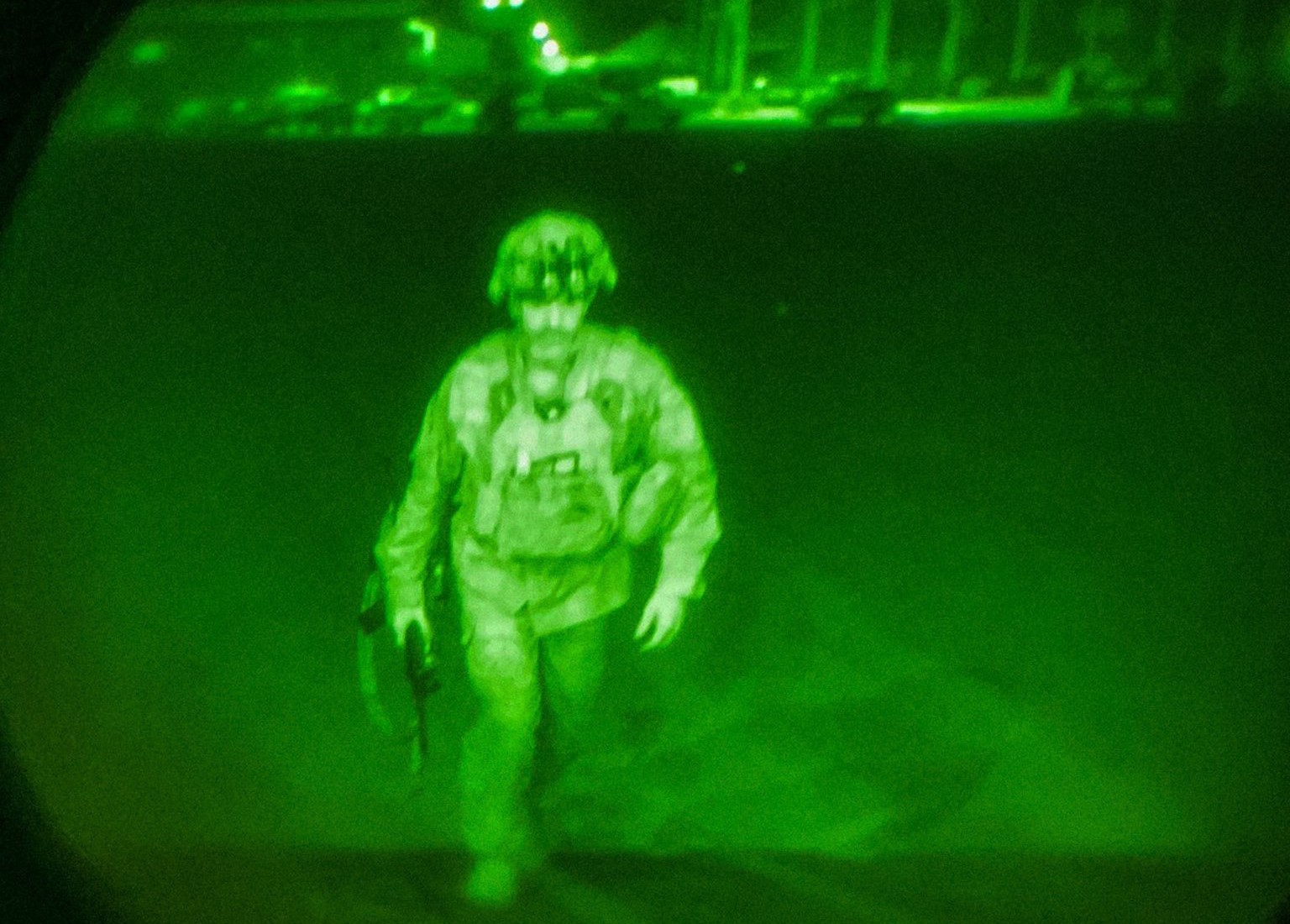
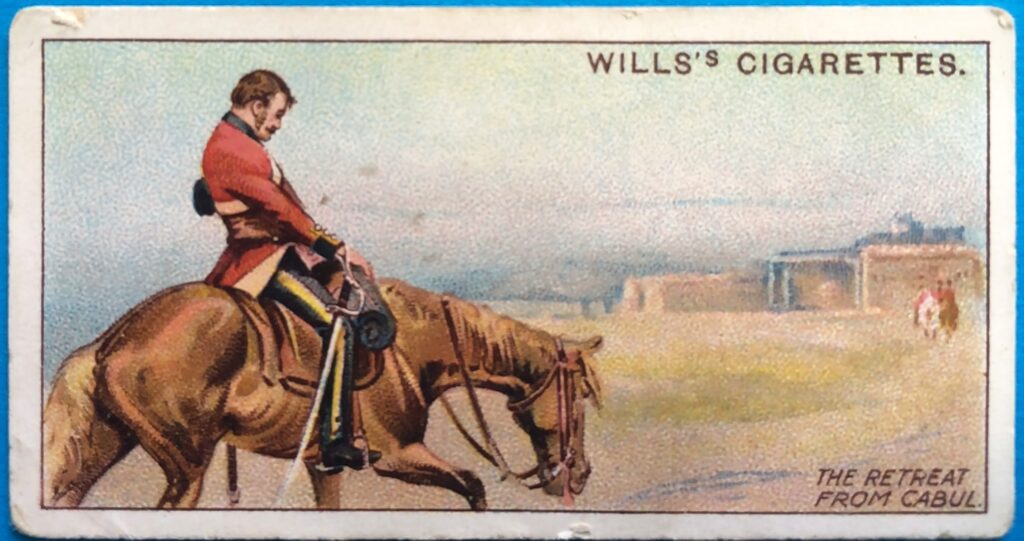
The visual echoes of Turbanismo are very much alive and impact everything from intervention policies to immigration policies in the US. It is by no means Victorian kitsch. The widely circulated image of the last American soldier leaving Afghanistan in 2021, framed in green night-vision, alone at the edge of the airfield, uncannily recalls nineteenth-century paintings of Dr Brydon stumbling into Jalalabad after the disastrous retreat from Kabul of 1842. Once again, it is a lone man who becomes the image of retreat from Afghanistan.
After 2021, Taliban-led Afghanistan attracted a new wave of US YouTube adventurers, selling “forbidden” access and “raw” authenticity to their subscribers. Their thumbnails: grinning foreigners flanked by armed men, drone shots of blue mosques and mountains extend the same trope, Afghanistan as canvas, the American as witness, interpreter, sometimes even “prank” hostage.
Here, a lightly revised version of Edward Said’s insight about “the authority to narrate” remains useful. The power to tell Afghanistan’s story and to make it legible to Western audiences still sits essentially in American or European hands, whether in nineteenth-century memoirs, Cold War reportage, or monetised travel vlogs.
To notice Turbanismo, then, is not only to critique how Afghans have been dehumanised as “warriors” in a hypermasculine landscape, but it also impacts foreign policy and immigration policy. A conflict-only narrative keeps Afghanistan trapped within a reductive frame: warriors on the one hand, victims on the other. It obscures Afghanistan’s historical position as a cultural nexus spanning Central Asia, South Asia, Iran, and the Caucasus, and diminishes the people’s storytelling power.
*headline image – Major General Chris Donahue, commander of the US Army 82nd Airborne Division boards a C-17 cargo plane at the Hamid Karzai International Airport in Kabul, Afghanistan. Maj Gen Donahue is the final American service member to depart Afghanistan (2021). Taken by Master Sgt. Alexander Burnett, US Central Command Public Affairs.
The opinions expressed are those of the contributor, not necessarily of the RSAA.