Rule Breakers: A true story about Technology, Gender, and the Politics of Defiance in Afghanistan

KOVA International
Rule Breakers tells the true story of Roya Mahboob, an Afghan entrepreneur whose work in technology and education has challenged deeply embedded structures of exclusion. Yet the film is not simply a celebration of individual achievement. It is a meditation on resistance under constraint, examining how gender, power, and access to knowledge intersect in a society where women’s participation in public life has long been circumscribed. Through Mahboob’s mentorship of a group of young women, the film explores what it means to pursue agency in environments designed to suppress it.
At its centre lies a profoundly political question: who controls access to knowledge, and what happens when that control is disrupted? In Afghanistan, where decades of conflict, ideological extremism, and patriarchal social norms have narrowed the space for women’s education, access to technology is not neutral. Coding, robotics, and internet access become acts laden with political significance, capable of unsettling hierarchies because they redistribute power. Rule Breakers recognises this, framing technology not as salvation but as a contested terrain shaped by both opportunity and risk.
The film is rooted in the story of the Afghan Dreamers, Afghanistan’s first all-girls robotics team, whose journey to international competition forms its narrative core. In January 2017, Roya Mahboob of the Digital Citizen Fund, a non-profit based in Herat, assembled a team for the FIRST Global Challenge. Following widespread interest and a competitive selection process, six girls from three high schools were chosen to represent their country. Their achievements, alongside the obstacles they faced from securing visas to navigating political and logistical restrictions, brought their story to international attention. The film moves beyond competition outcomes to examine the deeper structures that made participation itself an act of defiance. Education and visibility are presented not as neutral milestones but as challenges to systems that seek to limit women’s public presence.
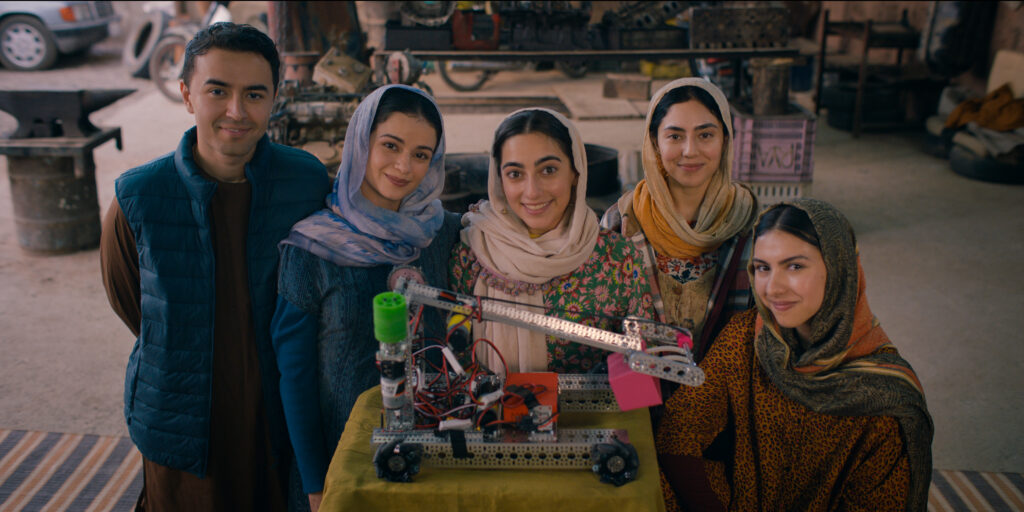
As the team wrote, “We aim to transform the culture of our community through the STEAM program and become some of the young leaders of science and technology. Most breakthroughs normally start with the dream of a child to do something great. We want to be that child and pursue our dreams to make a difference in people’s lives.” The film treats this aspiration seriously, presenting it as a political statement in a context where such dreams are actively discouraged. Mahboob herself reflected on the film, stating, “I’m excited to share Rule Breakers, a film that tells my journey and the incredible story of Afghan girls breaking barriers in STEAM education. It reflects a time of hope and determination, showing what is possible when girls are given the chance to lead and inspire. This story wouldn’t have been possible without the amazing support from so many people along the way. A heartfelt thank you to director Bill Guttentag, the talented writers, and the entire @AngelStudiosInc team for bringing this journey to life. Your dedication to authentically capturing the challenges and resilience behind this story is truly remarkable.”
Rule Breakers draws directly from this reality, portraying digital literacy as both opportunity and threat. Online platforms offer Afghan women new forms of expression and community, yet they also expose them to surveillance and reprisal. Access to technology expands horizons while increasing vulnerability, a tension the film allows to remain unresolved.
The transition from lived experience to cinema was shaped by close collaboration. Director Bill Guttentag, an Academy Award winner, worked with Roya Mahboob and her sister Elaha Mahboob, who co-wrote the screenplay and served as executive producers. This involvement ensured the film remained grounded in authentic experience rather than external interpretation. As a result, Rule Breakers insists on complexity, portraying ambition, disagreement, fear, and humour alongside courage, and resisting simplified portrayals of Afghan women’s lives.
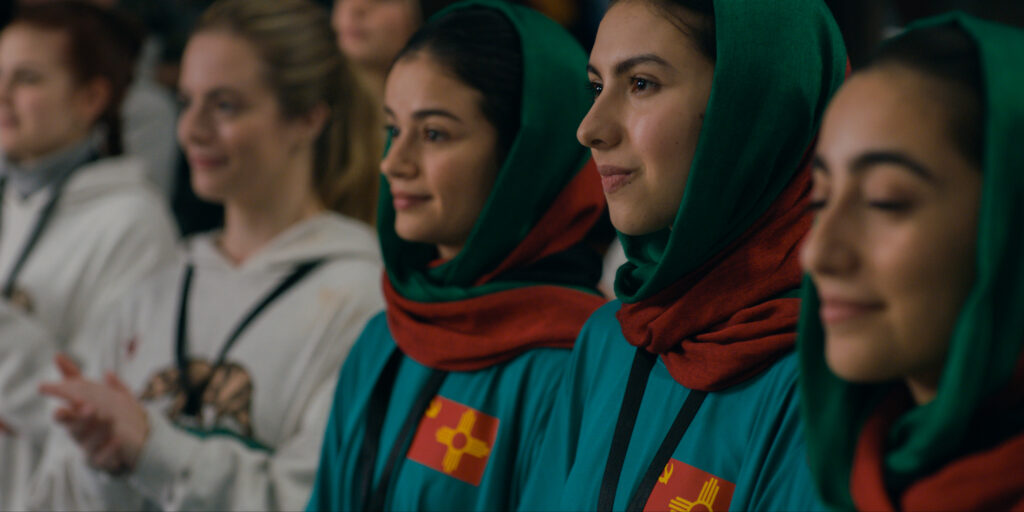
Bringing the story to film was itself a political act. As Elaha Mahboob has noted, the project aimed to counter narrow representations of Afghan women in international media. Rather than showing them solely as oppressed, the film foregrounds agency, intellect, and solidarity while remaining attentive to the constraints under which these qualities are exercised. This balance is one of the film’s most significant achievements.
Produced by Slingshot Productions, Shape Pictures, and Parallax Productions, and distributed by Angel Studios and KOVA International, the film reflects contemporary shifts in storytelling power. Angel Studios’ audience-backed model allows filmmakers to retain narrative control often lost in larger studio systems. Filming took place primarily in Morocco and Hungary for security reasons, yet the film avoids generic conflict imagery, remaining rooted in Afghan social realities and cultural specificity.
Mentorship is central to the film’s emotional and political logic. Mahboob’s relationship with the girls demonstrates that empowerment is built through sustained personal commitment rather than abstract ideals. The girls are portrayed as individuals shaping their own paths, negotiating fear, ambition, and responsibility. The film suggests that systemic change is slow and uncertain but often sustained through personal relationships that endure when institutions fail.
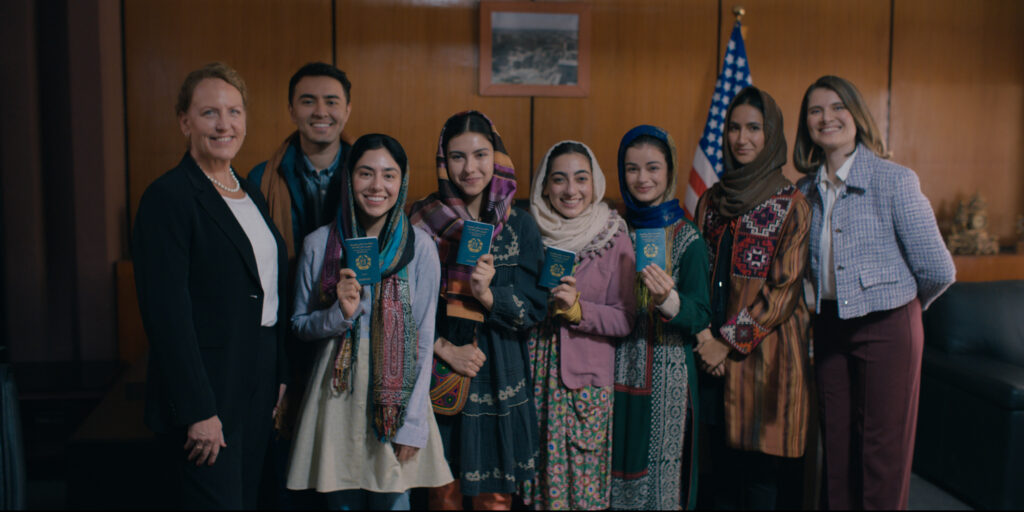
The film also interrogates the costs of defiance. Education and visibility expose women to scrutiny, hostility, and danger. Families are pressured, reputations threatened, and futures destabilised. These consequences are structural features of resistance in restrictive environments. In this sense, Rule Breakers resonates beyond Afghanistan, speaking to broader global struggles over women’s education, autonomy, and participation in public life.
Politically, Rule Breakers functions as an empowering narrative that raises the profile of the Afghan Dreamers and frames defiance as a visible and meaningful act. Rather than focusing solely on outcomes or institutional success, the film emphasises presence, participation, and recognition as forms of resistance. Education, competition, and public acknowledgment become symbolic acts that challenge exclusionary norms and assert agency within fragile systems.
Performances by Nikohl Boosheri and Ali Fazal are measured rather than melodramatic, reinforcing the film’s refusal to reduce complexity to inspiration alone. Boosheri portrays Roya Mahboob with restraint and resolve, while Fazal plays a key supporting role as a male ally navigating institutional resistance and cultural expectation. His character highlights both the importance and limits of solidarity within patriarchal systems. Fazal, known internationally for his work in Victoria & Abdul, Death on the Nile, and the series Mirzapur, brings transnational credibility to the role, reinforcing the film’s engagement with global audiences.
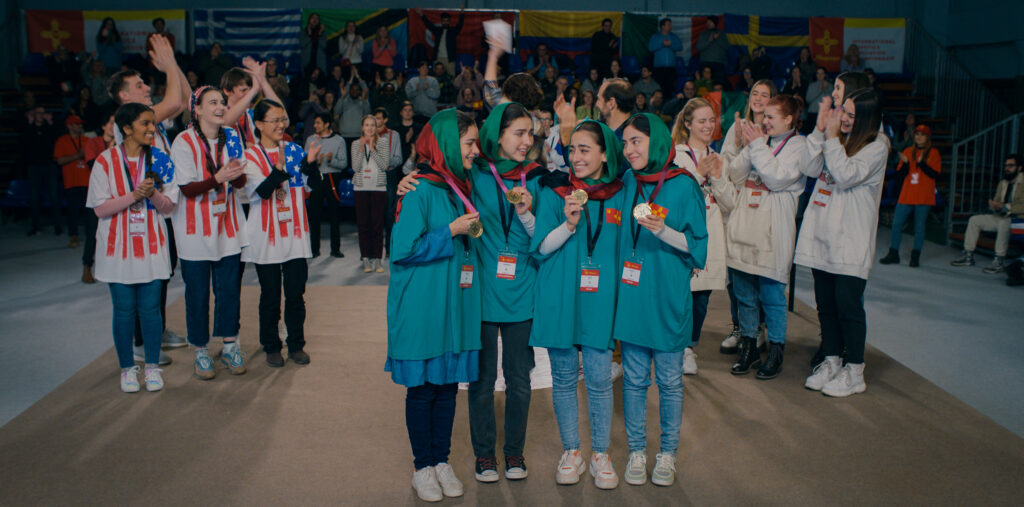
By grounding its narrative in Roya Mahboob’s lived experience and her mentorship of the Afghan Dreamers, Rule Breakers resists abstraction. It reminds viewers that structural change does not begin with slogans but with sustained acts of commitment that challenge who is allowed to learn, speak, and imagine a future. The film offers a corrective to narratives that frame Afghan women solely through loss. It does not deny suffering but insists on complexity, placing ambition alongside fear and solidarity alongside risk, and asking viewers to reckon with the conditions that make such courage necessary.
Rule Breakers is now available for streaming on major digital platforms including Prime Video.
The opinions expressed are those of the contributor, not necessarily of the RSAA.